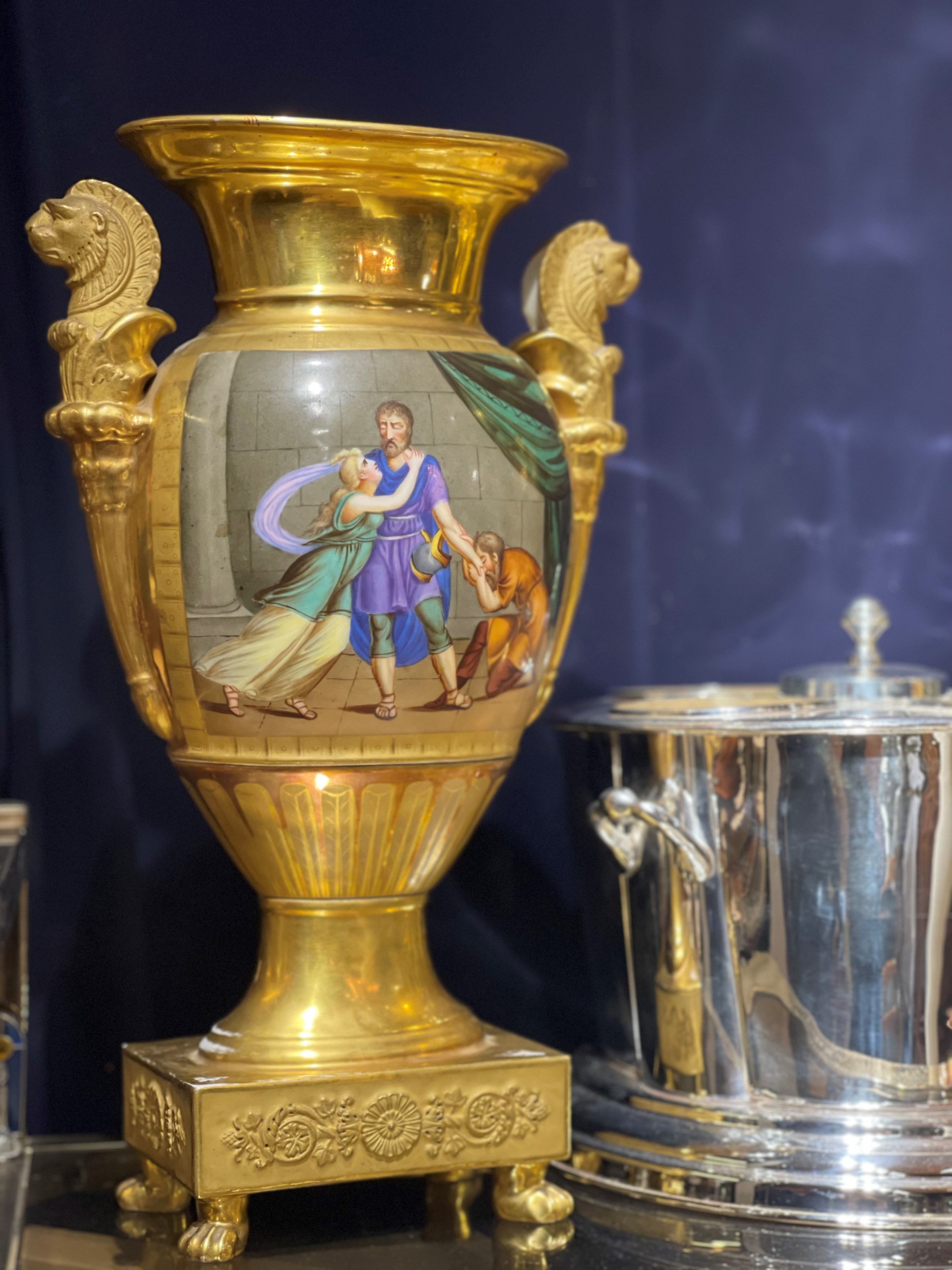
Porcelain known as "Old Paris" is a term used to designate a particular style of porcelain produced in Paris from the 18th to the 19th century. This ceramic art form is closely linked to the history of Paris porcelain, but it has its own distinctive characteristics that have earned it worldwide fame.
Origin and History:
The term "Old Paris" is used in the language of antique dealers to refer more broadly to the production of porcelain by Parisian factories between 1770 and 1850. Its history dates back to the 18th century, when Chinese porcelain was highly prized in Europe. Seeking to compete with Asian creations, French craftsmen developed their own style, taking inspiration from Chinese porcelain, but adding their own distinctive touch.
Around 1770, Parisian factories were able to obtain kaolin from Saint-Yrieix la-Perche near Limoges and then began their porcelain production. At the end of the 18th century, there were more than twenty hard porcelain factories in the capital.
Very often inspired by the productions of Sèvres, the decorations of the Parisian factories are simpler but the colors are bright. Although the shapes of the pieces remained simple, the decorations of the porcelains followed the trends of the time, incorporating elements of neoclassical and romantic style. There are ancient influences and decorations inspired by nature. The vases displayed motifs inspired by Greek columns, while the figurines represented mythological characters or sentimental scenes. Fine gold gilding was commonly used to add a touch of luxury to pieces.
In 1850, the Parisian factories will have almost all closed or moved for reasons of profitability.
Much more than simple decorative objects, "Old Paris" porcelains are open windows on the history of French art and craftsmanship of the 19th century. Owning one of these pieces allows you to perpetuate the artistic heritage of this era and enjoy the timeless beauty of these unique creations.