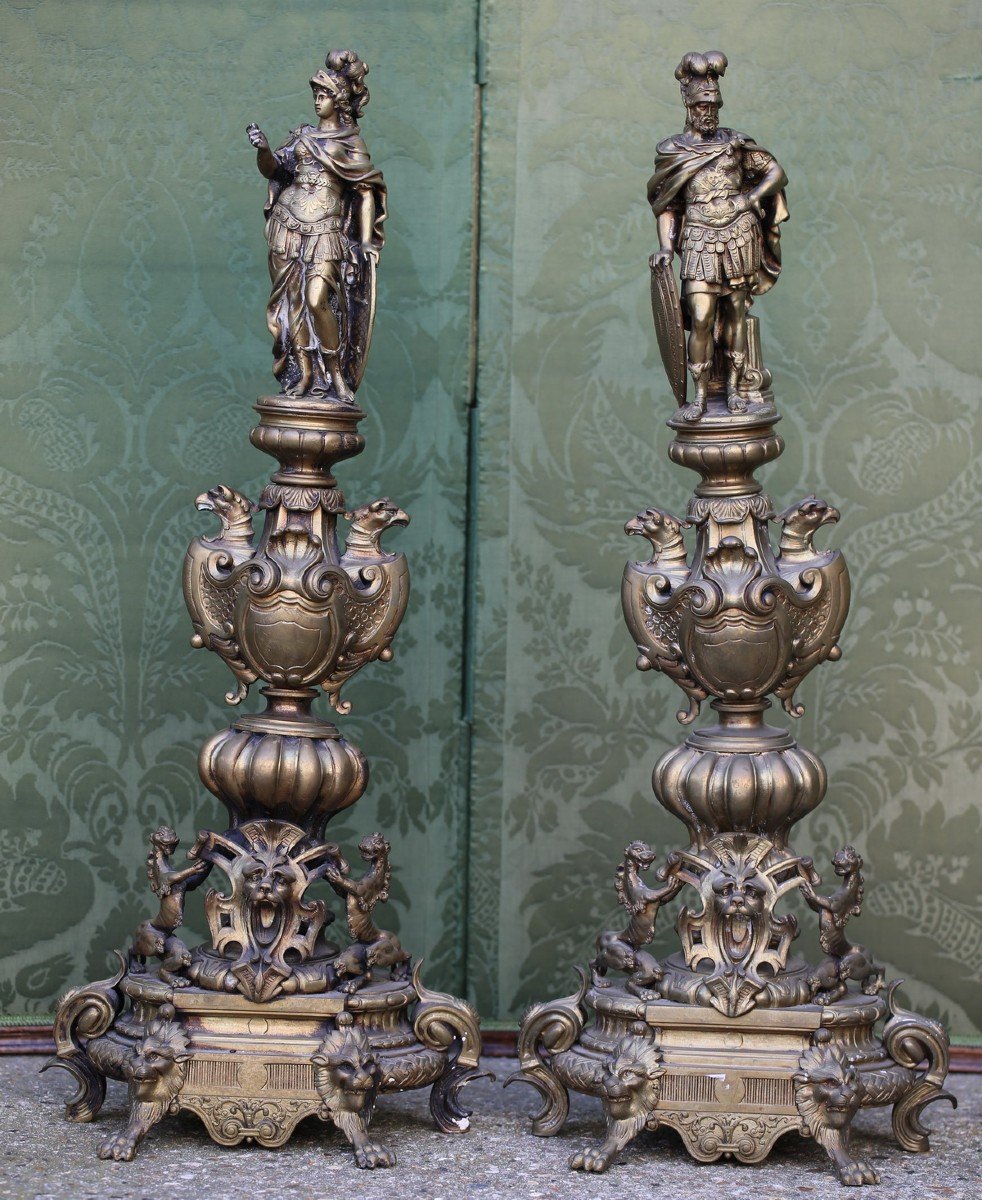
<p>Mathurin Moreau (1822-1912) is an emblematic figure of 19th-century French sculpture, whose works continue to mark public spaces in France and around the world. Born in Dijon into a family of sculptors, with a father and brothers who were also artists, he was quickly influenced by this family tradition.</p><p> In 1842, at the age of 21, he won the second prize of Rome, an award that propelled his career. His debut at the Salon in 1848 opened the doors to a collaboration with the Val d'Osne art foundry, which became a key partner of Moreau.</p><p> Among his most notable works is the <strong>Fontaine de Tourny</strong> , presented at the Universal Exhibition in Paris in 1855, where it received a gold medal. Installed in Bordeaux in 1857, it now adorns the esplanade of the Parliament of Quebec. In 1855, Moreau also created cast iron statues representing the four seasons for Queen Victoria, installed at Osborne House.</p><p> Moreau's collaboration with the Val d'Osne until 1879 allowed him to produce monumental sculptures that adorn many public spaces in France and abroad. Among his flagship works is the vase <strong>"The Education of Achilles"</strong> , designed in collaboration with the goldsmith Christofle, now preserved at the Musée d'Orsay.</p><p> Mathurin Moreau carried out prestigious commissions, such as the caryatids of the Paris Opera in 1877 and the sculpture <strong>Oceania</strong> which adorned the Gare d'Orsay in 1878 and which is still visible today.</p><p> Moreau was also politically involved, becoming mayor of the 19th arrondissement of Paris in 1878, and published an essay on poverty in 1851. He received a medal of honor at the Salon in 1897, crowning an exceptional career.</p><p> Mathurin Moreau's works continue to fascinate today, in museums and public spaces, testifying to the richness of 19th-century French sculpture and the lasting artistic legacy of this great sculptor.</p>