


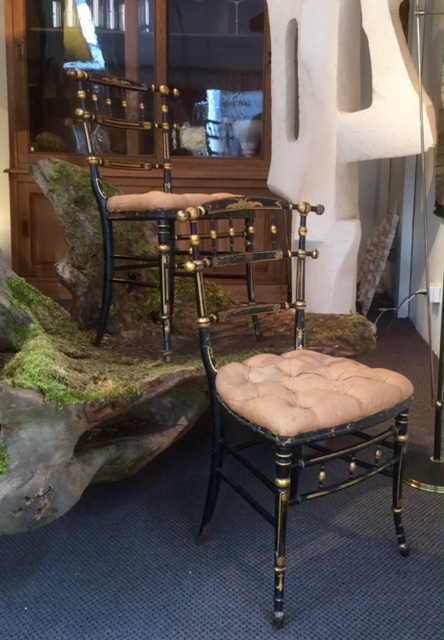
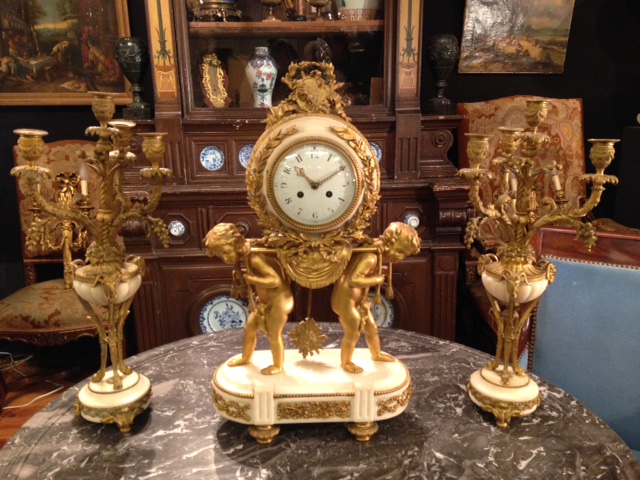
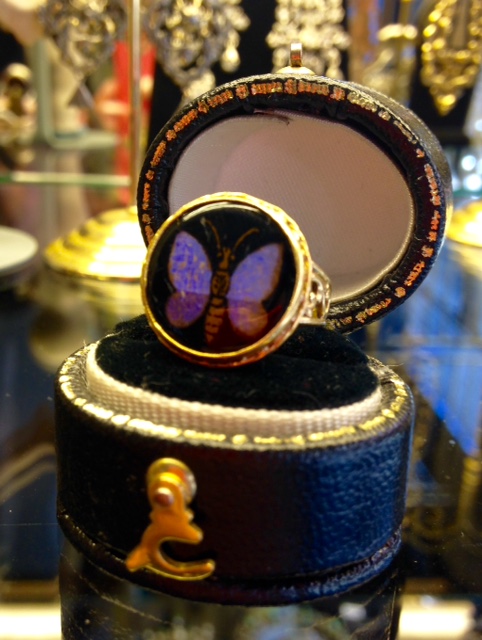
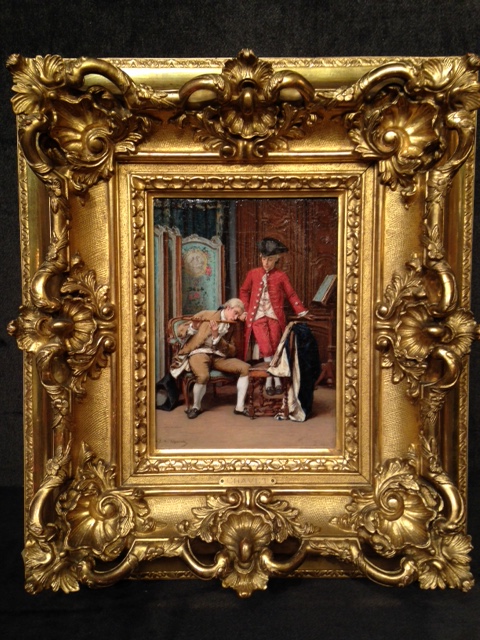
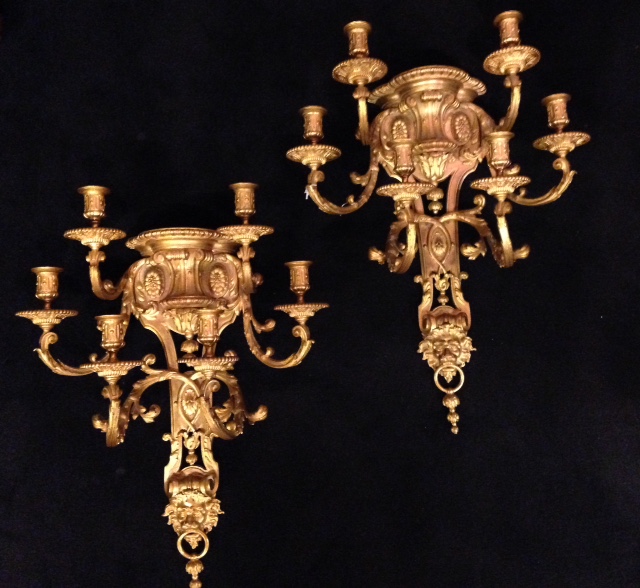


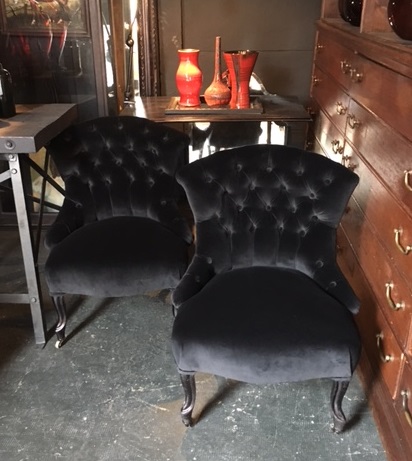
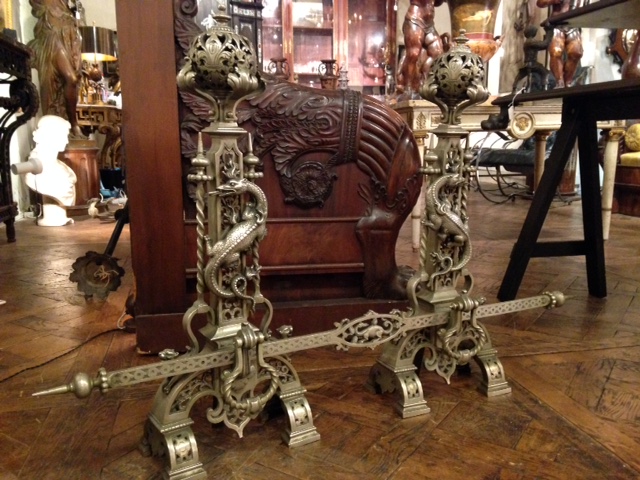

With his coup d’état of December 1852 Napoléon III propelled the thriving business bourgeoisie to power. If it had nothing to be ashamed of regarding its industrious origins compared to the nobles and aristocrats, the problem was it still had to make its mark stylistically. It needed to show that business and money had power, not only those with impressive family trees. In this era of pomp and decorum, they loved nothing more than a more opulent decor drawing their influences from times past.
Finding a look was not just the problem of the ‘nouveau riche’, the problem was the same for the new Empire, born out of nothing and which had everything to create. It was especially under the influence of the Empress Eugénie that the Louis XVI style had a revival. An avowed admirer of Marie Antoinette, the Empress was inspired by her, collecting her furniture or reproducing it.
Great families followed this comeback in style of the ‘Ancien Régime’. To furnish their vast Haussmann apartments, the Rothschilds and, among others, the Péreires opt for Louis XVI and Louis XV. The industrial boom on which they built their successes also allowed them to have access the high-end furniture which, due to new techniques, could be produced in quantity.
In this redesigned Paris where people could visit world exhibitions just as one might visit department stores, the XVIIIth century is in fashion. Its vocabulary is reinvented- secrétaires, small desks, sloped desks, dressers ... The fledgling intimacy of the last century is now widely developed with the appearance of small boudoir furniture and papier-maché and mother-of-pearl inlay. At the same time new mores are in fashion and new social rules take shape. Discreet meetings indoors or on rattan or bamboo furniture in conservatories or in ‘jardins d’hiver’ become the norm.
After 1870 and the fall of the Second Empire, the political and stylistic leaders gave way to the creative invention of a bourgeoisie, alone, who then came to power.