


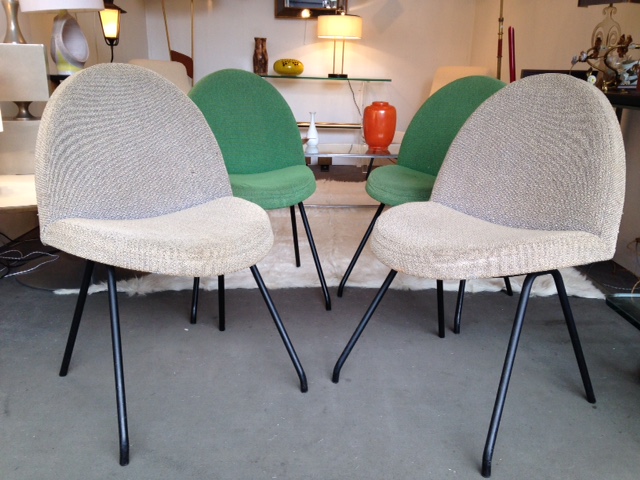

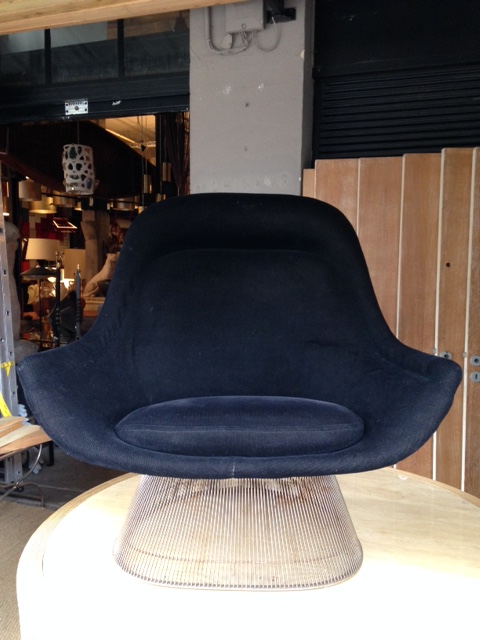
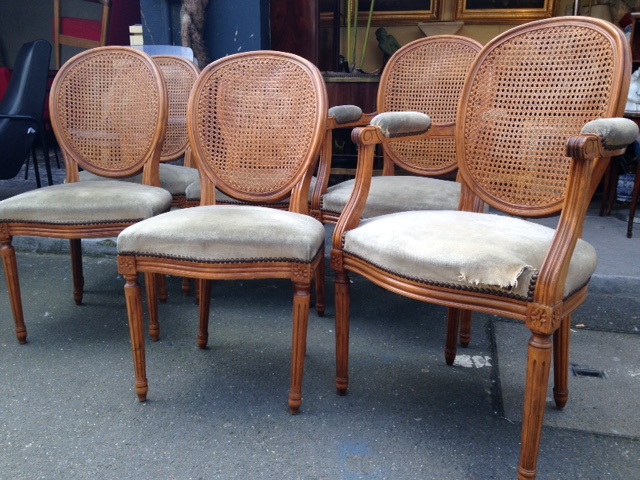
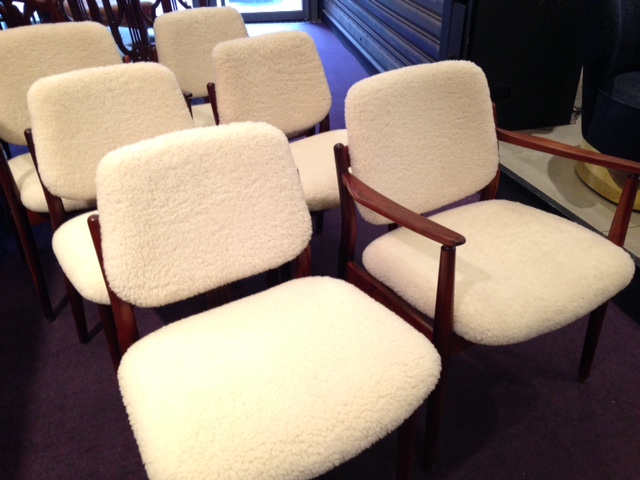
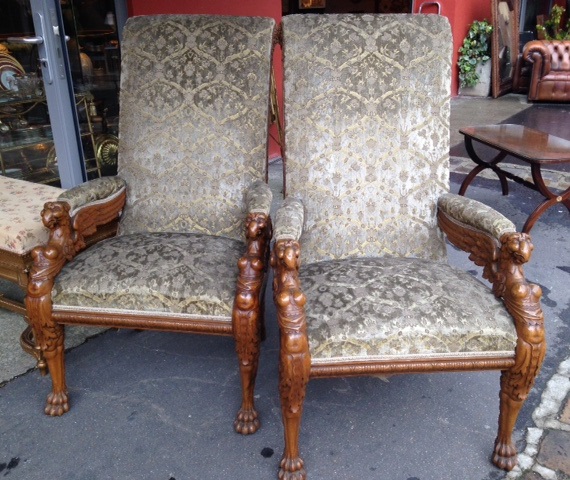
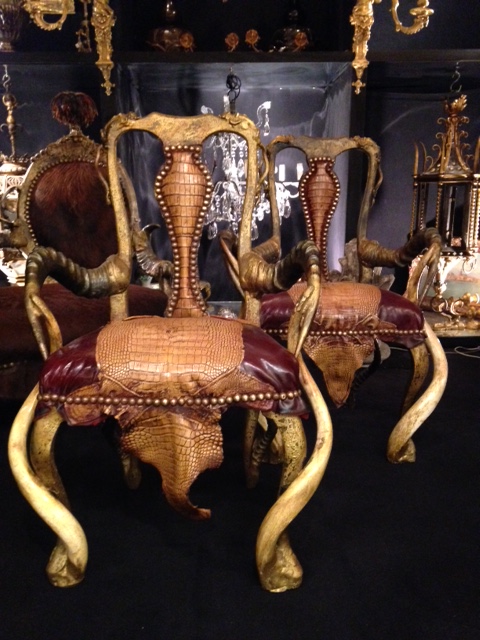
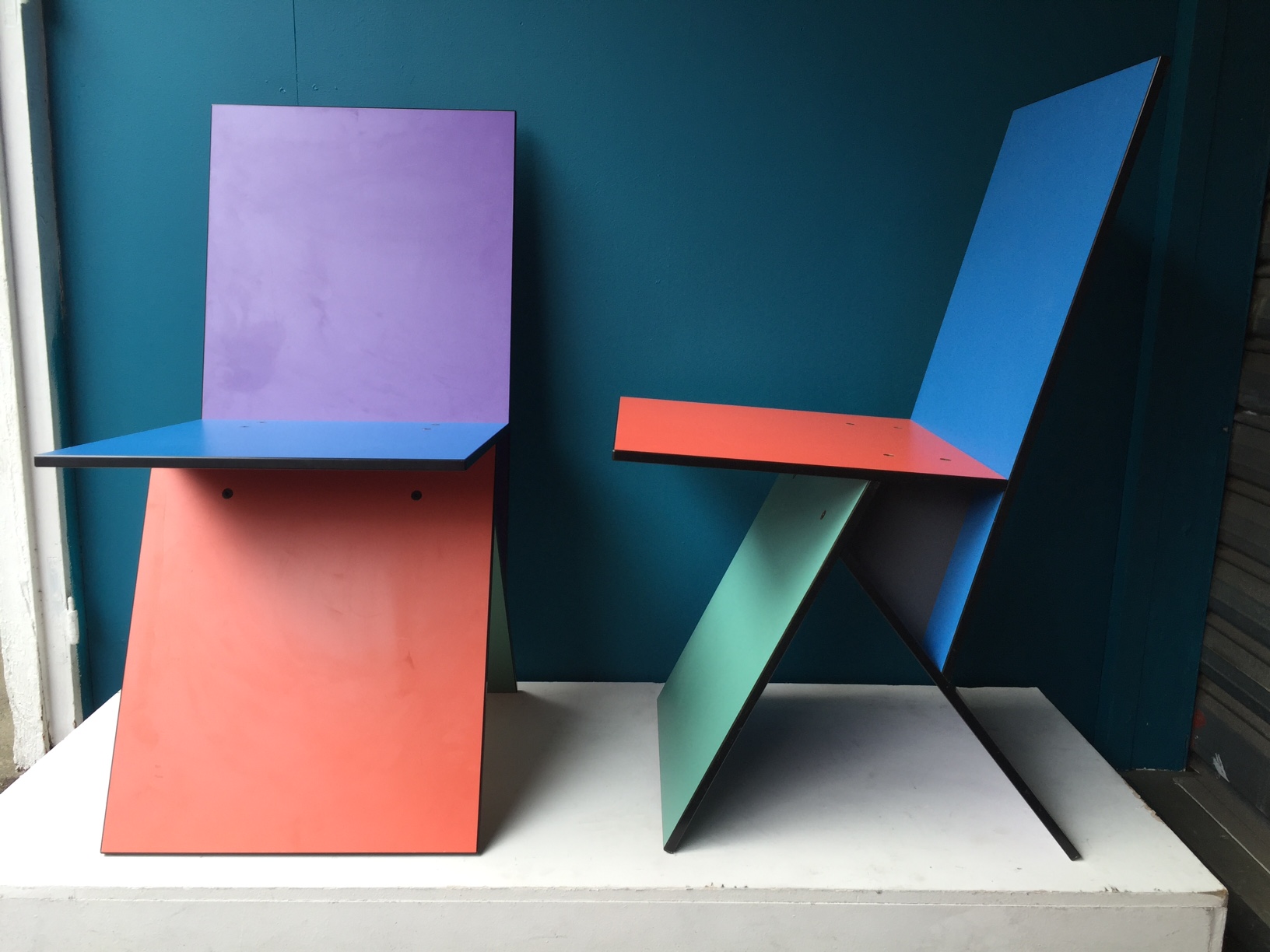
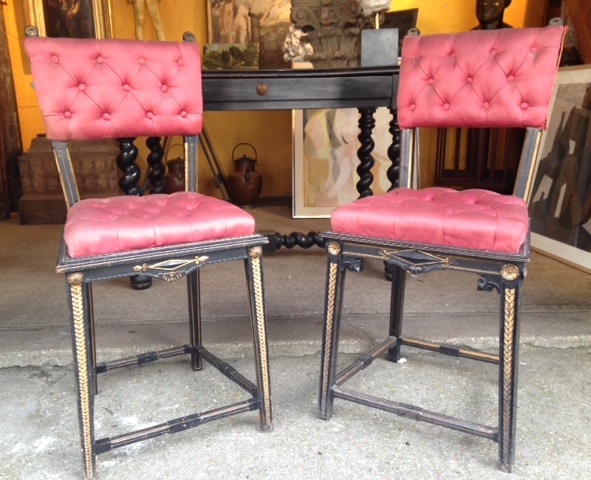
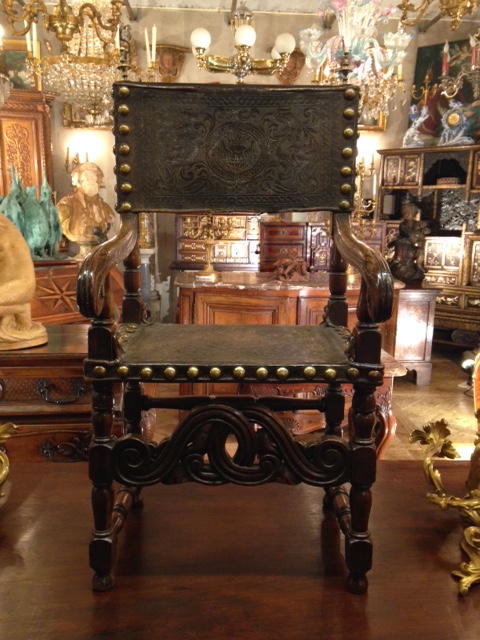
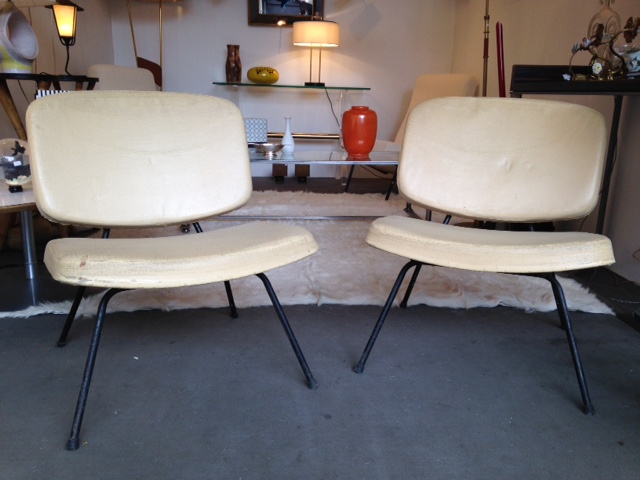
The chair has evolved over the ages, gradually making comfort its first priority. At Paul Bert Serpette, the oldest, often from the Haute époque, were created for formality rather than for being comfortable. They were used by those with an authority as severe as the harshness of their seat. With the Renaissance appear the first armchairs with a padded and upholstered seat. They thus combine the demonstration of power and the comfort of the person who uses them. Under Louis XIV, the seat is lowered and the back gets taller. Also, we see armrests become shorter or wider depending on the style and the width of ladies dresses.
In the eighteenth century, the bergère surrounds the occupant with its curved back. A style that is later reinterpreted by great designers of the twentieth century such as Boris Tabacoff with his "Sphere" or Christian Daninos with his " Ball Chair " in 1969. Pierre Paulin goes even further with his "Mushroom" chair upholstered in elastic jersey merging the back and the seat. A similar evolution happened to the Louis XV Duchess chair which became the Méridienne under Napoleon III. In 1928, Charlotte Perriand and Jean Prouvé reinterpretted this chaise longue creating an iconic model in leather and metal.
Economic restrictions immediately postwar meant that less expensive materials and techniques became popular, such as oak and cane which were used by Marcel Gascoin for his "C" chair. New materials such as plastics revolutionized seating in the 50s -70s with the creations of Charles and Ray Eames in the United States or those of Peter Guariche in France.