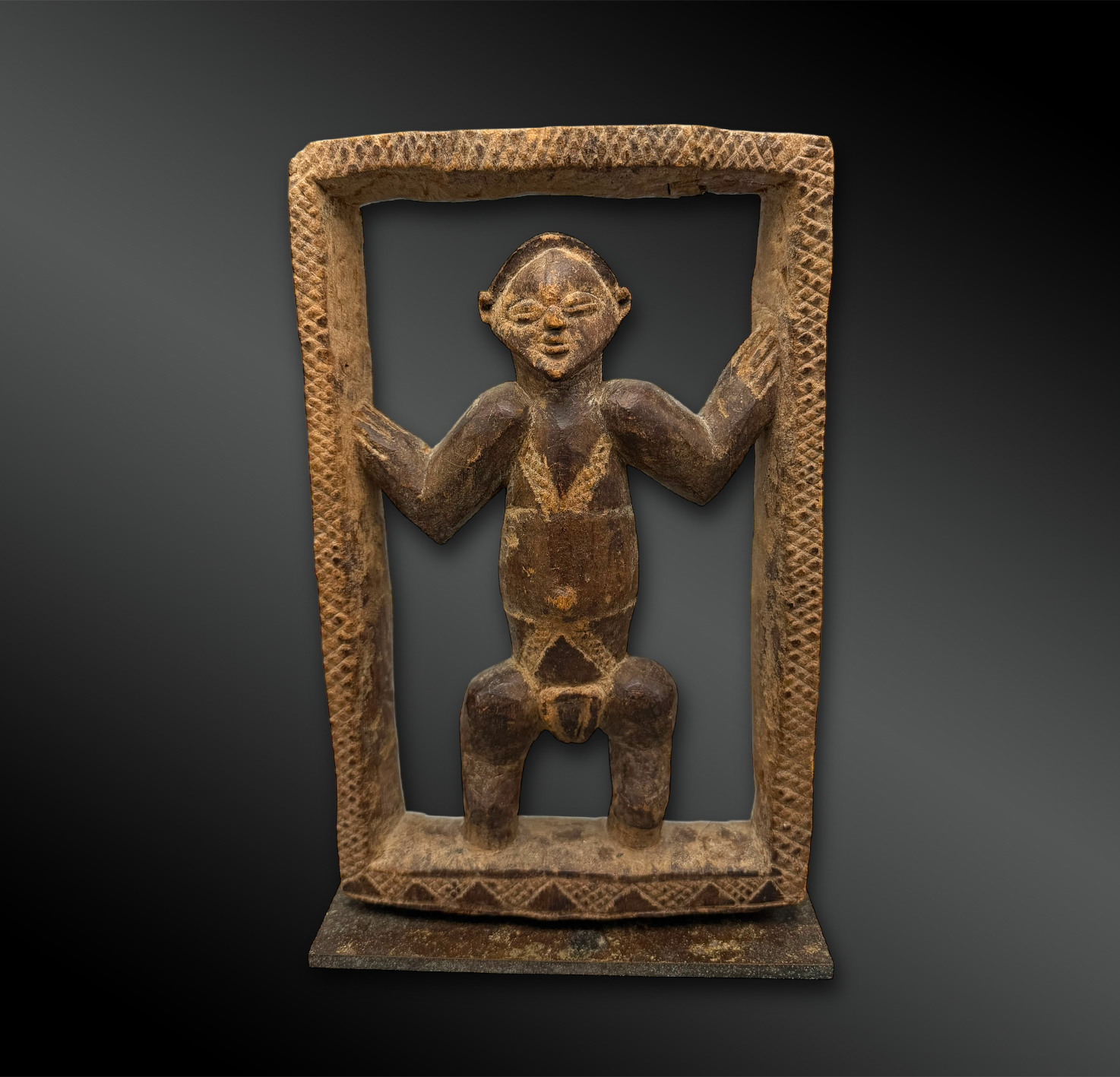
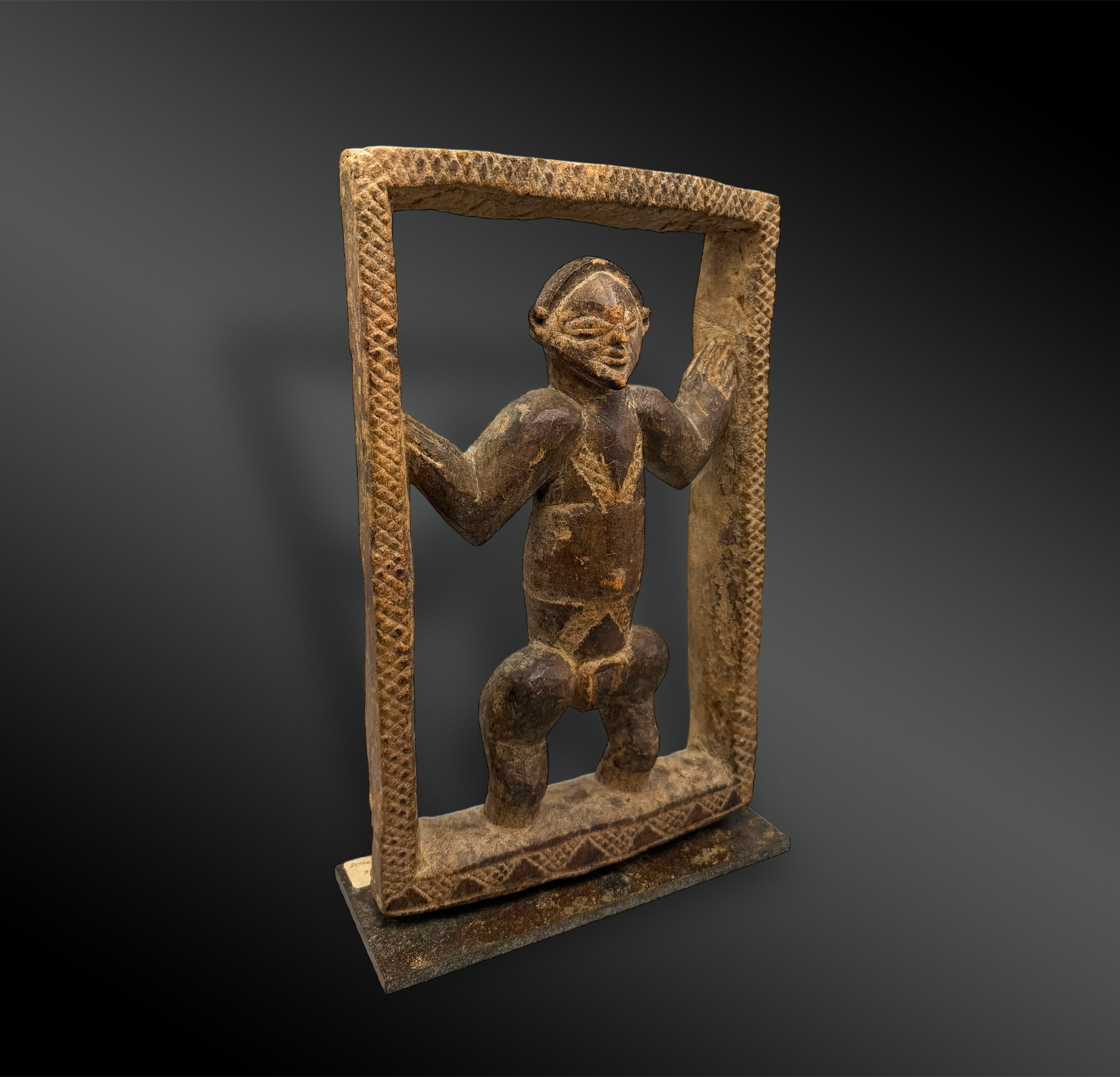
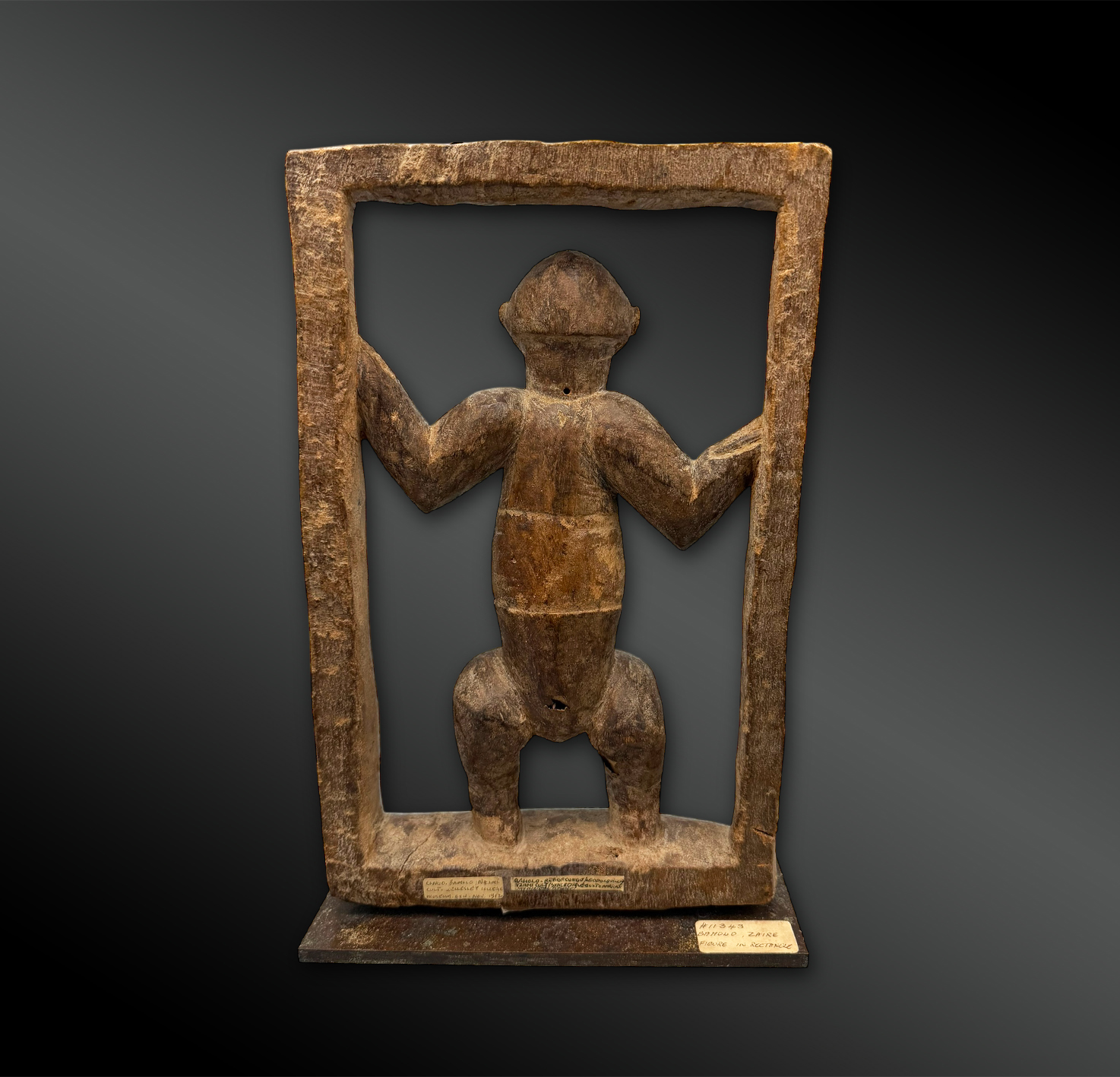
ANTHROPOMORPHIC STATUETTE called Nzambi
Holo culture, Democratic Republic of Congo and Northern Angola
Around 1900
Drink
Height: 29.5 cm; Width: 18.5 cm
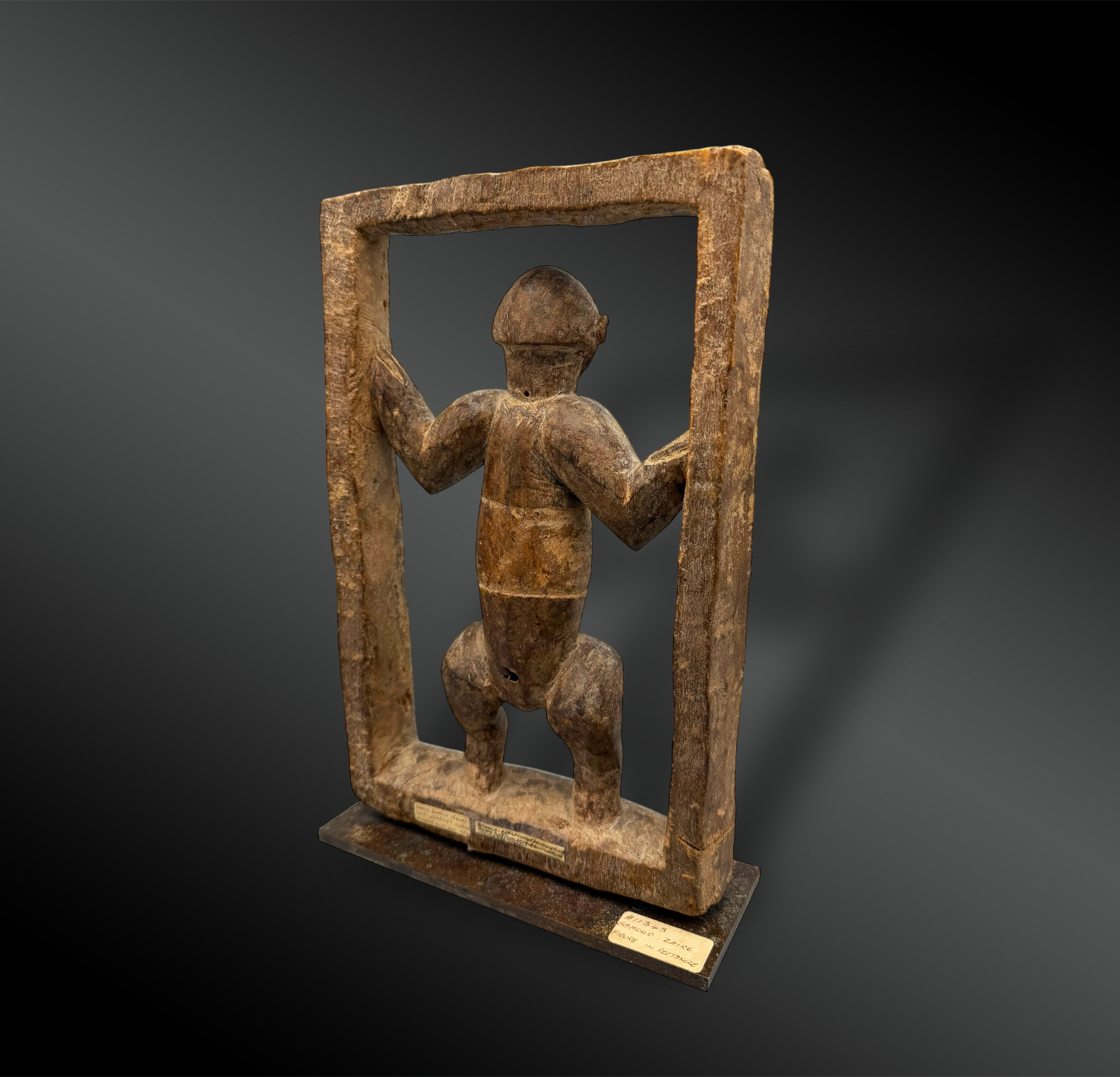
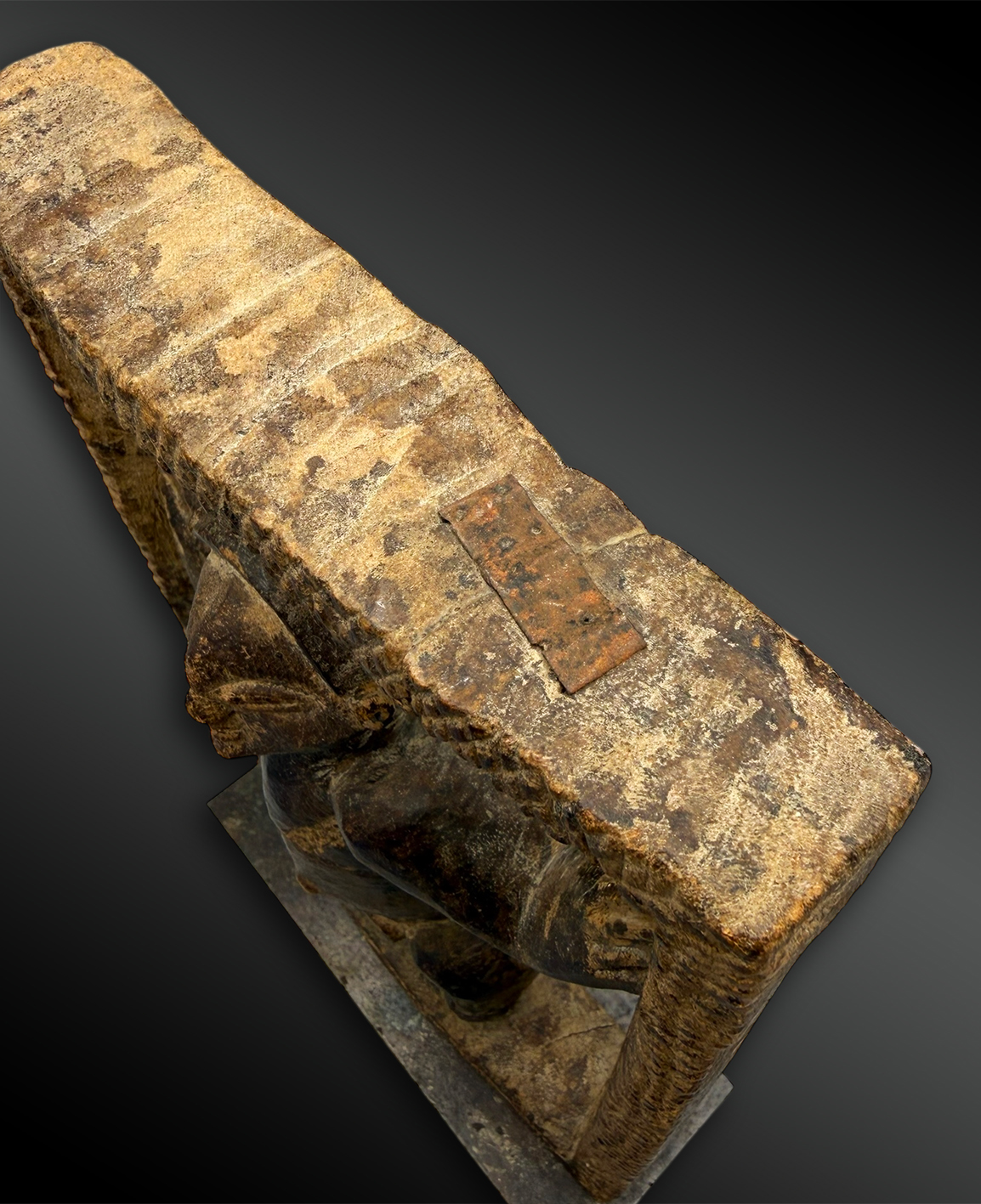
(indigenous restoration and slight flaking of the wood on the reverse)
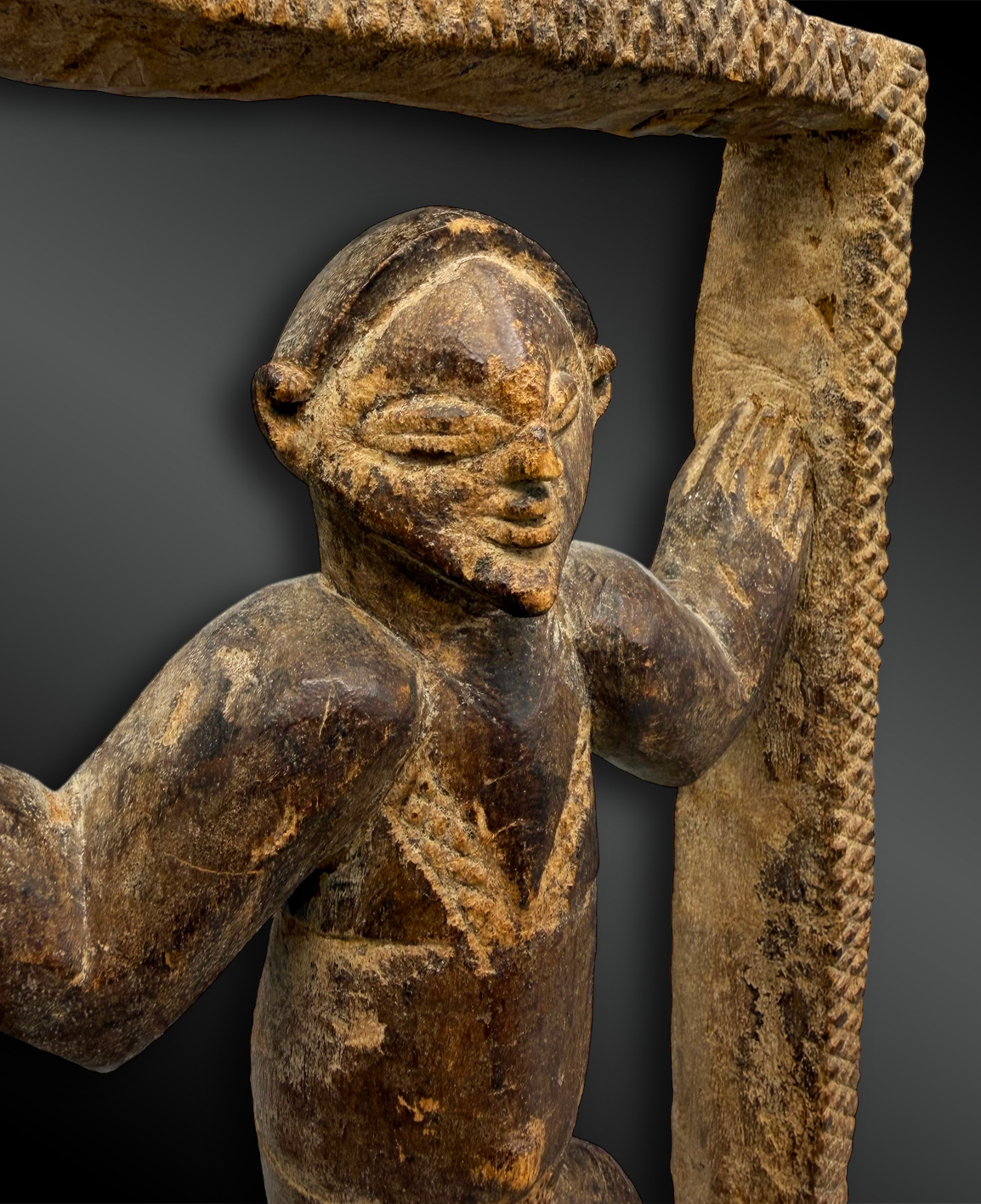
This hermaphrodite statuette carved from a single block of wood stands within an architecturally designed frame, its hands resting on the uprights of the angular structure while its feet, joined in the lower segment, support short legs, slightly bent and distinct from one another.
Her face is tapered at the chin, marked by two coffee bean eyes and two small C-shaped ears. From her large shoulders spring widely incised fingers, her torso, with a protruding navel, is adorned with X and checkerboard body scarifications.
According to Albert Maesen, a doctor of art history and archaeology and former curator of the Museum of the Belgian Congo, these statuettes are reminiscent of Christian crucifixes.
Indeed, from the 15th century onwards, Christian iconography was introduced to Central Africa through contact with Europeans, notably via crucifixes and representations of saints and the Virgin Mary. These framed statuettes likely appeared in the 17th century during the second phase of the Christianization of the kingdom by Capuchin missionaries, who arrived in the territory in 1645.
Just like the depiction of Christ on the cross, these sacred panels were imbued with a protective function, comparable to that of an amulet. Therefore, they were kept in houses called nzo santu, as part of the worship of Nzambi.
In the Kongo religious tradition, Nzambi is the supreme God, creator of the universe and is considered the origin of all life and all spiritual power.
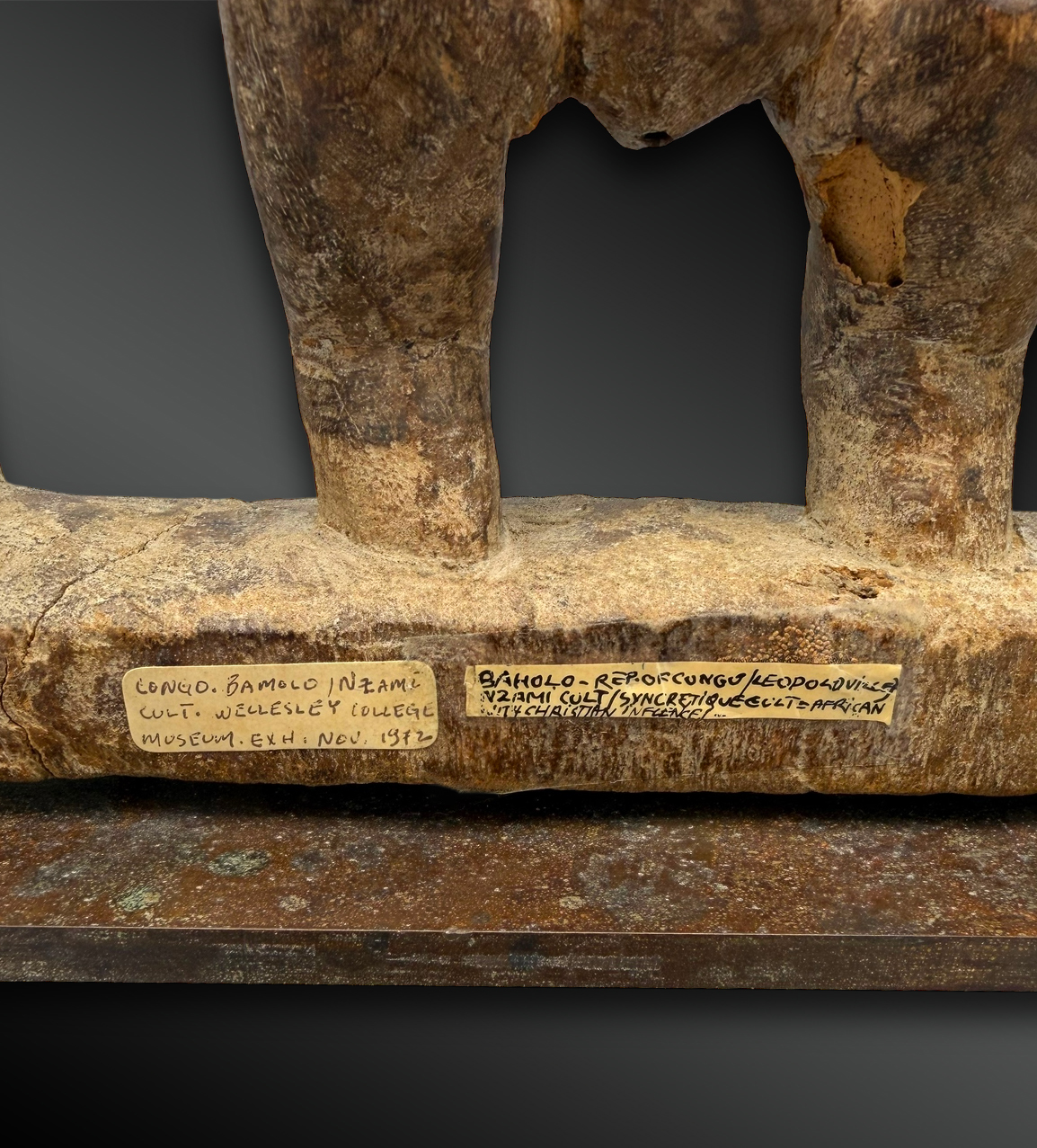
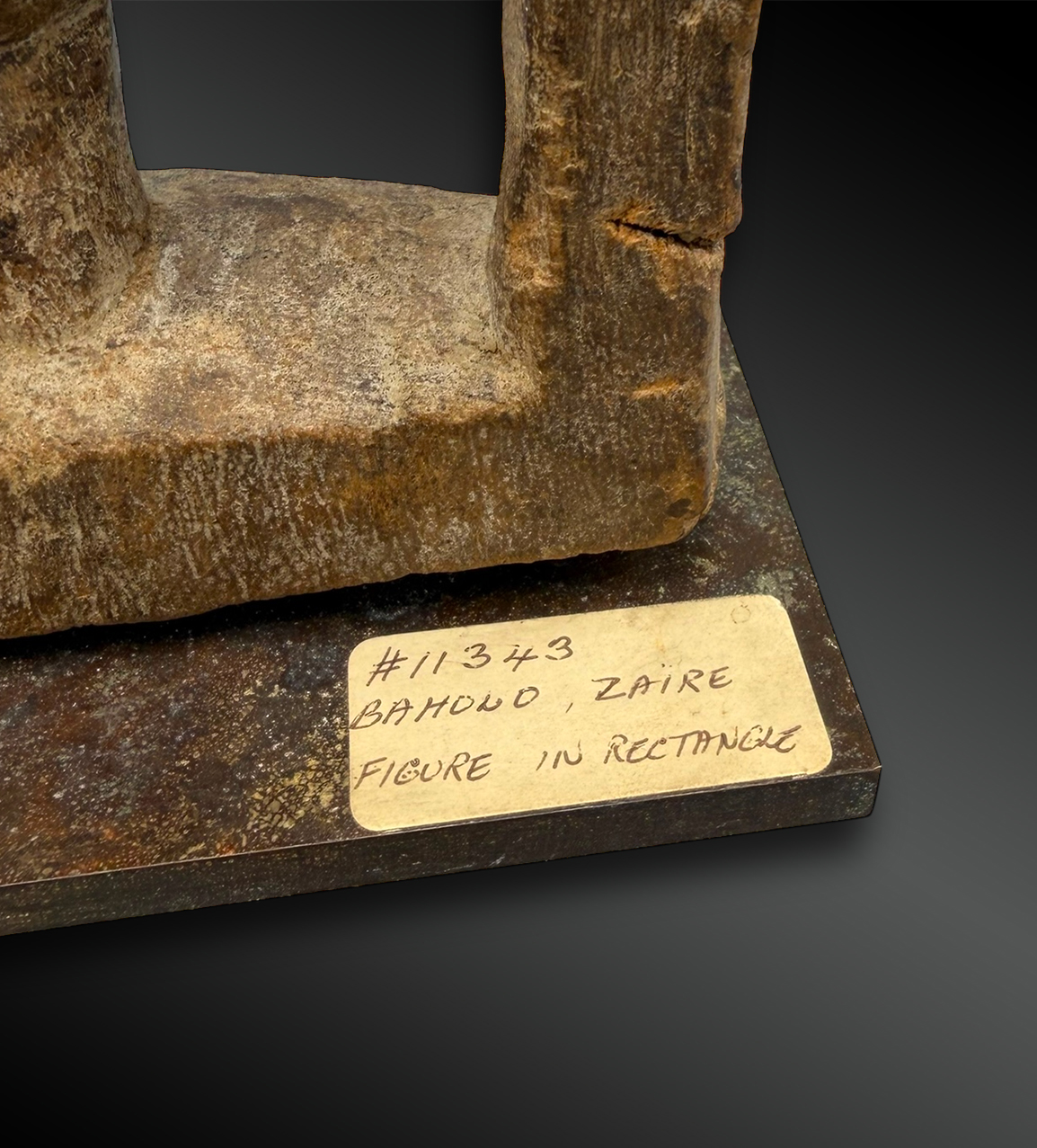
Three labels are visible on the back:
- Handwritten label by Klejman indicating the location, group, and date
- Perls Galleries inventory label accompanied by its number "11343".
- Wellesley College Museum label mentioning its exhibition in November 1972.
Origins:
- Former John J. Klejman collection, New York, Perls Galleries (inv. n°11343)
- Formerly in a private American collection.
Bibliographic reference: Francois Neyt, L'Art Holo du Haut-Kwango, Munich, Fred Jahn, 1982.
Text and photos © FCP CORIDON


 +33681153179
 ff.coridon@wanadoo.fr
 www.proantic.com/galerie/coridon/