Walking sticks
There are two types of walking sticks. The first one is functional, works as an arm extension and gives support for walking. The second one has a symbolic function and is reserved for the elite. Deriving from the scepter, the walking stick is a symbol of power, whether royal, aristocratic or military, as in Scottish Army officers stick from the late 17th century as well as sword-cane or Duchesne system-canes in 1518.
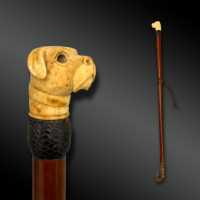
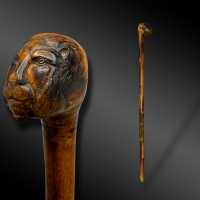
In the early 19th century walking stick became more accessible. Whether it was simple or ornate the stick was an essential accessory to the Parisian “Bourgeois” who wanted to shine in the upper social circles. Sticks creation generated huge ingenuity. When carrying a weapon became outlawed, the gun-cane was invented, a good solution in case of an attack. Different materials were used, from rich materials like antlers to simple beech wood pommels. The production of ivory or bone sticks was common in harbors, like Dieppe where the lobster claw cane was invented. Frequently, sculptures represent coat of arms, animals, whimsical or even erotic scenes.