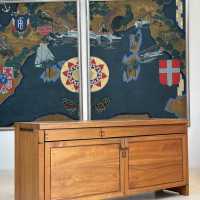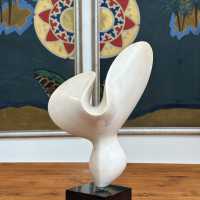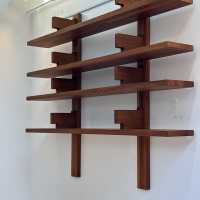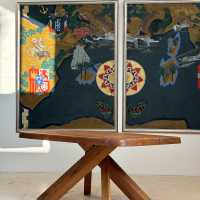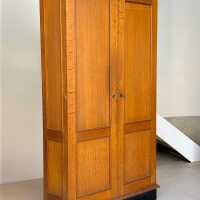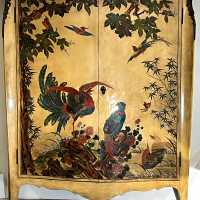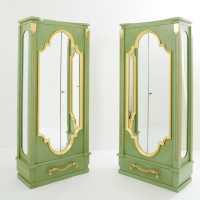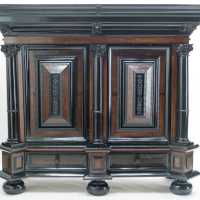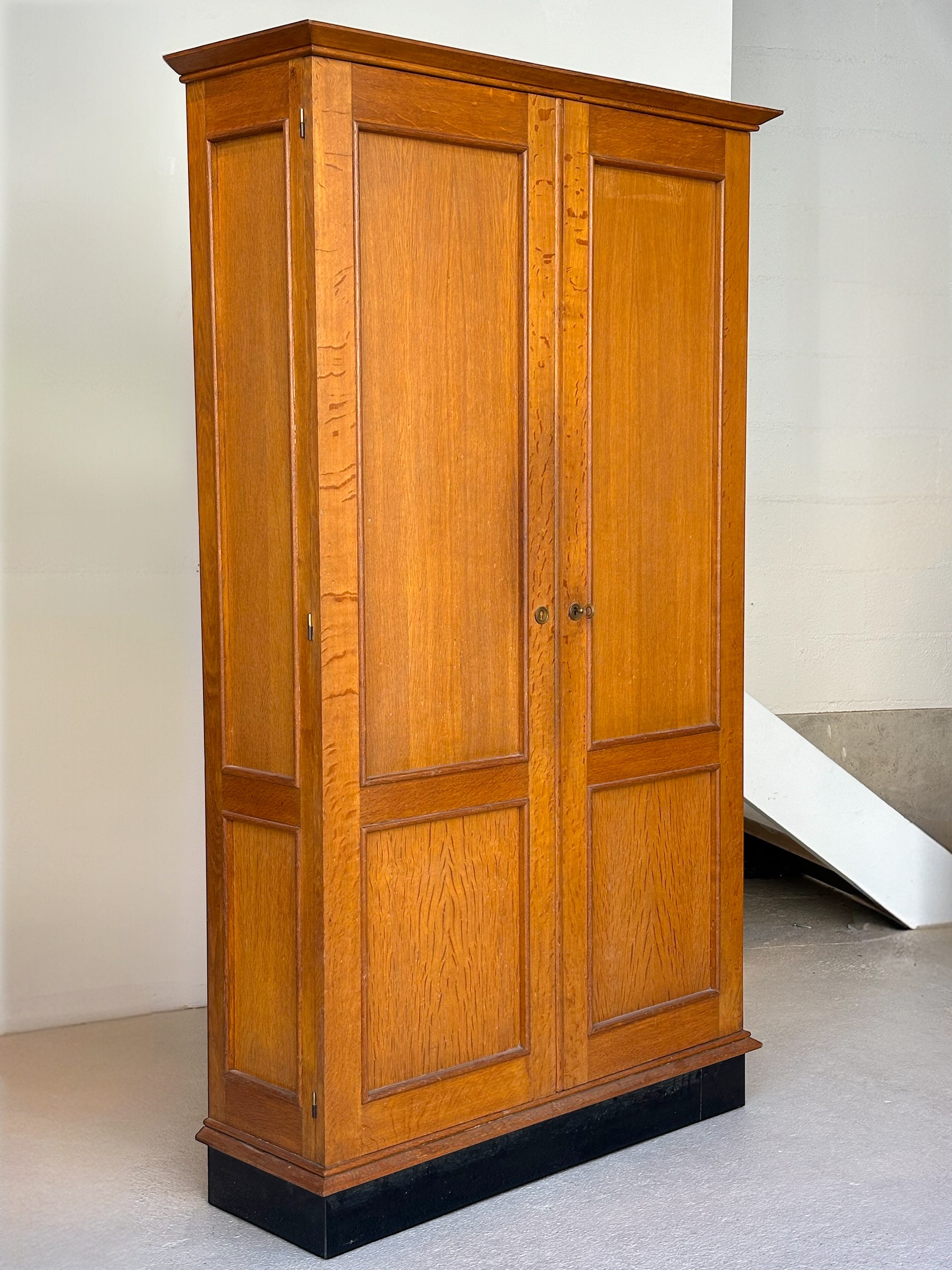
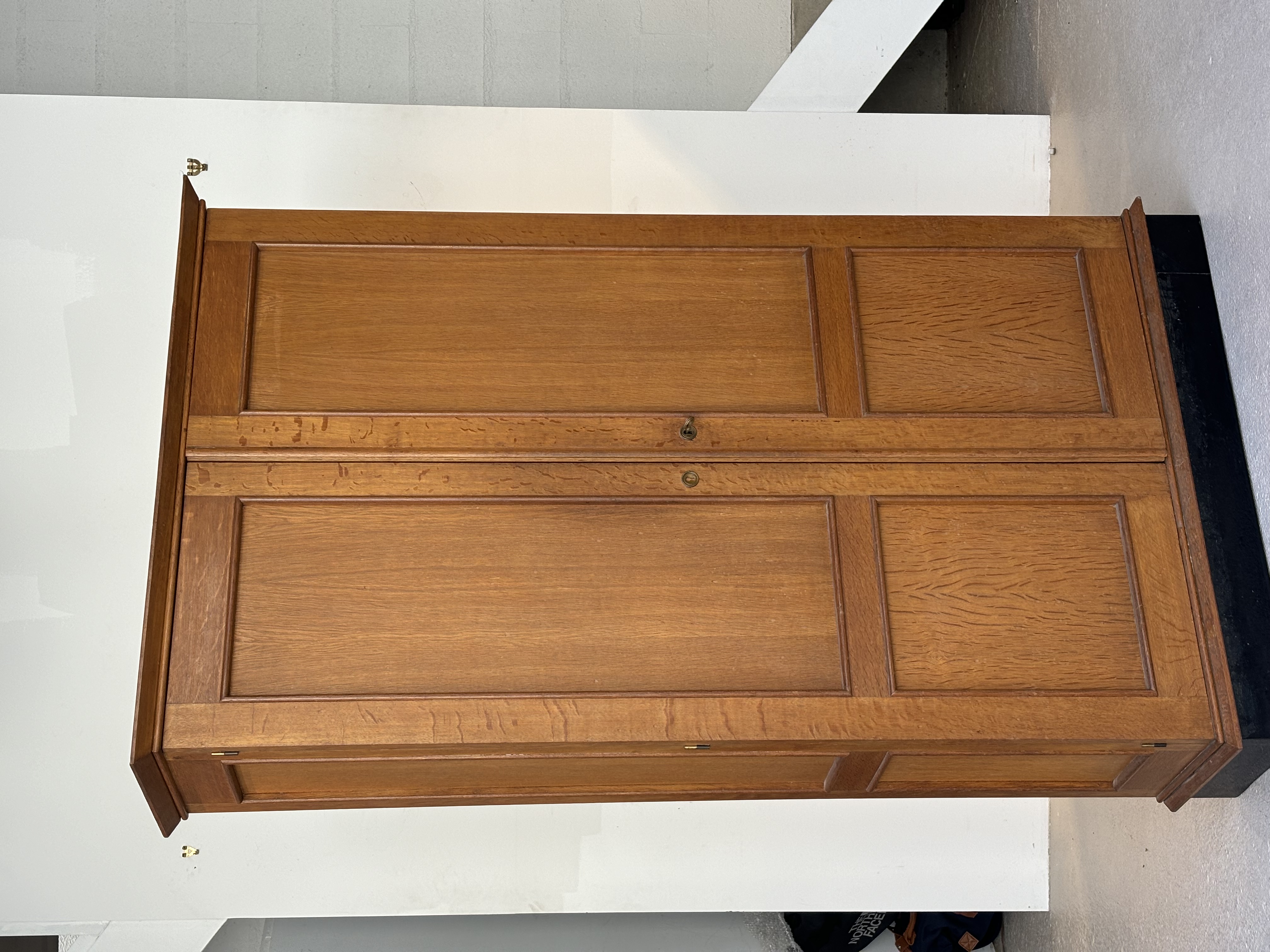
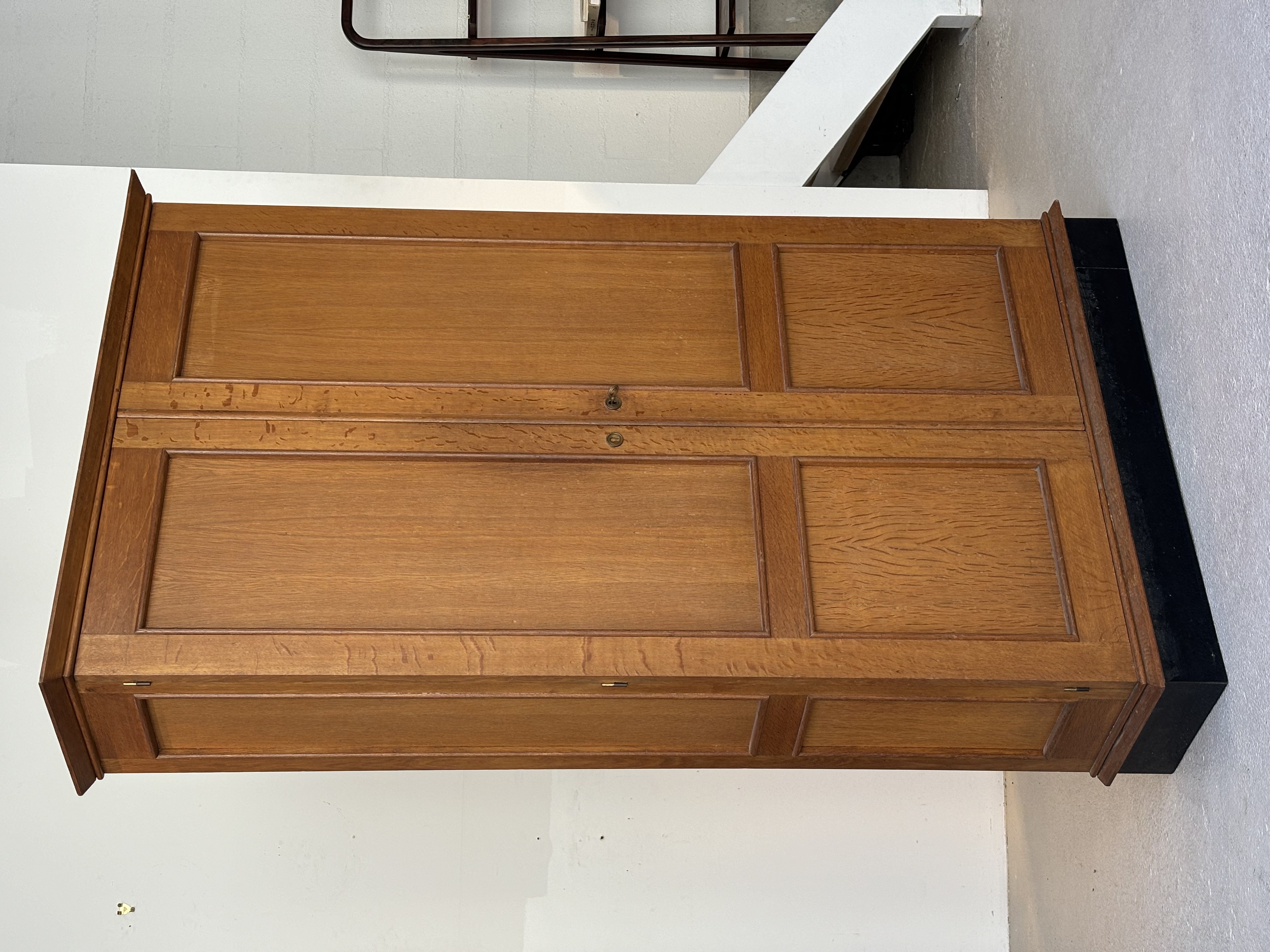
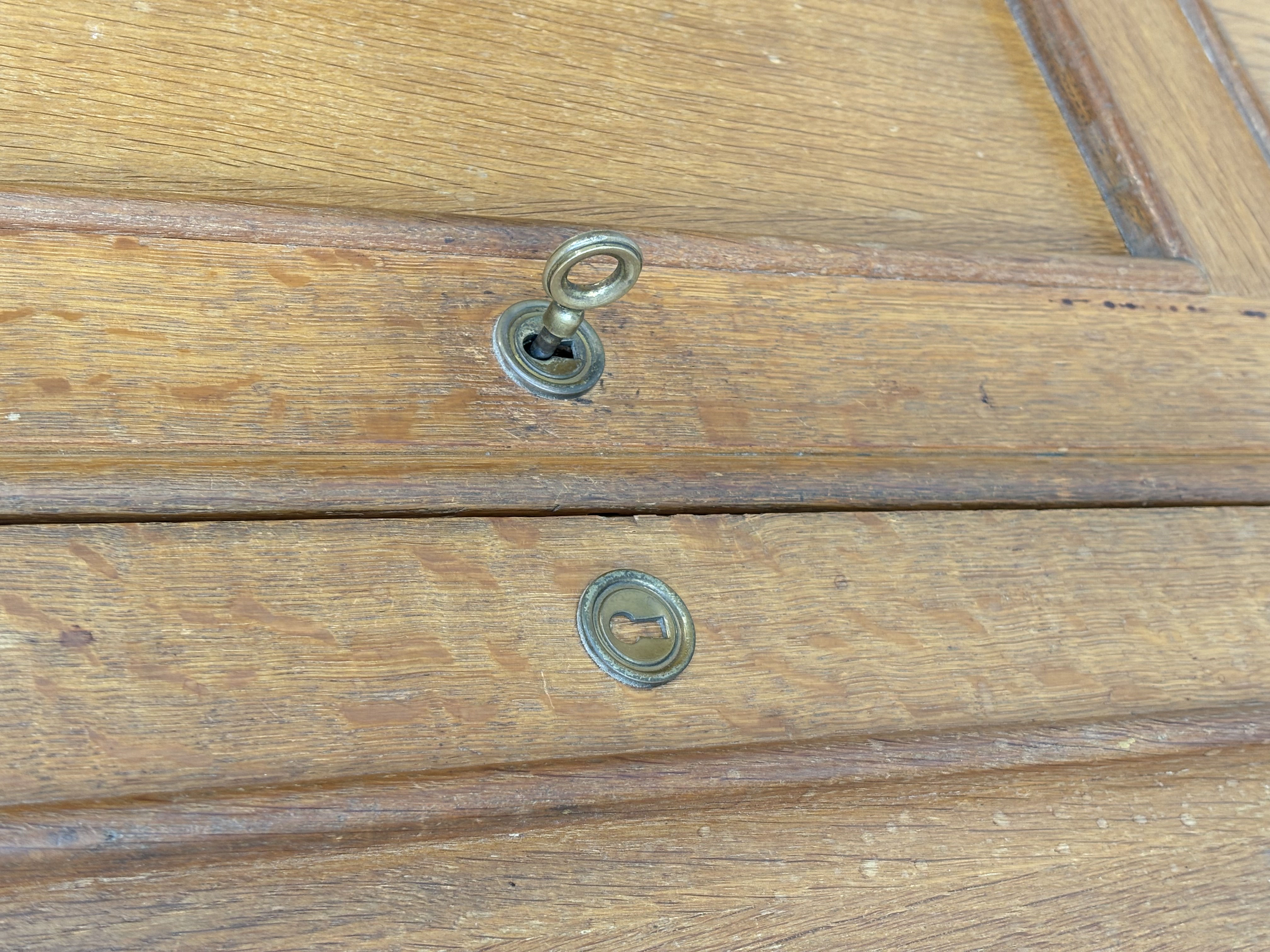
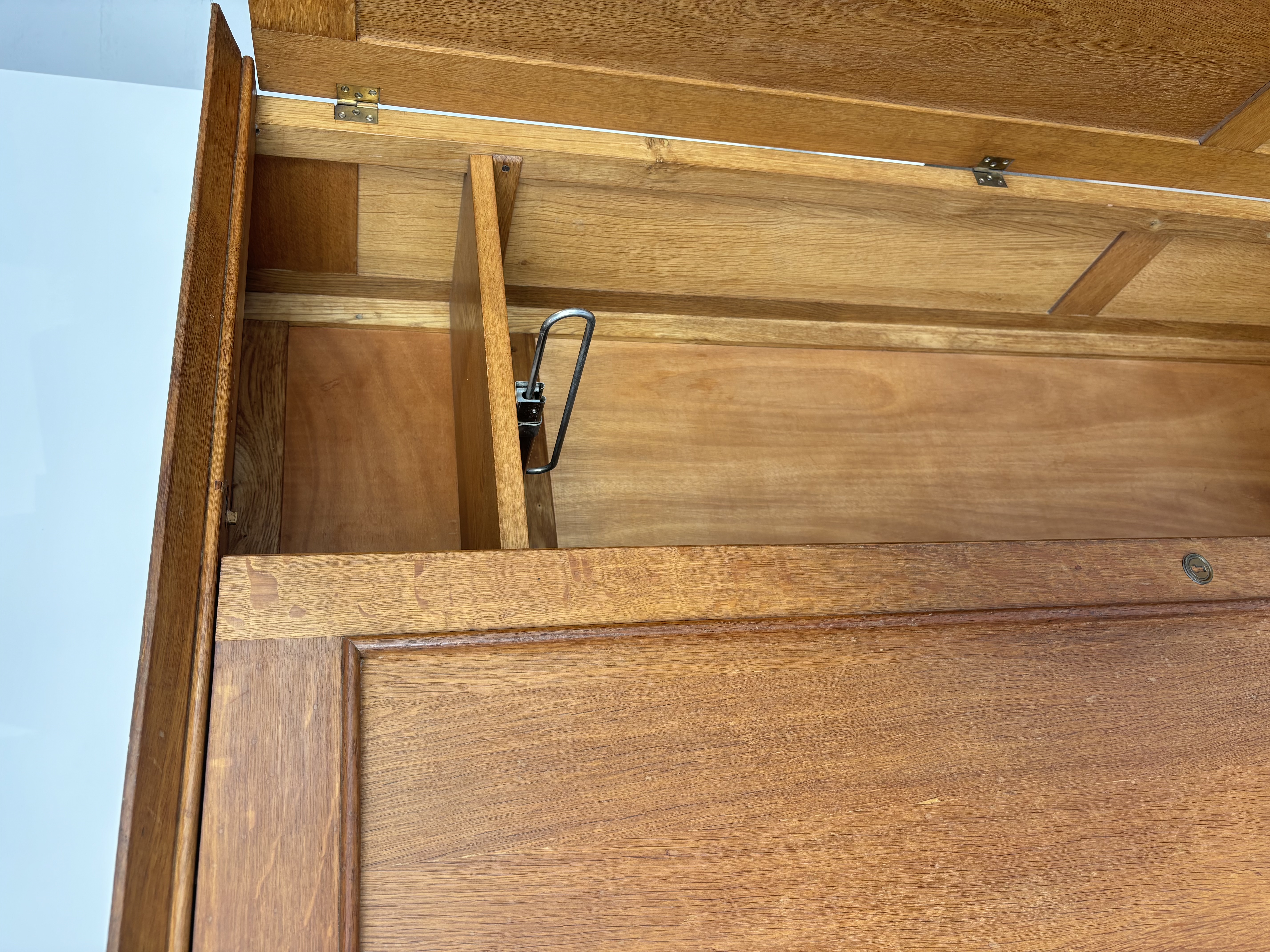
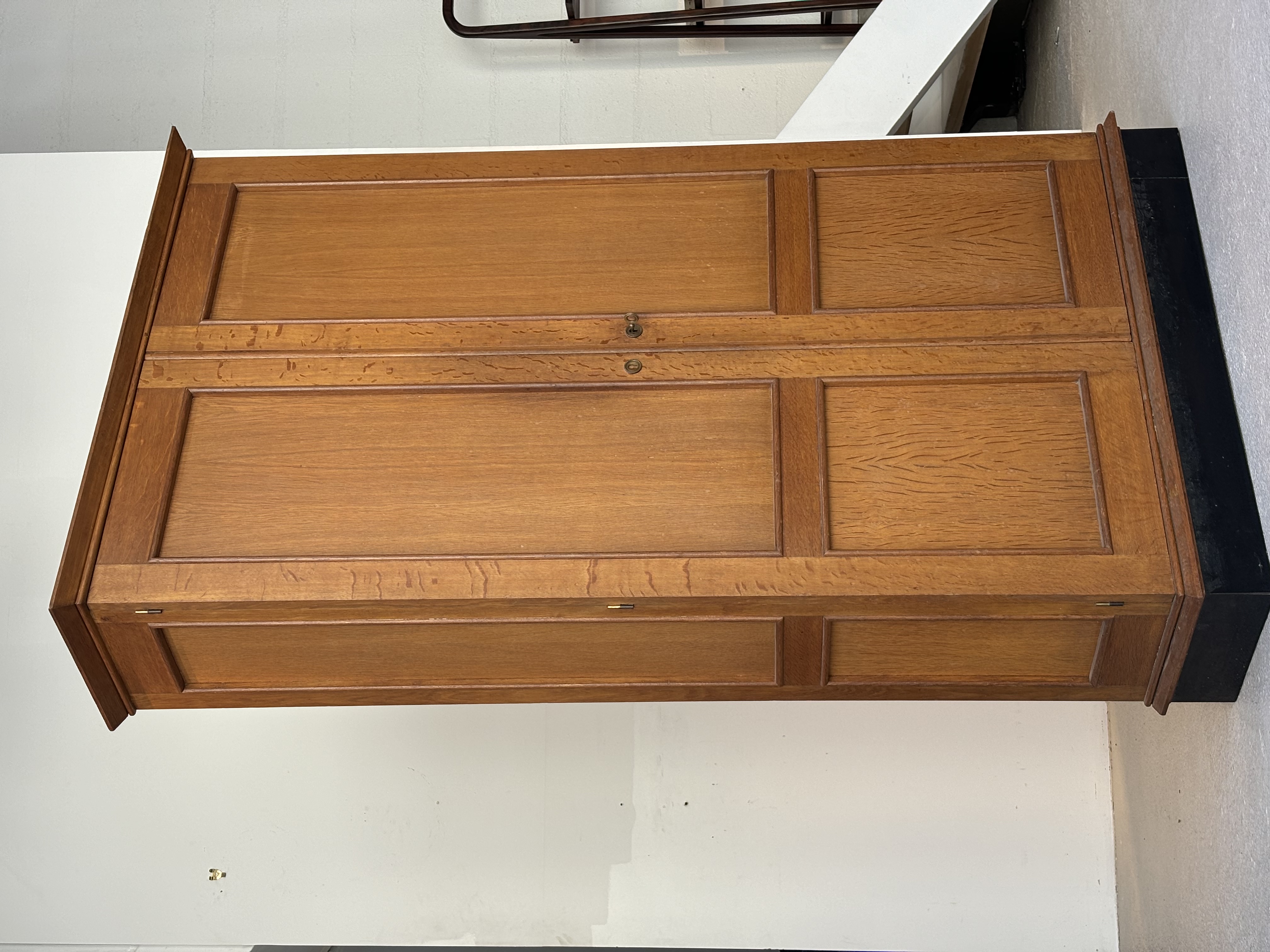
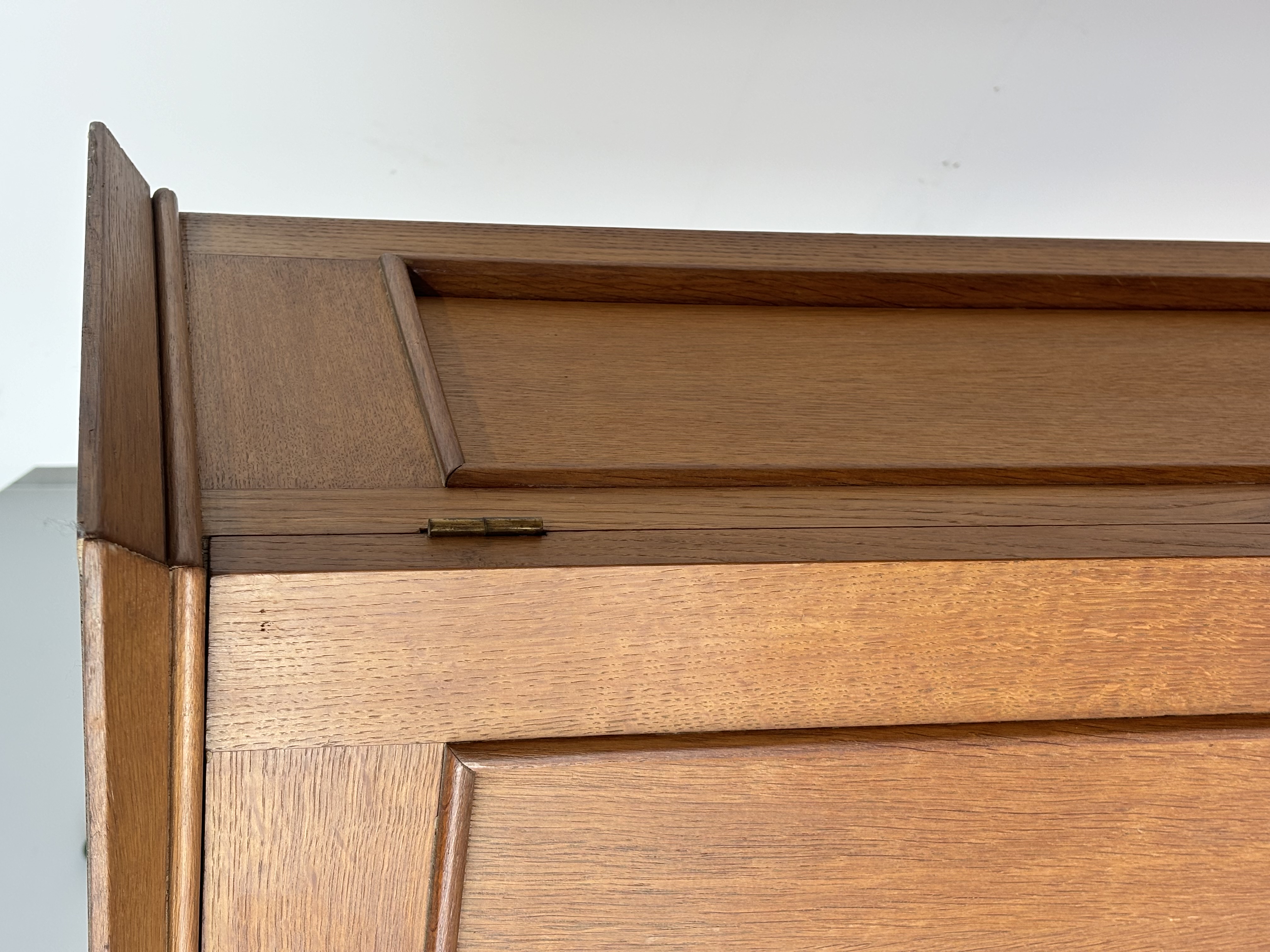
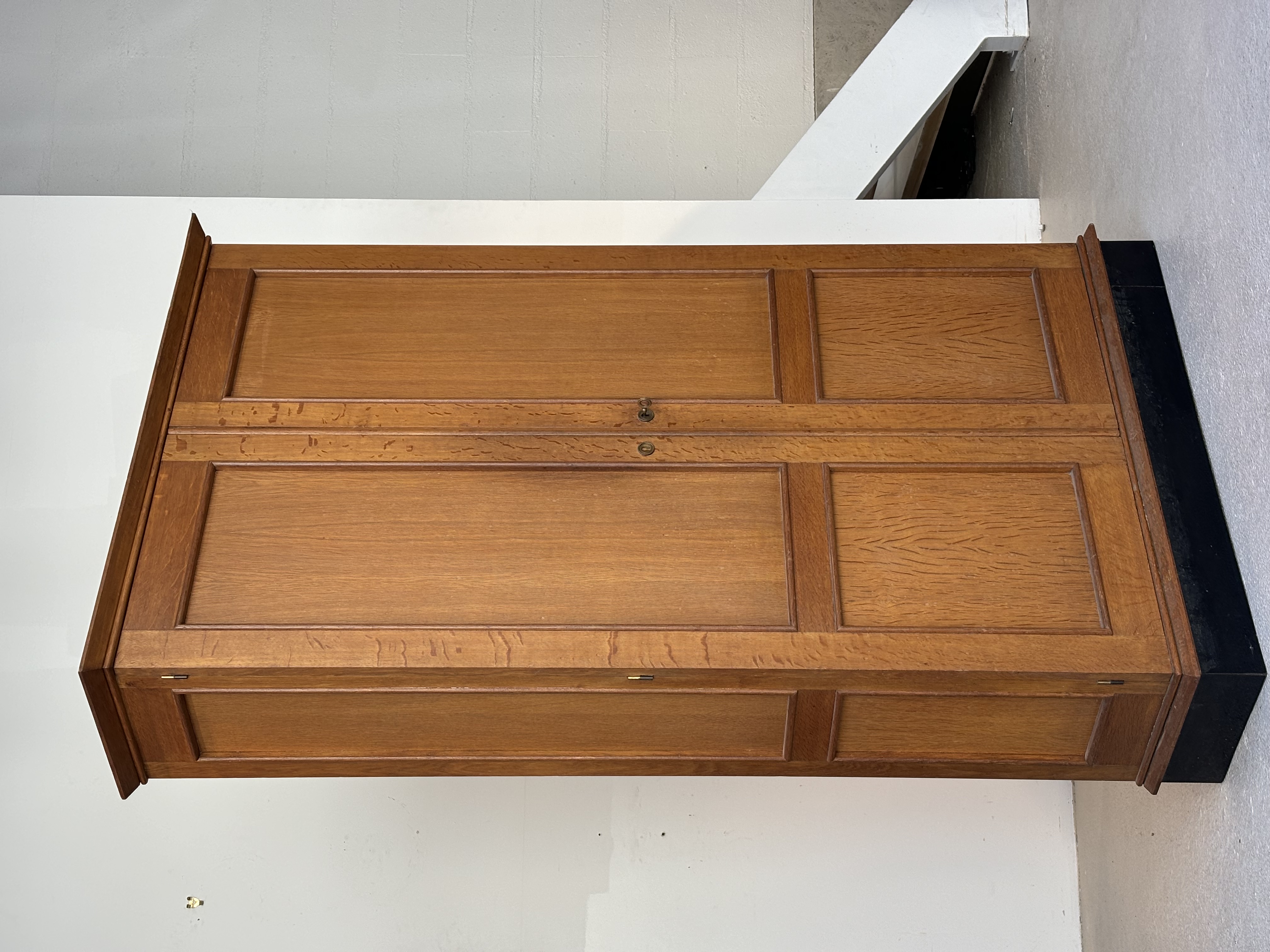
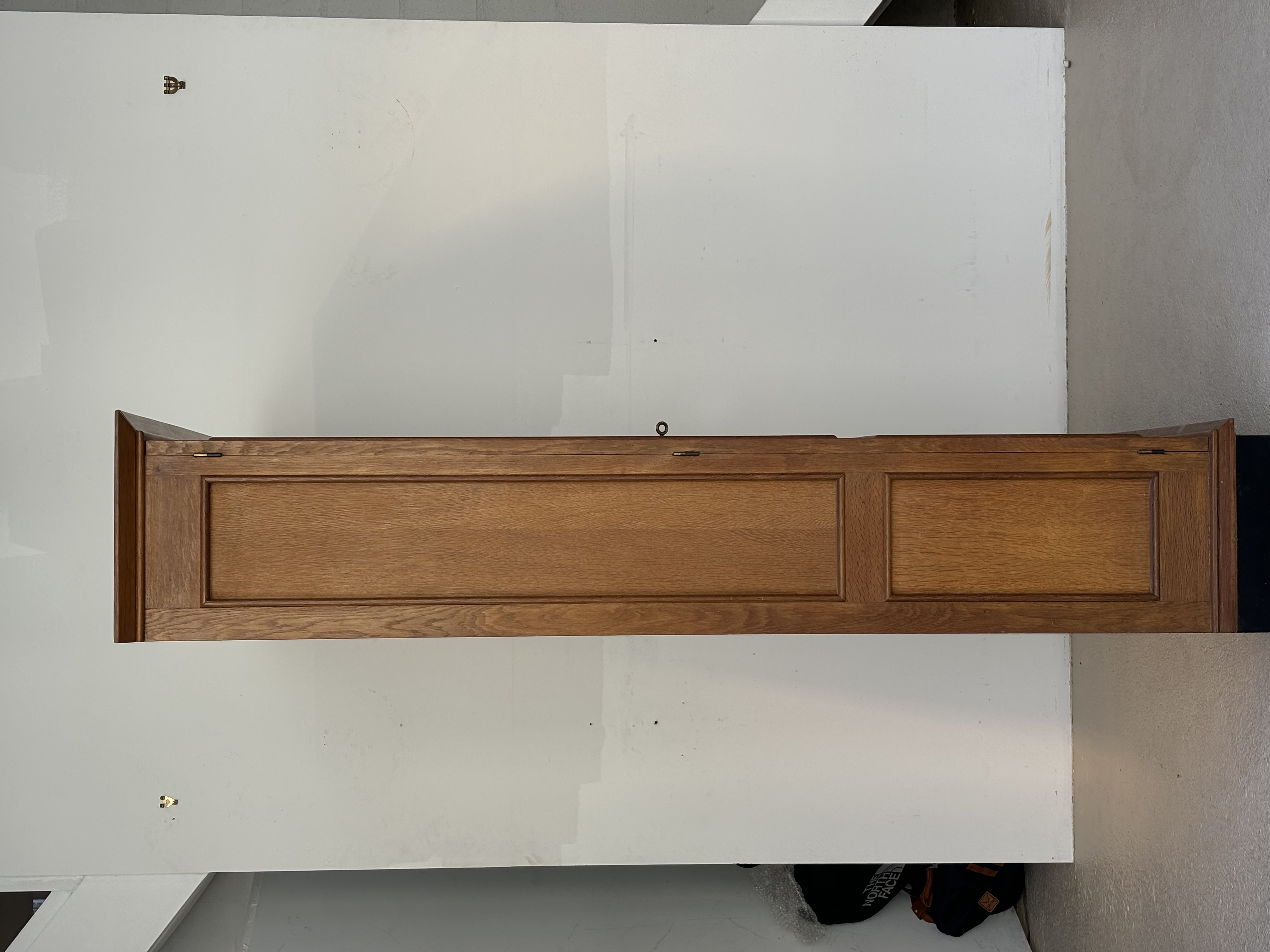
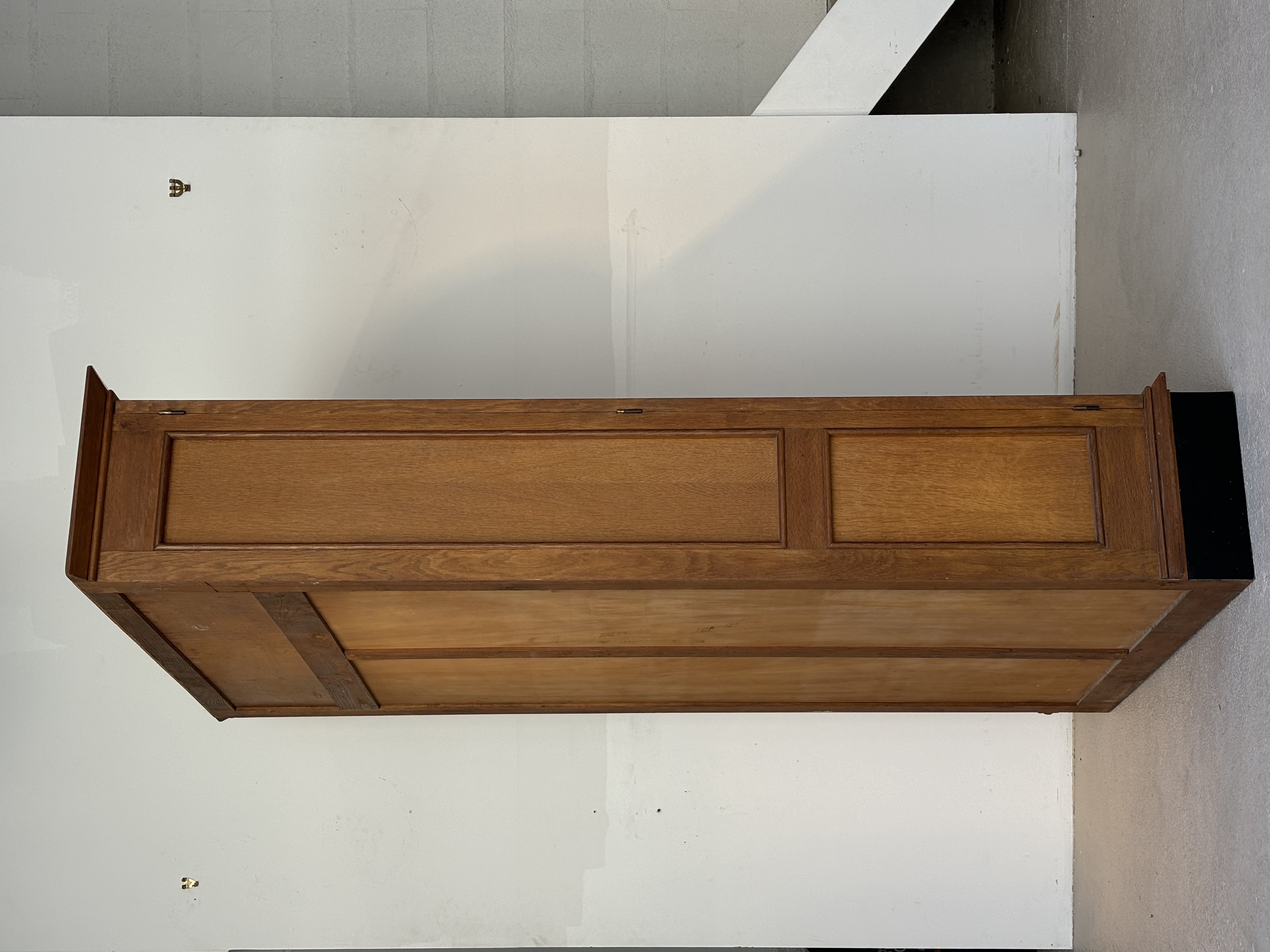
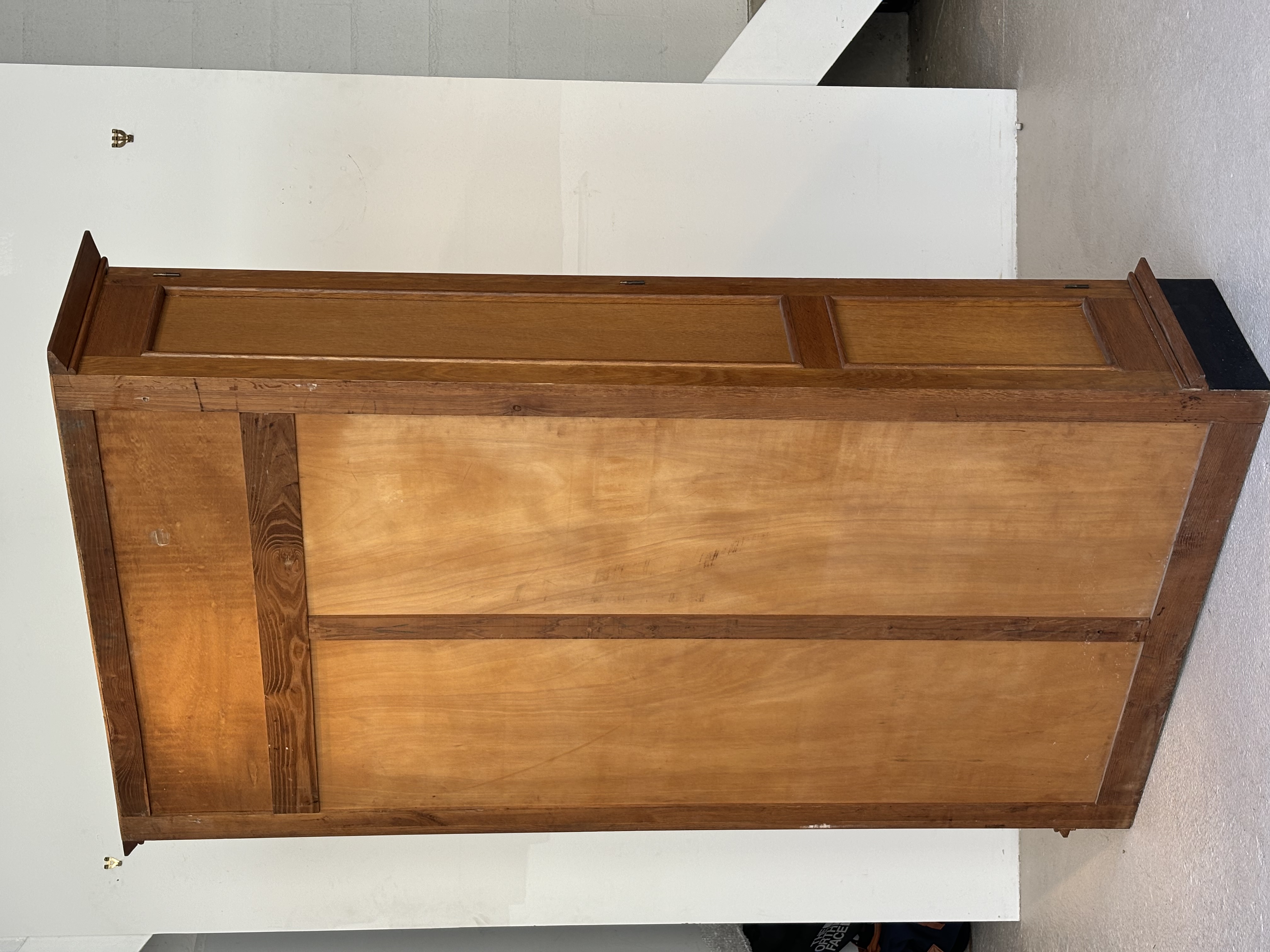
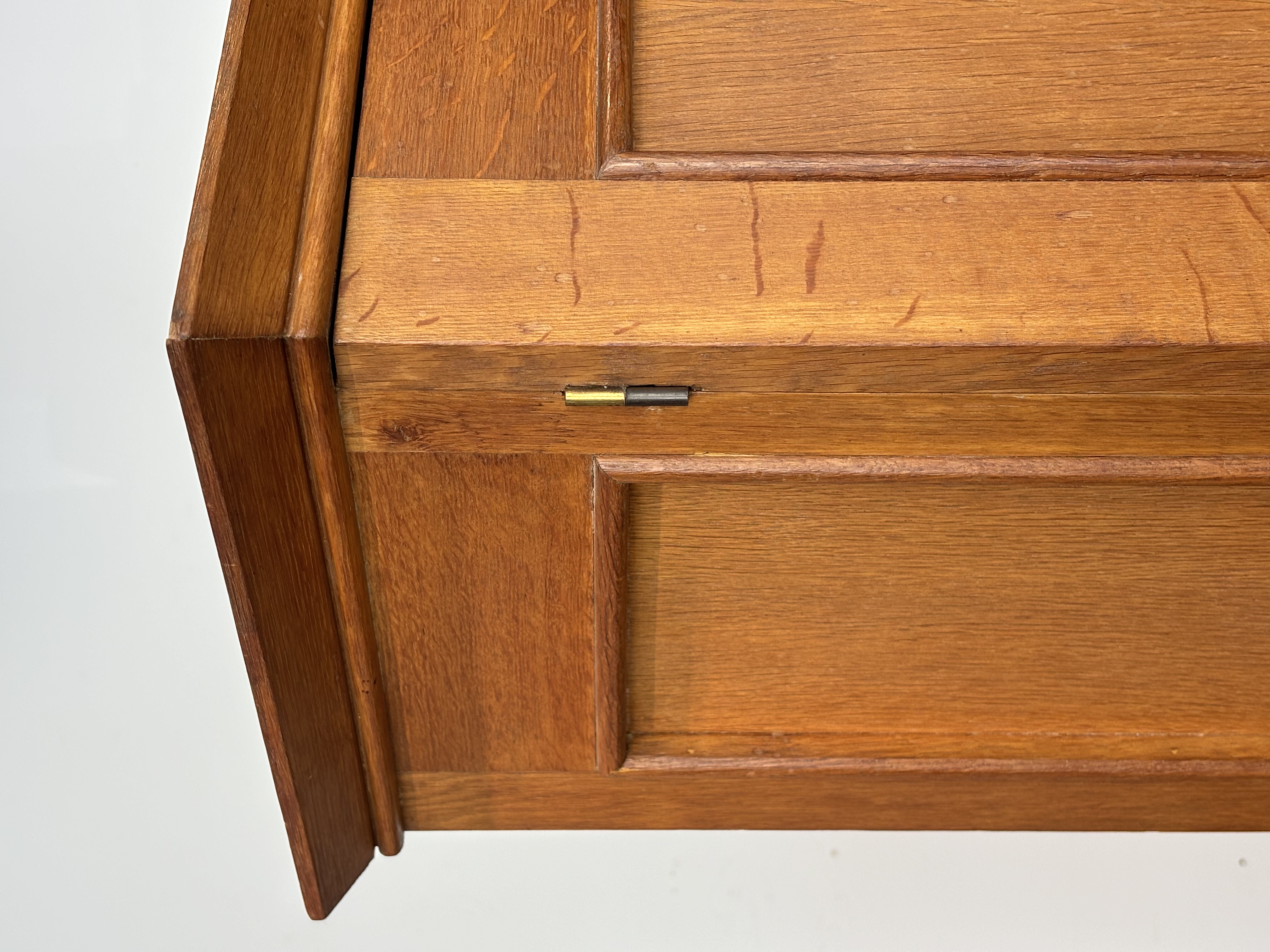
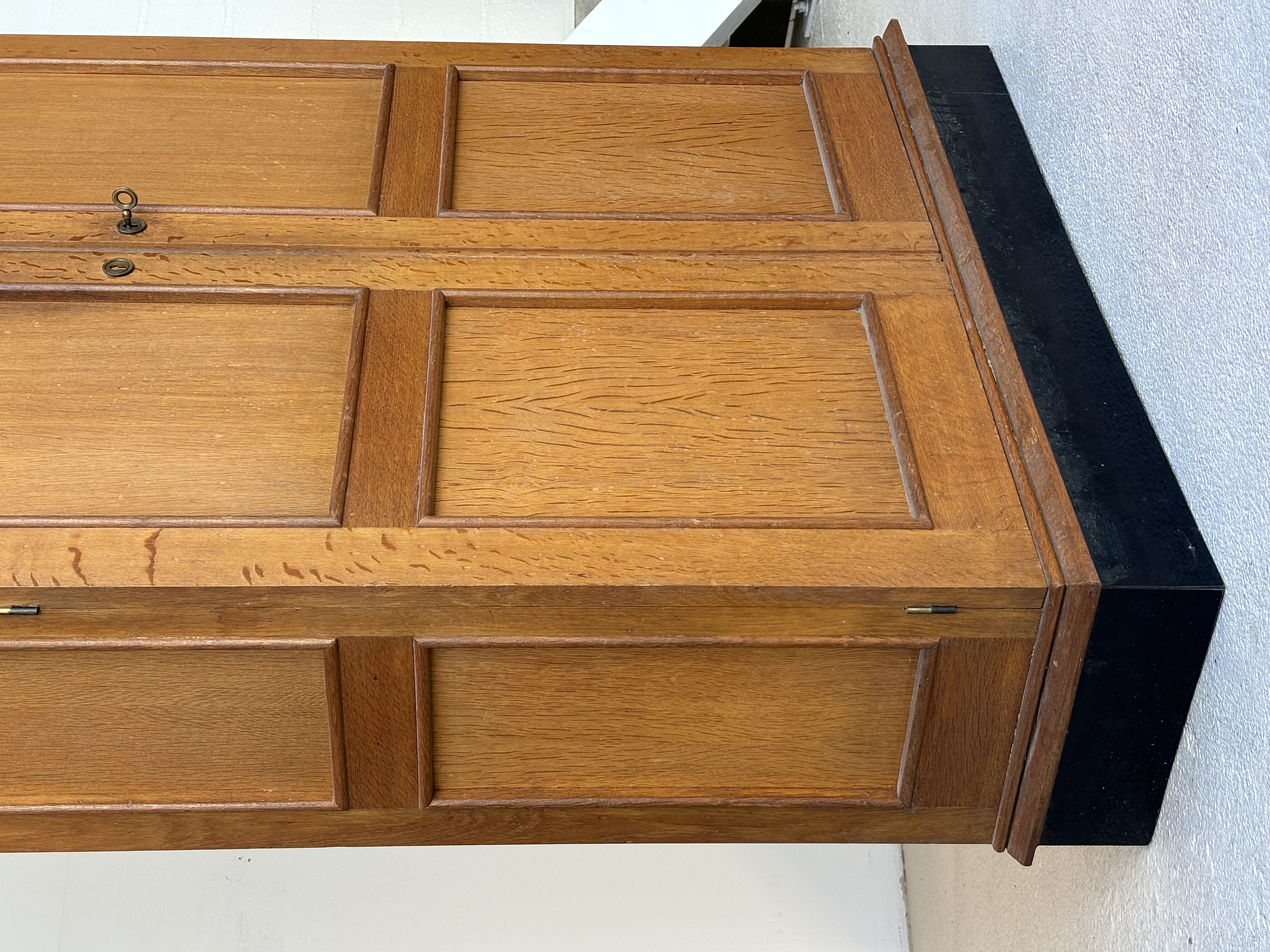
Beautiful wardrobe by Jacques Adnet in oak with Formica veneered legs
After secondary school in Auxerre, Jacques Adnet entered the School of Decorative Arts at the age of sixteen. There he met, among others, Raymond Legueult . Once he had his diploma, he was hired by the decorators Tony Selmersheim and Maurice Dufrène ; it was there that he learned the art and technique of furniture making. When Maurice Dufrène was appointed director of "La Maîtrise" (the art workshop of Galeries Lafayette), Jacques Adnet followed him.
In 1925, at the International Exhibition of Modern Decorative and Industrial Arts , Jacques Adnet exhibited ceramics (created with his brother Jean and signed "JJ Adnet") at the "La Maîtrise" stand. During the second half of the 1920s, he continued to create furniture and objects typical of Art Deco [2] in collaboration with his brother Jean. In 1927, Jacques Adnet won the prestigious Blumenthal Grant [3].
Their paths diverged in 1928 when Jacques Adnet took over the management of the Compagnie des arts français, founded in 1919 by Louis Süe and André Mare (Jean Adnet remained at Galeries Lafayette). Jacques Adnet directed the Compagnie des arts français, whose motto was "Evolution within tradition" [4], until its closure in 1959.
Jacques Adnet sought to establish links between decoration and new inventions such as electricity, cinema, the automobile, and the airplane. As he stated, "Technique must follow inspiration, not precede it. The question is not only to make useful things, but to satisfy the eyes and then the soul. Certainly, one must submit to certain standards imposed by the materials, but start from there to create something human." [5] Passionate about all the arts, he believed their interconnection was the key to success. Like a true conductor, Jacques Adnet sought collaborators in numerous disciplines such as glassmaking, jewelry making, goldsmithing, ironwork, sculpture, metalwork, etc., to form his new team.
He also creates personal works and is among the first designers to use metal and glass to make objects, lighting fixtures, or furniture; his preferred materials are chrome-plated or nickel-plated metal, mirrors, Saint-Gobain glass slabs often cast on a sand bed, and crystal.. wikipediaorg/wiki/Opaline" title="Opaline">opaline
The light fixtures designed by Jacques Adnet between 1928 and the late 1930s resemble nothing that had been created before and are resolutely modern; the art critic René Chavance calls them "lighting devices" [6] , they fit perfectly into the new line of modernist furniture and objects in metal and glass or mirrored glass set in a metal frame that Jacques Adnet created and where no detail is superfluous.
In 1937, Jacques Adnet (in collaboration with René Coulon) was commissioned to design the Saint-Gobain pavilion for the 1937 International Exposition of Arts and Technology. This veritable palace of glass showcased to the public the many applications of the various products developed by Saint-Gobain (the "marmotte" glass block, glass slabs cast on a sand bed, glass pavers, tempered glass). Jacques Adnet and René Coulon won five awards, including the Grand Prize for Architecture at the International Exposition of Arts and Technology in Modern Life.
When war broke out, Jacques Adnet believed it was his duty to help prevent the extinguishing of what Louis Chéronnet called "a torch that must continue to shine on the world: that of the artistic and creative genius of France" [7]. He played a fundamental role in supporting and helping artists by organizing annual exhibitions at the Compagnie des arts français. It was in this way that he commissioned Raymond Legueult to create a tapestry cartoon "L'atelier", which he published in 1942 [8]. After the armistice, things had changed, and Jacques Adnet underwent a stylistic shift. After his modernist creations of the 1930s, he turned towards tradition and neoclassicism, creating furniture in precious wood or lacquer in which ironwork played an important role; To this end, he invited sculptors such as Emmanuel Auricoste , Paul Belmondo , and Hubert Hencesse to create elements (bases, fittings, etc.) for his furniture. He also reconnected with Alberto Giacometti and Diego Giacometti , whom he had known before the war and who, freed from their contract with Jean-Michel Frank by the latter's death in 1941, collaborated with the Compagnie des Arts Français , which now produced the lamps, floor lamps, and other objects they had designed for Jean-Michel Frank. Between 1947 and 1949, Jacques Adnet presided over the Salon des Artistes Décorateurs (Salon of Decorative Artists).. wikipediaorg/wiki/Ska%C3%AF" title="Skaï">skaï (from 1955) saddle stitching One [Who?] can find desks, consoles as well as chairs, tables, lamps or floor lamps
In 1958, Jacques Adnet was appointed an Officer of Arts and Letters by General de Gaulle, then President of the Republic.


 0677504552
 galeriephare@yahoo.com