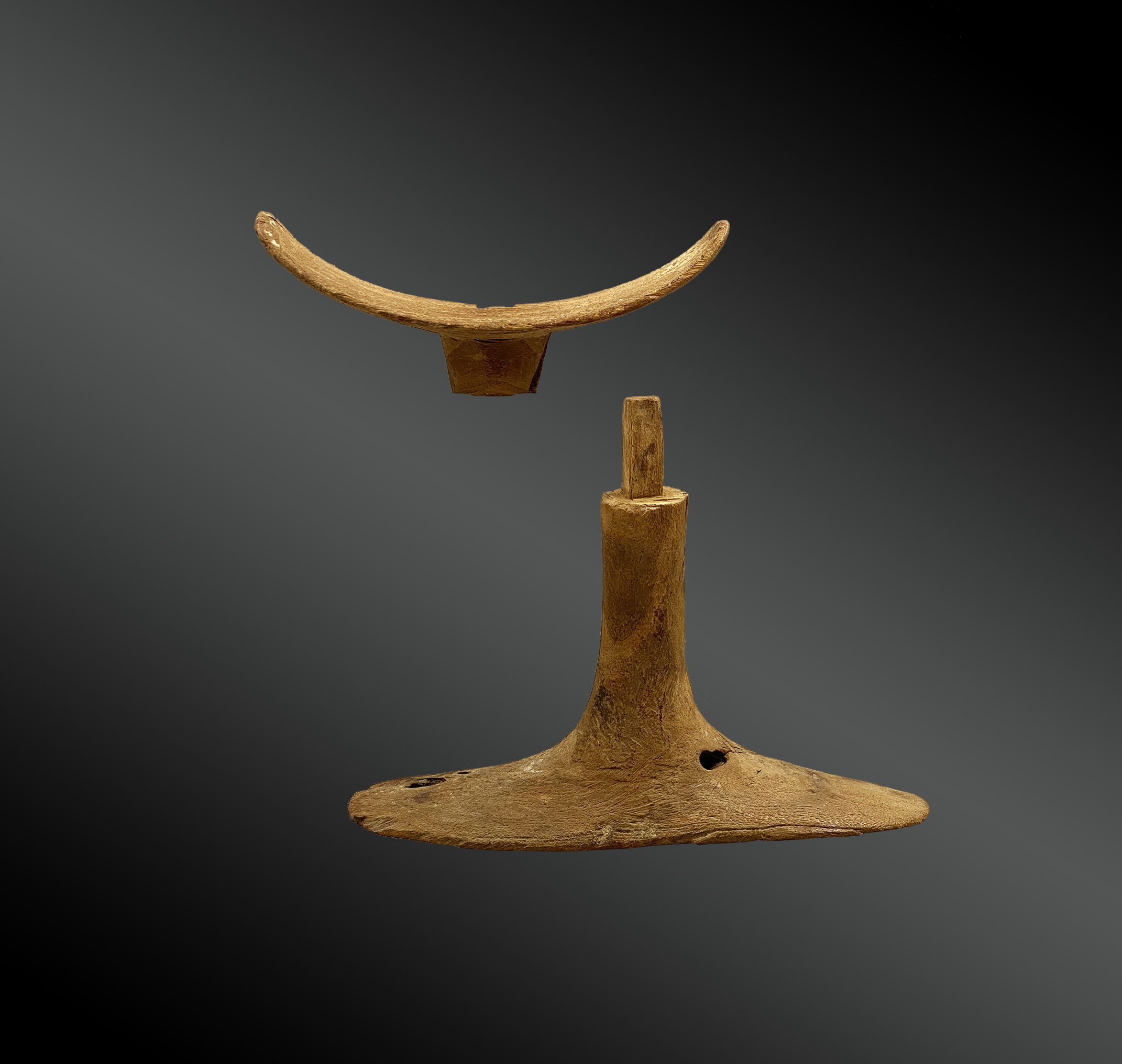
NECK REST
Egypt
Old Kingdom (4th to 6th dynasties (approx. 2630 - 2250 BC)
Wood
H: 19.5; L: 21; Thickness: 7 cm
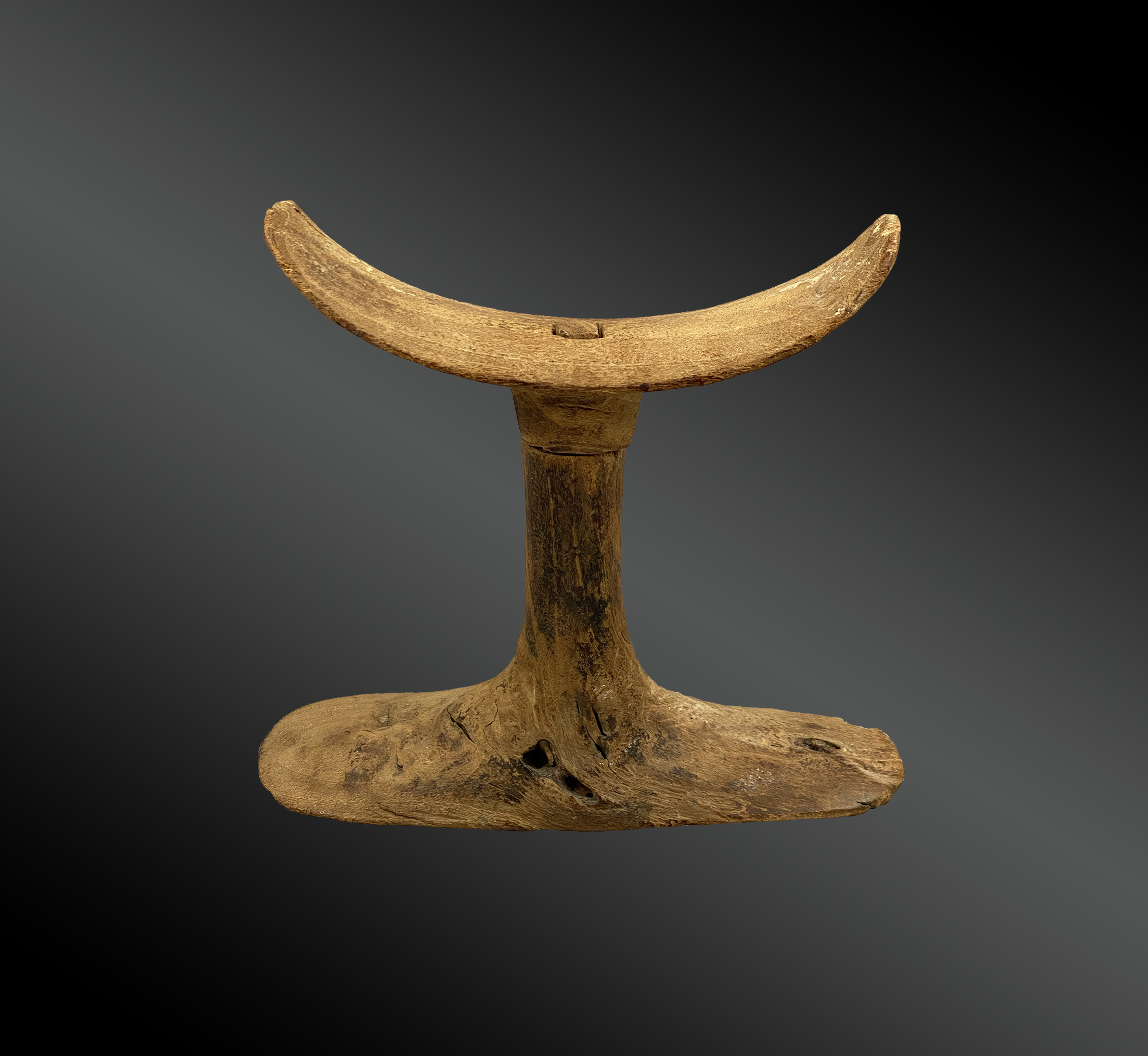
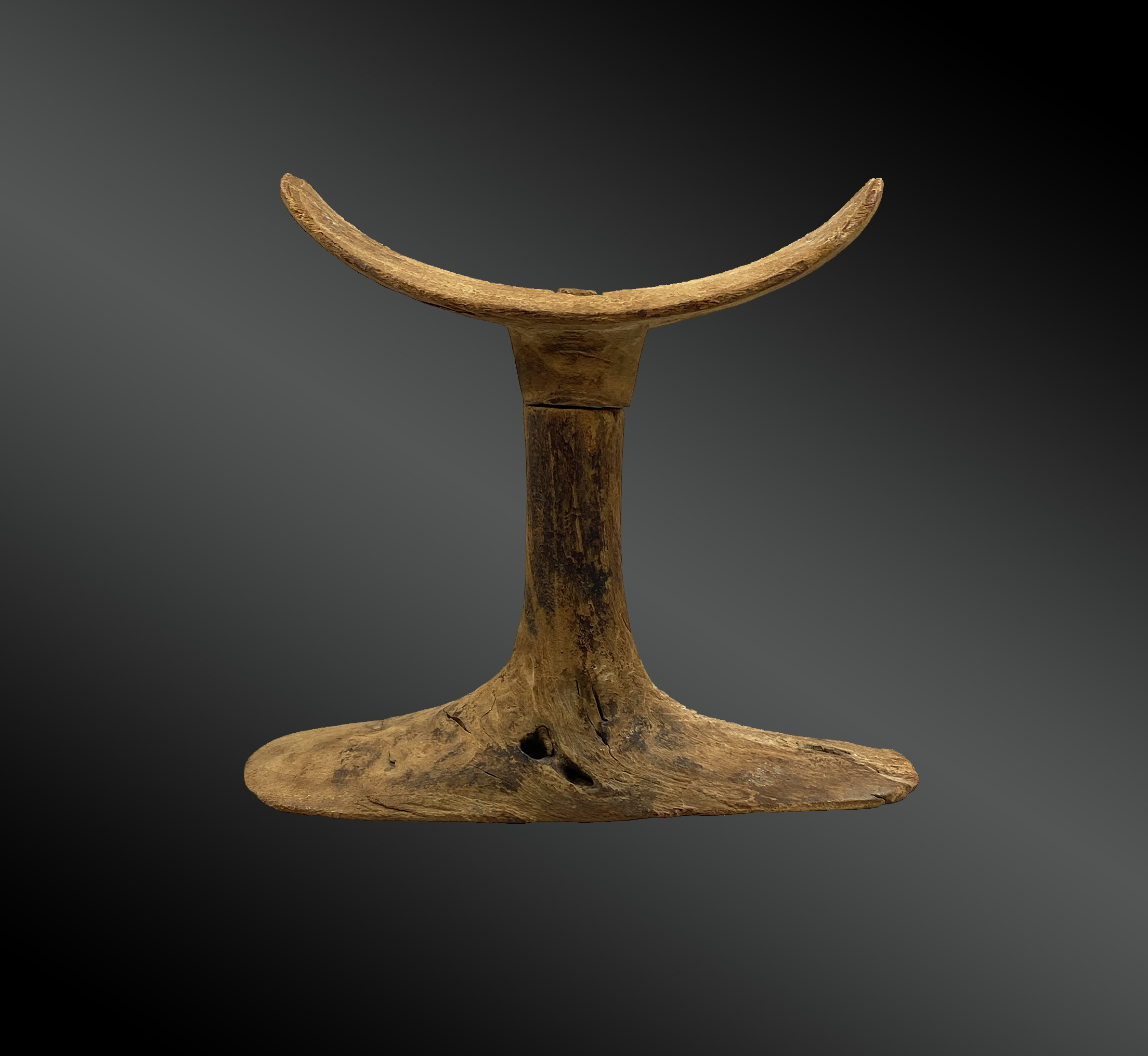
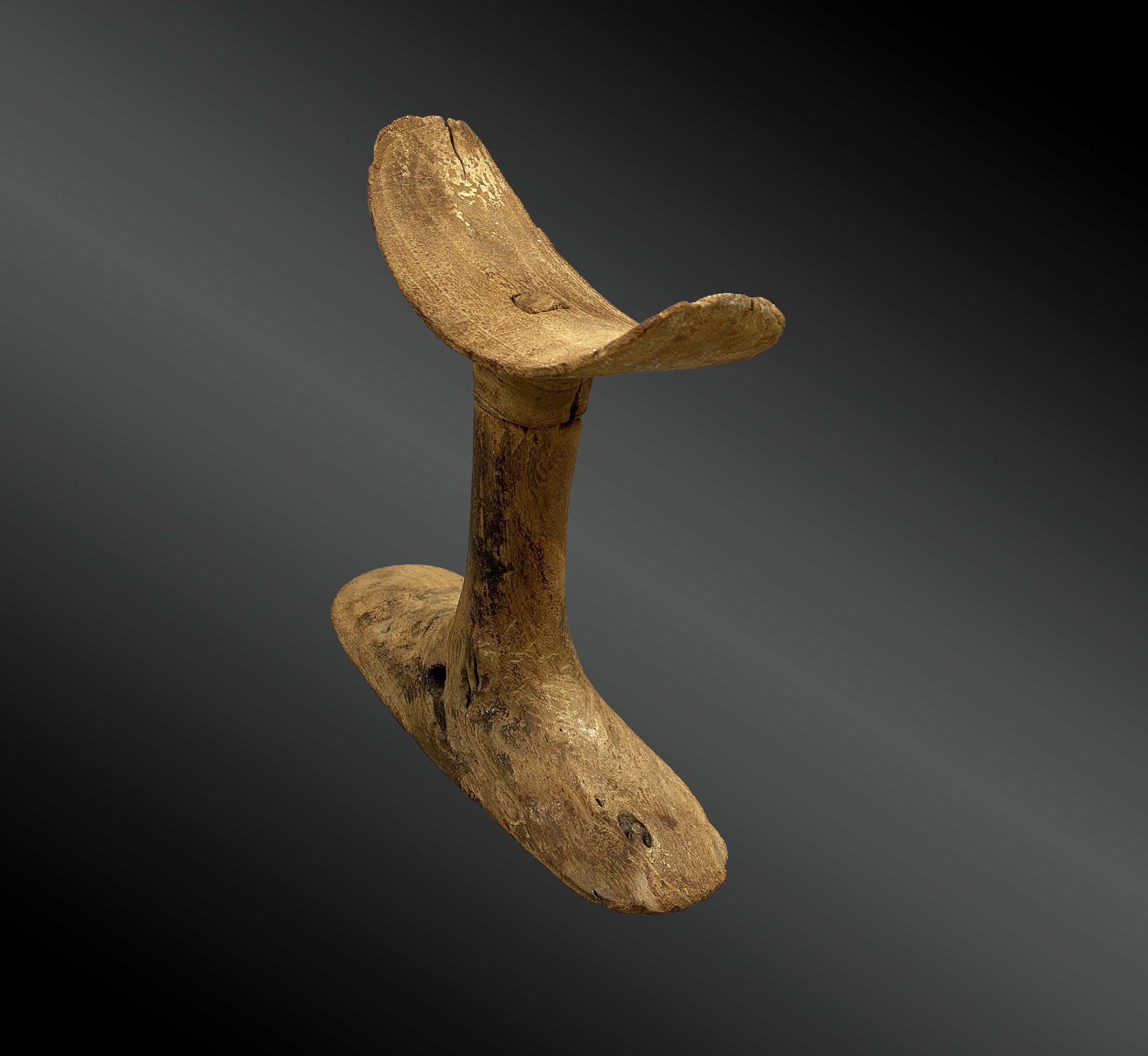
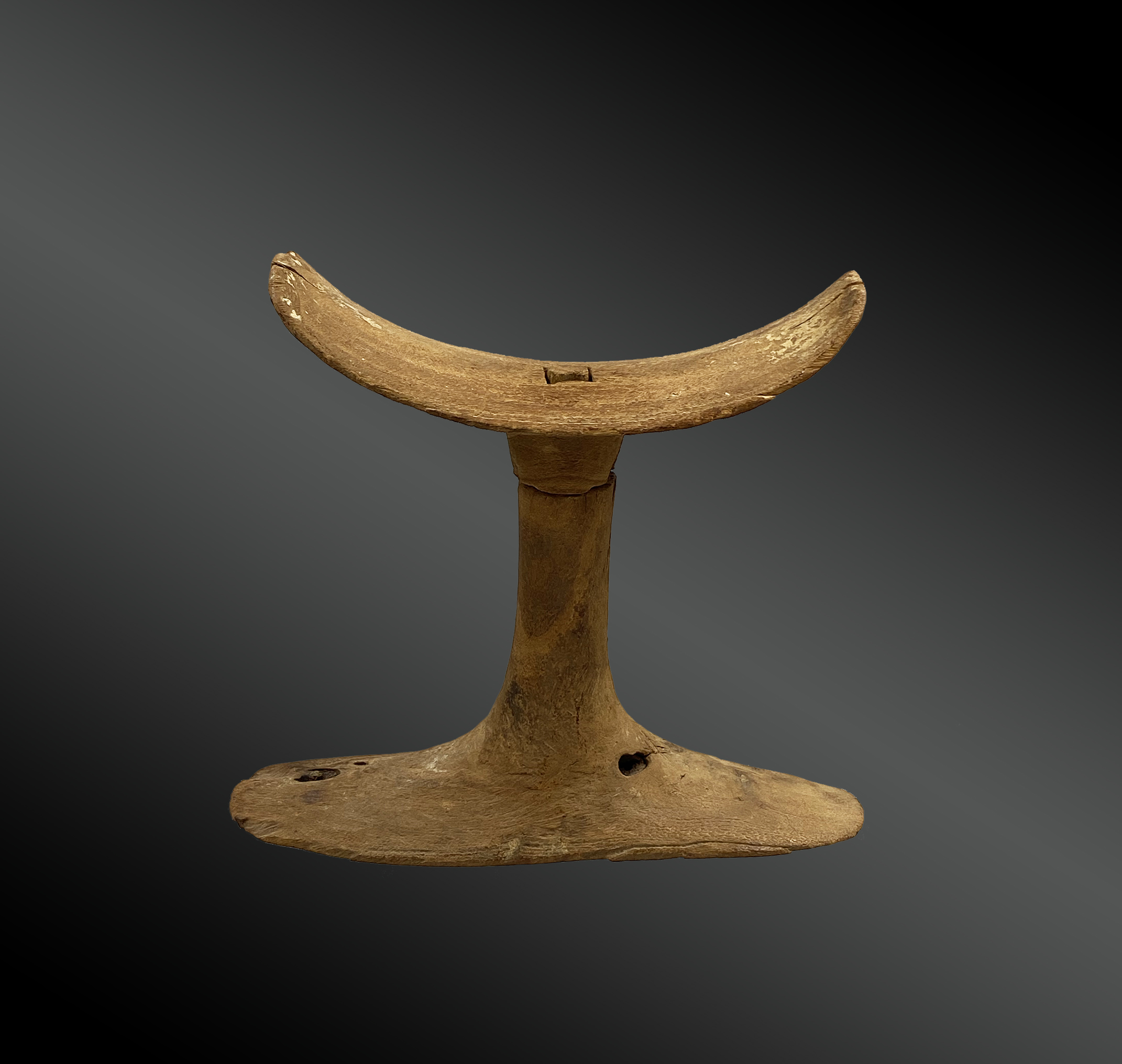
This wooden neckrest can be disassembled into two parts. The flat base tapers into a cylindrical post. The upper part serving for the rest of the neck, and therefore of the head, is flat, of the same width as the base. The side ends are this time slightly raised in two small ears.
This assembly is based on the mortise technique: the amount of the neckrest is carved into a notch of square section constituting the tenon; the headrest fits into it.
Small funerary furniture, headrest or bedside, this neckrest has different names. It could have daily use but also reserved for funeral activities.
In the first case, he had a protective role. The neck support, placed under the sleeper's head, guaranteed him to wake up soon while preserving him from all nightmares and harmful situations. In the second case, it served as a funeral accessory for the preparation and rest of the dead. Once mummified, the head of the deceased was placed on the neckrest so as to elevate it twenty to thirty degrees. This was to prevent the head from detaching from the body over time.
This particular inclination also refers to a magical character. Indeed, beliefs want that if the head were detached from the body of the deceased, any resurrection was impossible.
Some also compare the shape of the upper part to that of the solar boat. Like the sun, Re led men from the East to the West. This ship refers to the perpetual cycle: the sun sets to rise again. Sleep and death are two similar states which each refer to a state of transition.
Thus, for the Egyptians, this continuous solar renewal was similar to that of life: man dies to live again.
Illustration: Scene of purification of the body before its mummification.
Text and photos © FCP CORIDON