Kriss knife
Malaysia, South East Asia
Around 1870
Wood, ivory, iron and metal
Long. total 37 cm; Long. scabbard: 31 cm
Long. blade: 25.5 cm; Long. handle: 7 cm
(old slot on the scabbard)
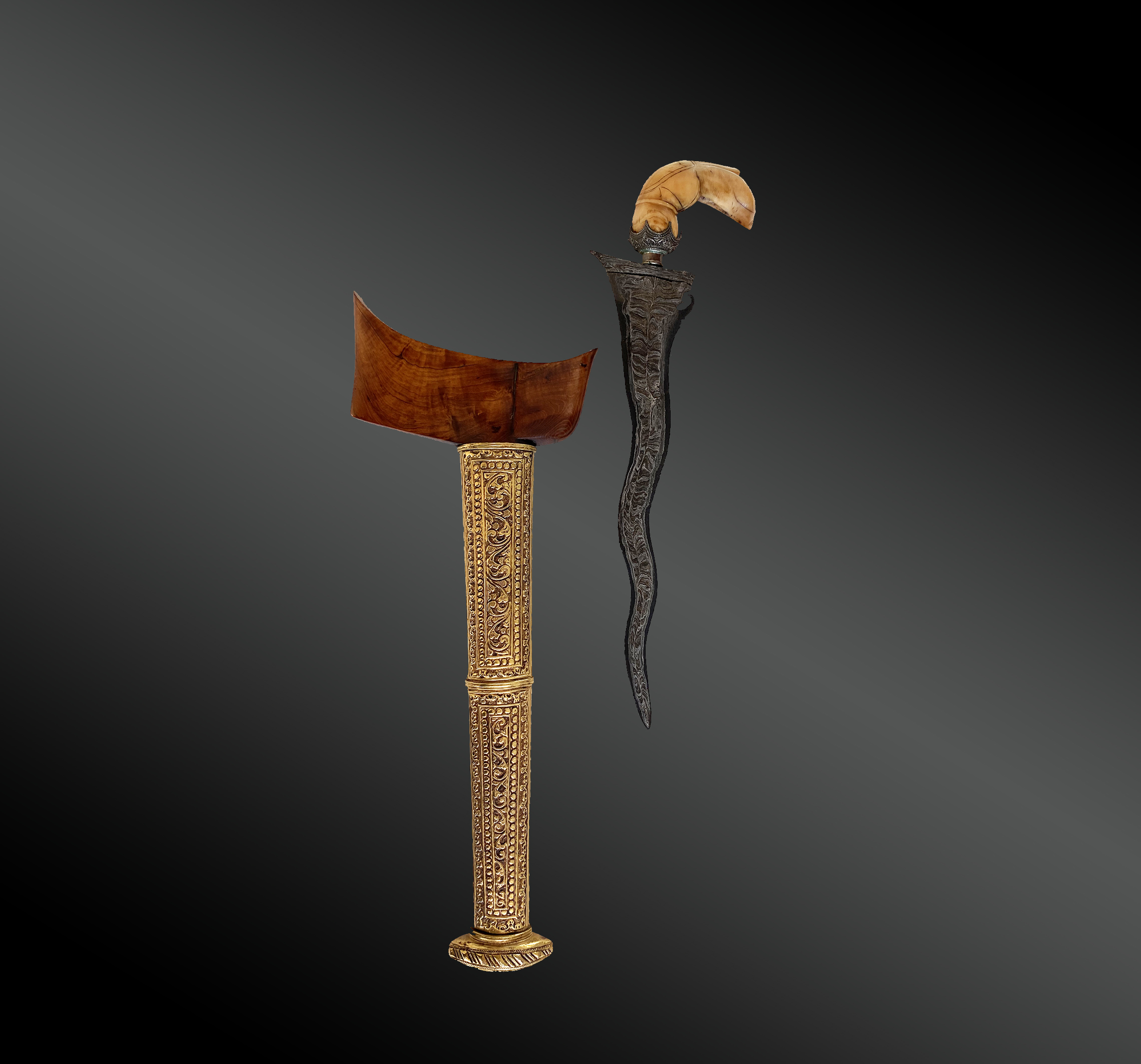
The handle, called ukiran, is carved ivory in the shape of a butt and incised with a foliage decoration. The upper part of the scabbard, called wrangka, is made of veined wood, with a shiny patina, terminated in two tapered side ears. The section constituting the body of the scabbard, called gandar, is made of wood with an oval section entirely covered with gilded metal with embossed decoration.
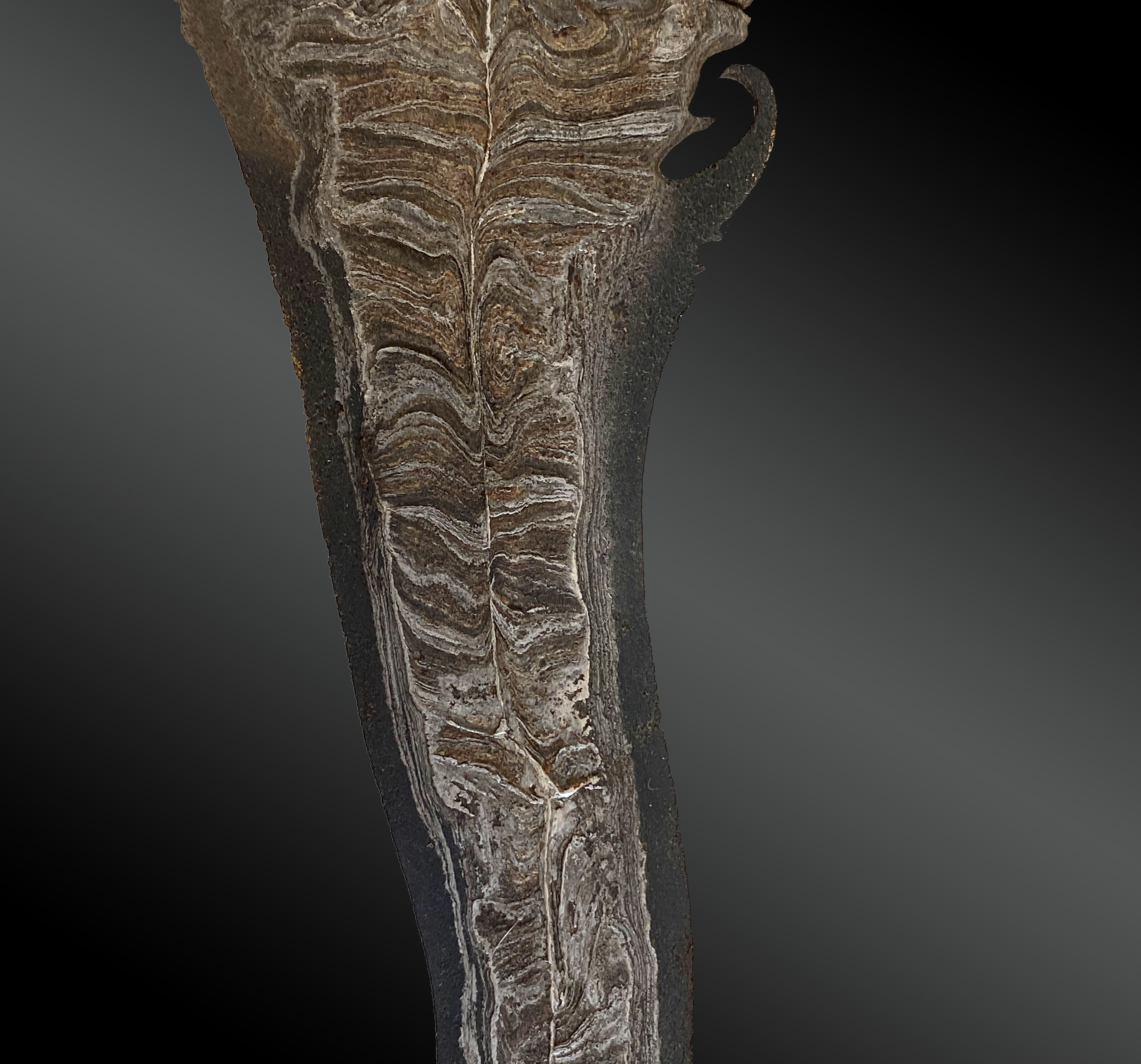
The double-edged blade is wavy. A ring in silvery and alevéolé metal, called a mendak, marks the junction between the ukiran and the blade.
The kris is a truly masculine weapon. Social and wealth marker, it was also the object symbolically offered to a young boy who became a man.
The more the blade was worked and the more the handle made of noble materials, the higher the rank of its owner.
Ukiran, carved in an anthropomorphic way almost systematically, is considered an allegory of its owner. Thus, the head would be the hilt, the body, the blade, and the garment, the scabbard. Note that the traditional clothing of Balinese men is the sarong - the same name given to the sheath of the kriss.
Kriss, endowed with magical powers, is considered a vector of spirituality. It is transmitted by inheritance, which allows it to increase its power.
Text and photos © FCP CORIDON