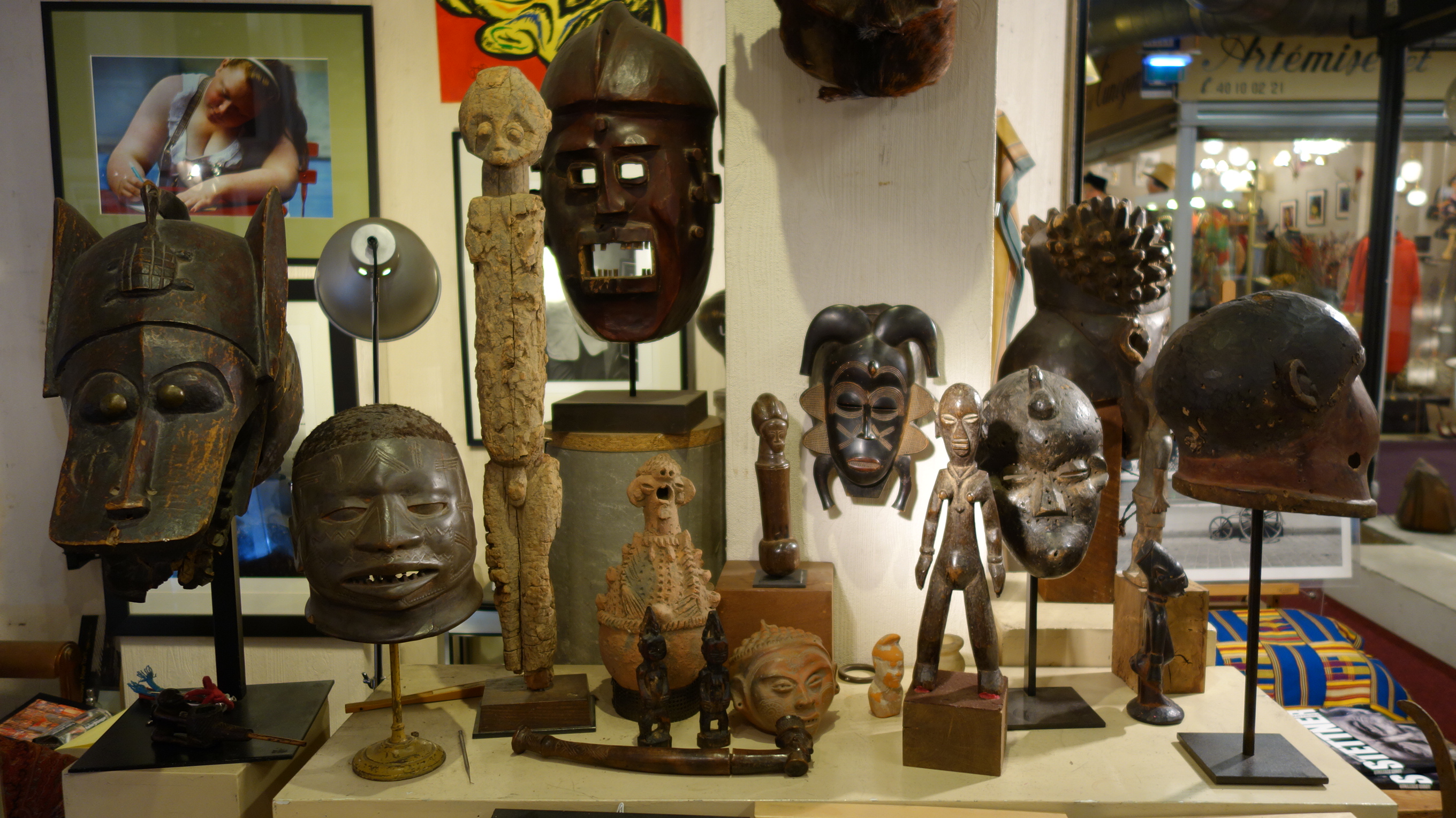
Fetishes, amulets, totems, masks, ... So many objects with strange shapes come from other countries and sometimes loaded with magic: why are they so fascinating?
The expressiveness of the forms, the elegance of the lines, the power of the looks and their disturbing serenity retain all our attention
How to understand their patinated, crusty, repaired or nibbled appearance? How to distinguish inexorable traces of time, the marks of the ritual for which these objects were intended?
Objects of social representations or supernatural powers, the First Arts allow us to question the place of each one within the group and its relation to the world
Beyond the esthetics of forms and materials, masks and statues accompany the rites of passage as well as the agrarian celebrations and testify to the natural environment of cultures and their know-how
Picasso, who was one of the first collectors of early art and found in African statuary the confirmation of his stylistic researches: to represent the world as we know it, and not only as we see it. This distance from the representation Mimetic was at the heart of the modern artistic revolution.
By going beyond the limits of the eye, the artist will draw from one side to the other. He re-enchants the arts by capturing the bewitching power of these ritual objects.
Thus, the First Arts testify to the diversity of thinking the world and allow us to re-examine our own gaze.
Bibliography
Benoît de L'Estoile, The taste of Others From the Colonial Exposition to the First Arts , Field Trials, Flammarion, 2010
Our selection :
5) Himashal Pradesh Mask, India, mid-19th century, at Virgile Wahl-Boyer, stand 18, Alley 5, Serpette
6) Rare statuette N'kisi N'kondi, Congo, 30 years, at Josette Revellin, stand 6, alley 4, Serpette
8). Paulbert-serpettecom / catalog / categories / art-africain-arts-premiers / chaise-ethiopienne ">) A former Ethiopian chair, at the beginning of the 20th century, at Audrey Chevalier, stand 67,
10) Oceanian vessel (Maori?), Eighteenth century, at Didier Bénichou, stand 42, allée 1, Serpette