MALE FUNERAL MANNEQUIN called Tau-Tau
Toradja culture, Greater Sunda Islands, Sulawesi Island, Indonesia
Late 19th - early 20th century
Jackfruit wood, tin and pigments
H.: 132; L.: 31 cm
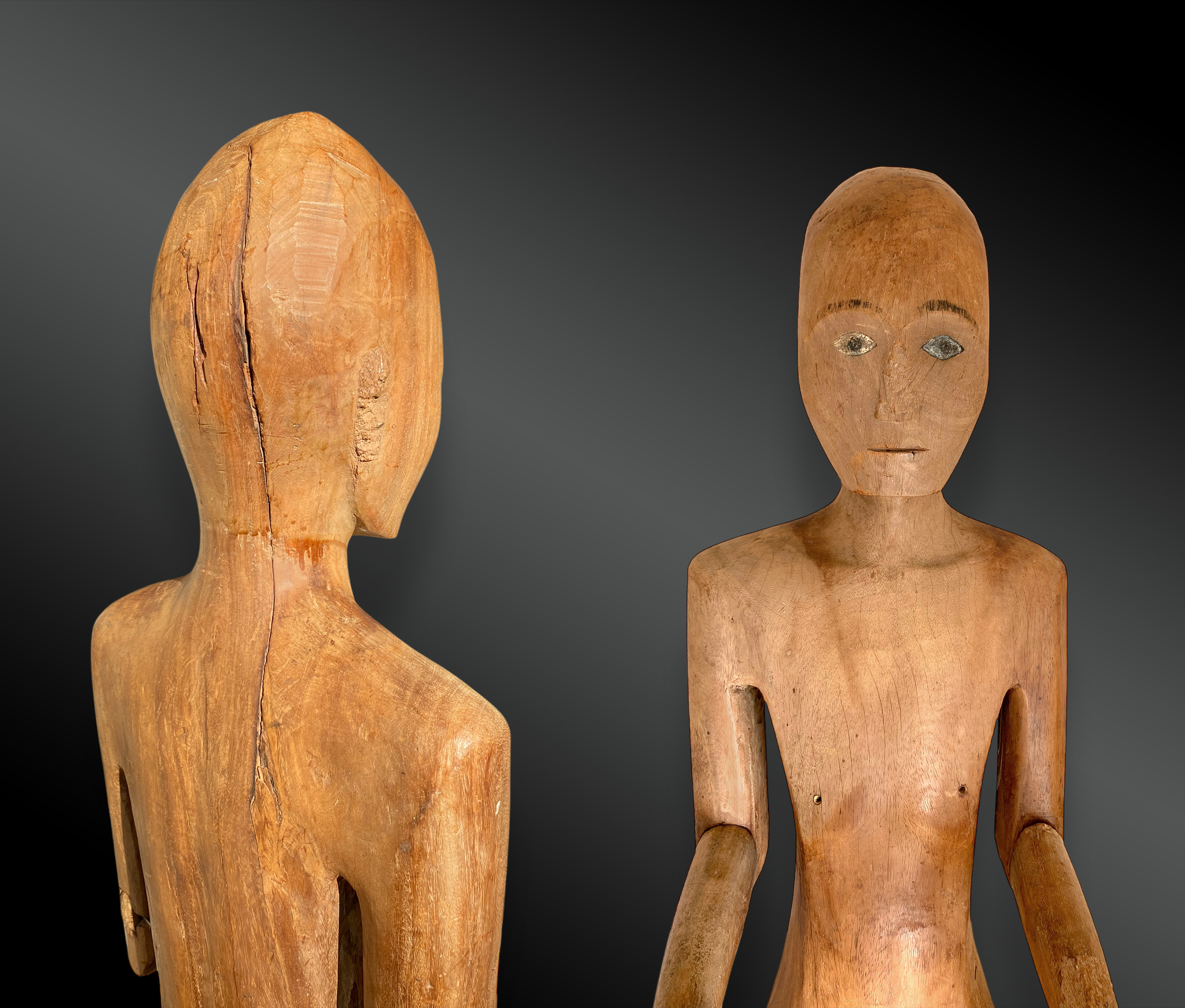
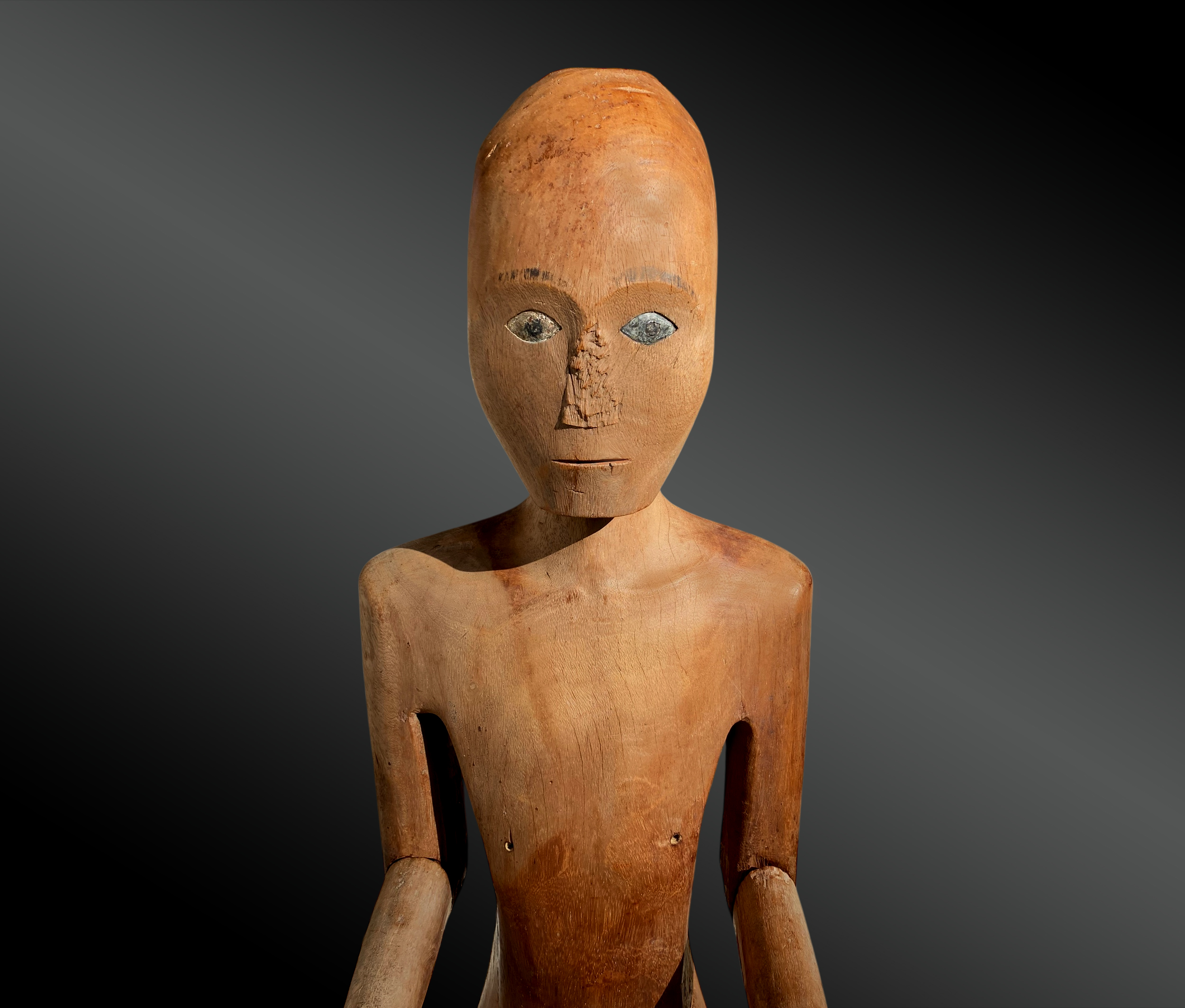
Anthropomorphic wooden sculpture, carved standing, removable forearms and hands outstretched in a gesture characteristic of Tau-Tau funerary sculptures.
From the oval head can be distinguished a pair of almond-shaped eyes inlaid with pewter inserts – the circular pupils are enhanced with black pigments; an incised mouth with thin lips, a skull top that must once have been topped with a bun and eyebrows elegantly painted with black pigments.
Jackfruit wood was reserved for sculptures of high dignitaries. The spiral body tattoos painted with black pigments on both calves also reflect the high social rank of the individual represented.
These effigies, considered to be funerary guardians, intercessors between heaven and earth and protectors of life and men, were placed at the entrance to tombs on the edge of cliffs.
Formerly dressed in the complete sarong dodo, baju to dolo jacket and seppa tallu buku panties or in a kain mawa fabric, they could be either masculine or feminine – depending on the deceased represented.
A headdress or hair could also adorn the top of the character's head. The movable forearms made it easier to dress it.
Tau means "person" or "man". The repetition Tau Tau refers to the idea of image combined with its resemblance to an identity. Thus, these statues are the representations of deceased men and women - which a priest, with the help of his songs, could animate. Indeed, following a ritual and a procession, the dressed mannequin received the soul of the deceased. It thus became more than a funerary portrait: a form of reincarnation of the living, or even of a divinized ancestor by reaching the status called "deata".
Origins:
- Manfredi Gallery
- Private collection, Paris.
- On base.
Text and photos © FCP CORIDON
Ref.: 5070