INRŌ signed Shokasai and Shibayama
Japan, Edo period (1603-1868) or even early Meiji (1868-1912)
19th century
Lacquer, copper, mother-of-pearl and silk cord
H.: 8.5; W.: 6.5 cm
(Very slight accident inside a compartment)
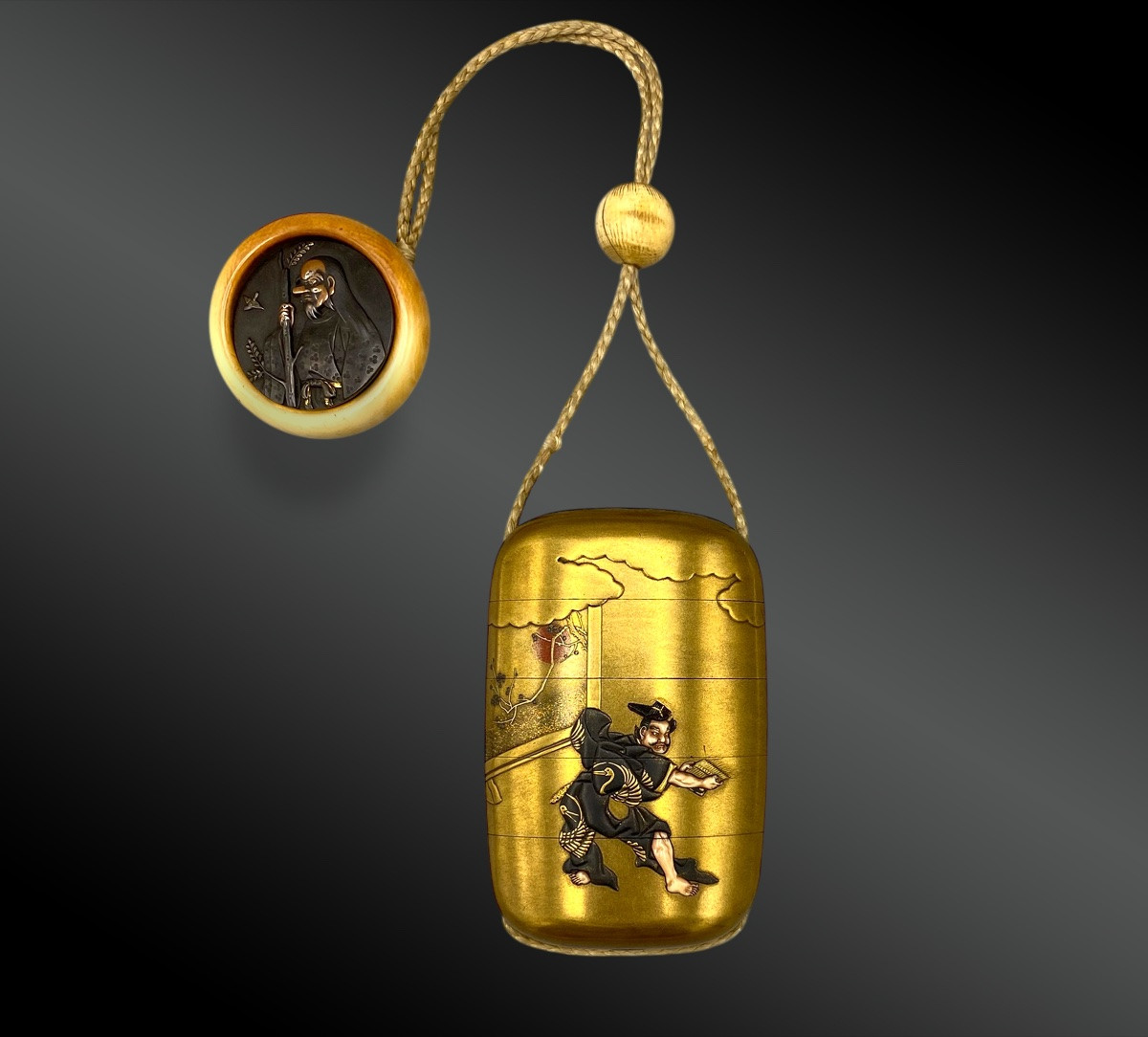
Also called a medicine box, the inrō is a kimono accessory whose various superimposed compartments allowed the carrying of small everyday objects - the kimono being a garment without pockets.
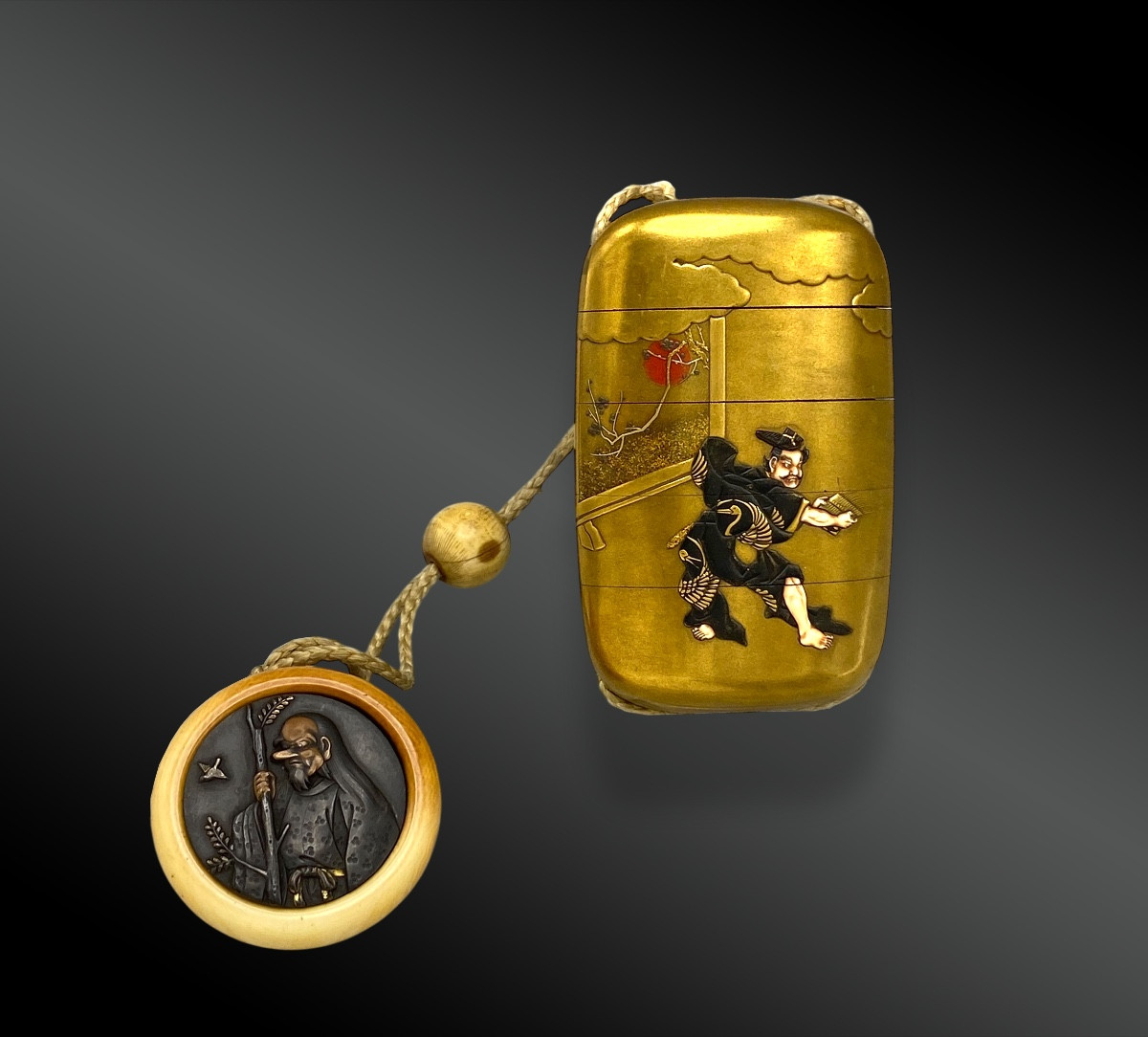
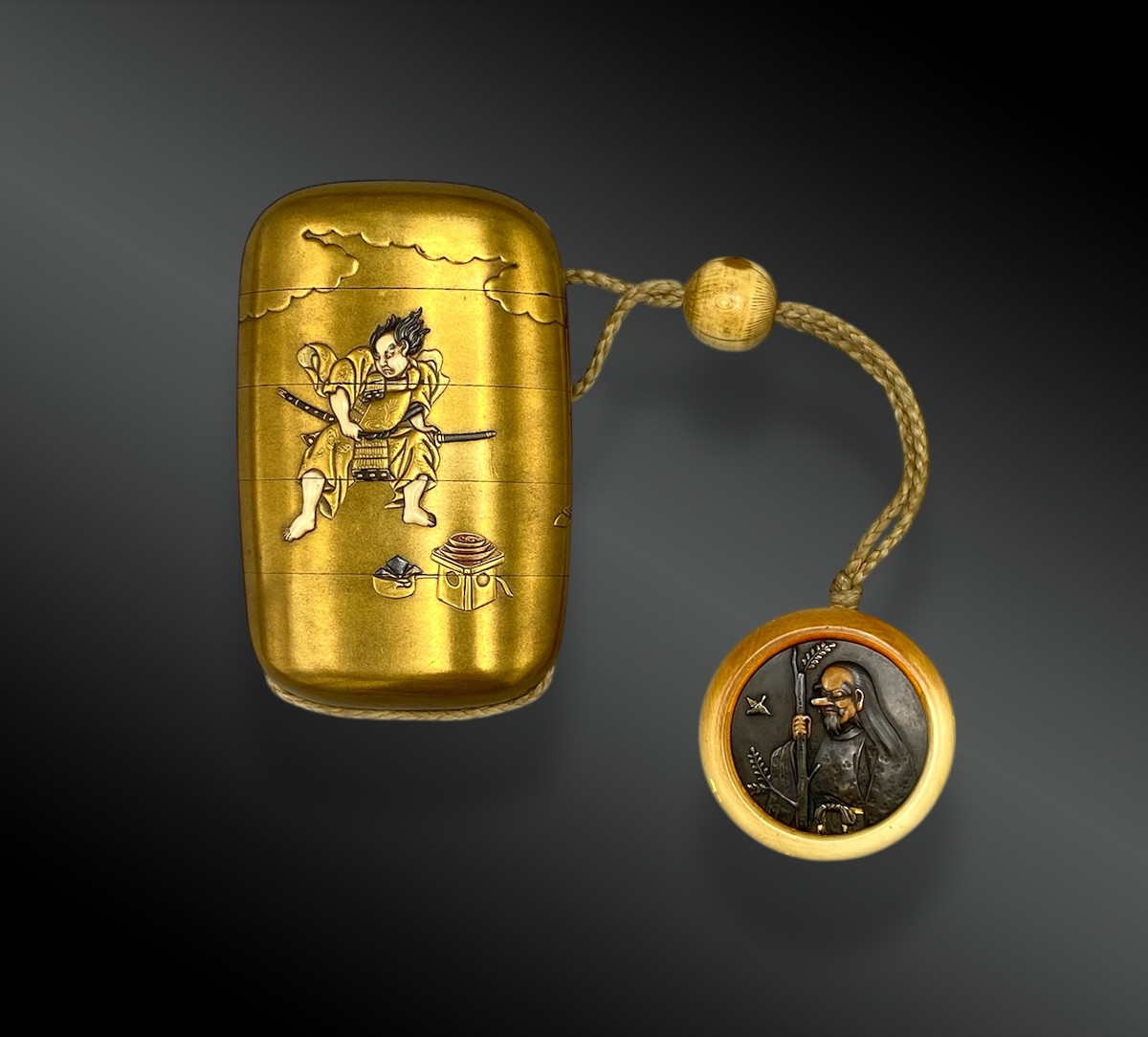
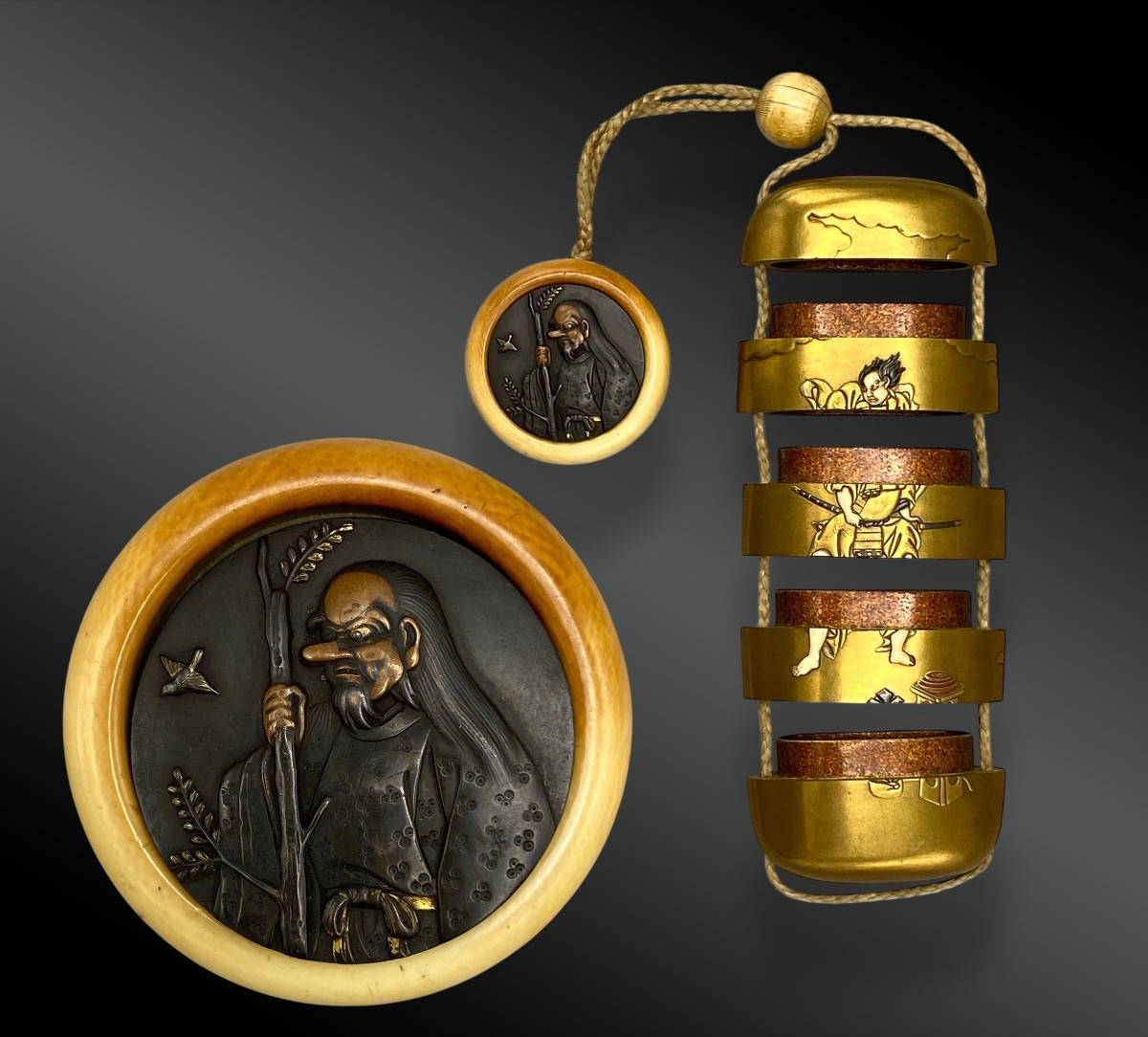
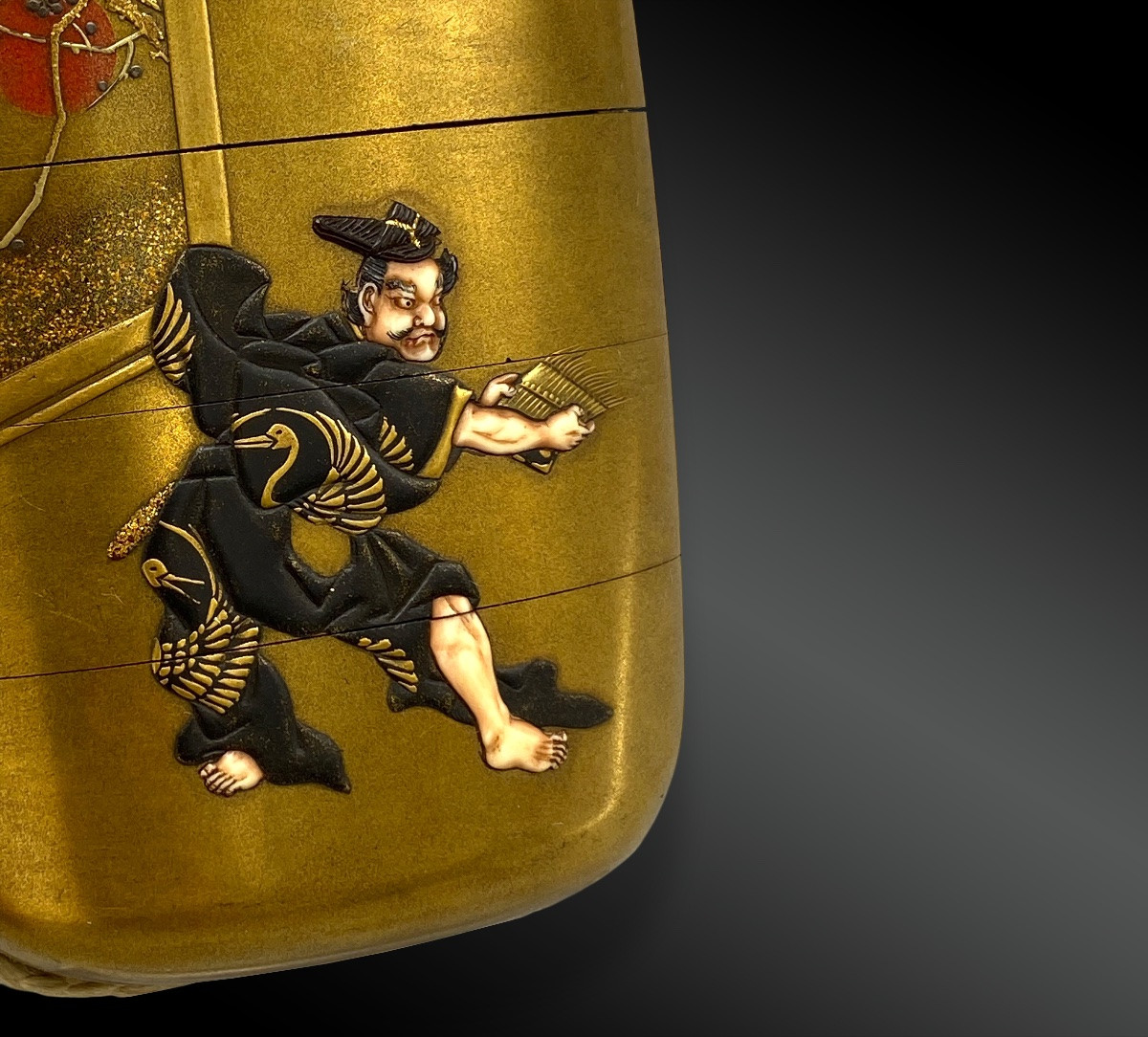
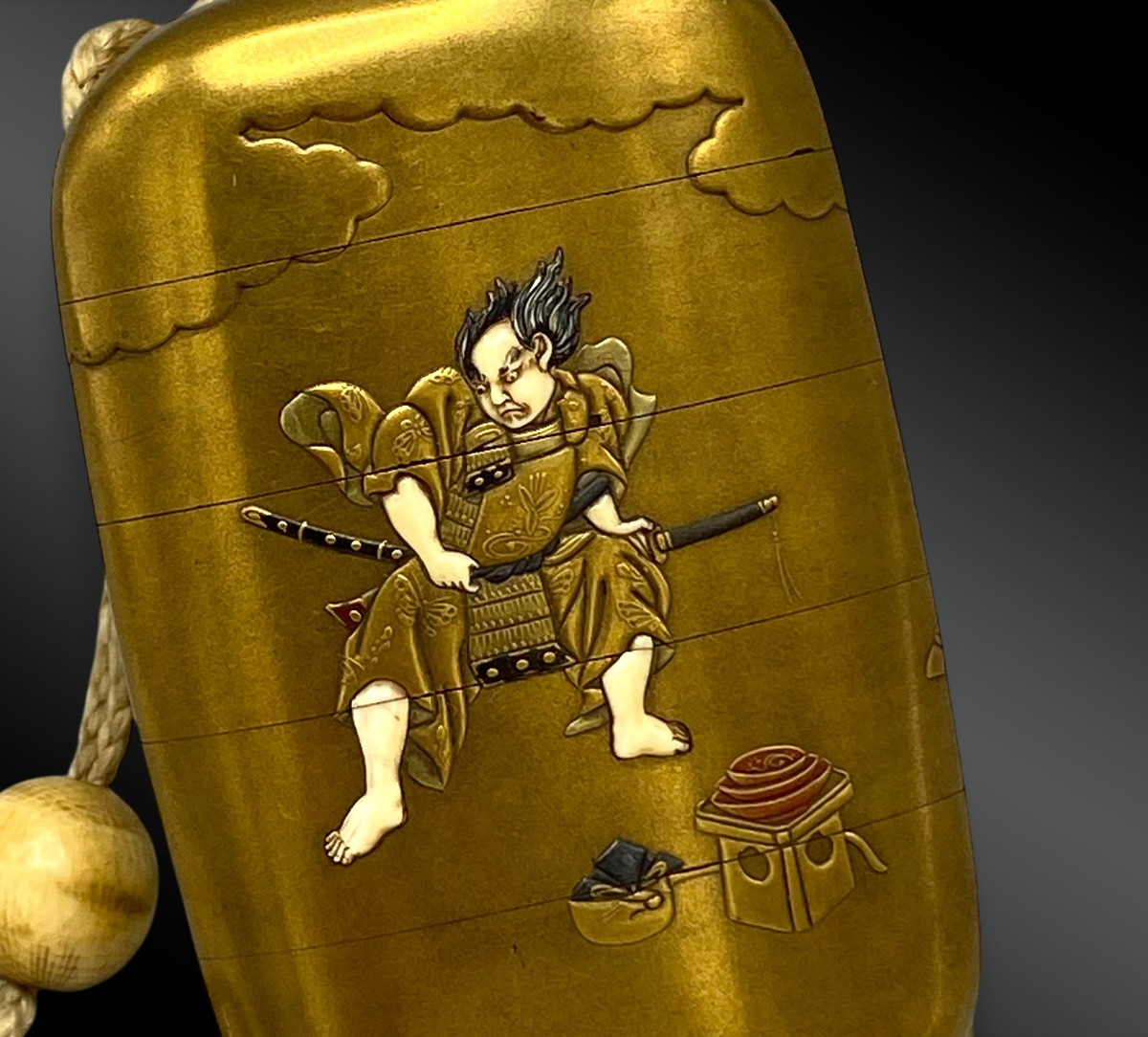
This one has four compartments, made of kinji lacquered wood in shibayama. This decorative technique is applied, combining several different materials. Indeed, the visible body parts of the two dueling samurai, depicted individually on each side, are in bas-relief, applied and enhanced with pink pigments. Their outfits are finely decorated with cranes for one and butterflies for the other. The two warriors both evolve under a cloudy sky in golden takamakie. The interior is ennashiji.
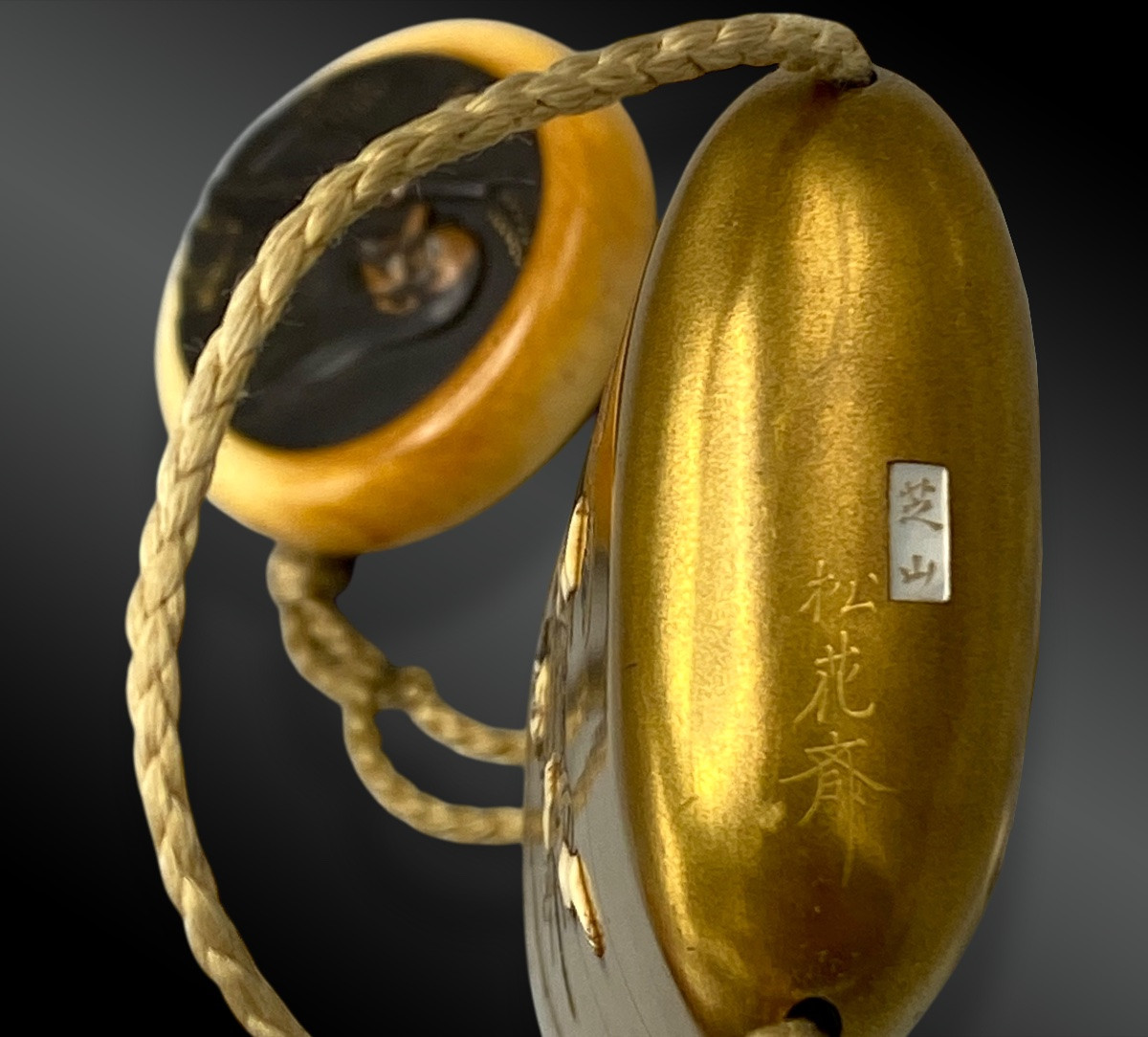
On the lower compartment are affixed the double signatures of the lacquerer Shokasai and Shibayama, who carried out all the applied decoration.
Each compartment conceals two internal lateral holes into which the braided silk suspension link is slipped. The intermediate round bead is called the ojime. The netsuke, of the kagamibuta type, is lenticular in shape, split in two to form a small round box. It is decorated with a round copper medallion covered with sentoku depicting Tengu, his belt enhanced with gold and his face turned towards a small bird in flight.
The use of the netsuke refers to a very particular use when wearing the kimono. Indeed, and we have seen it previously, this traditional Japanese garment does not have a pocket, but it has neither closure, nor button placket, nor loop either. Thus, a wide ribbon of fabric closed by knotting, called the obi, served as a belt and kept the kimono closed. It was from the obi that the inrō was suspended and the netsuke, attached to the end, and placed above the upper edge of the belt, blocked the object. It thus played the role of cleat or counterweight.
Bibliography: A copy by the same artist is kept at the Metropolitan Museum in New York and another at the Rijksmuseum in Amsterdam.
Text and photos © FCP CORIDON
Ref.LP5436