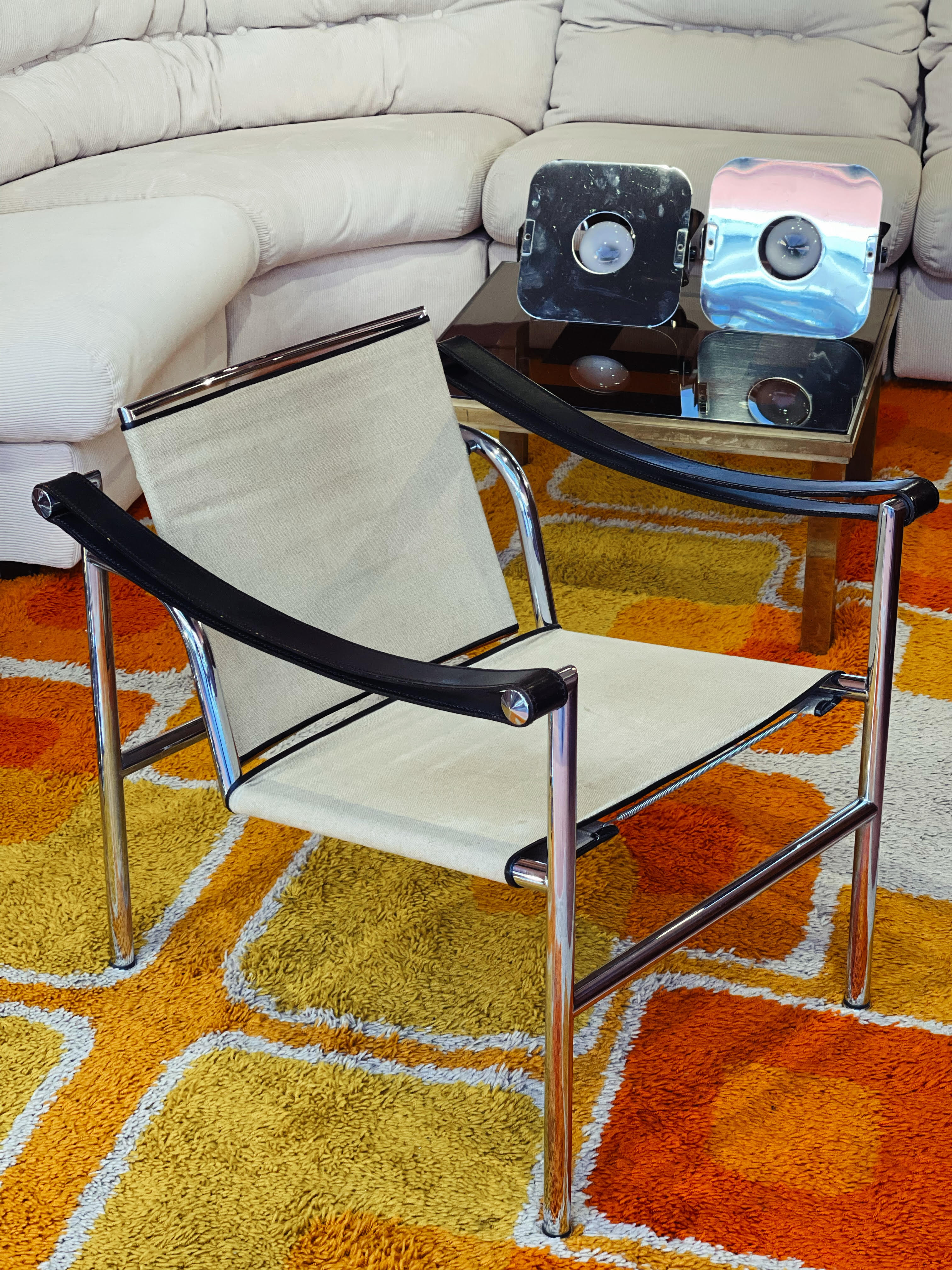
LC1: The armchair, manifesto of modernism
Designed in 1928 by Le Corbusier , Pierre Jeanneret and Charlotte Perriand, the armchair
LC1 is an iconic piece of modern design. Through its aesthetics
minimalist, its tubular steel structure and its approach focused on use, it
marks a decisive turning point in the way of thinking about furniture in domestic space.
A shared vision born from a unique collaboration
Before 1928, Le Corbusier relied mainly on existing furniture to furnish
his architectural projects, notably sober pieces produced by Thonet. But
That year, a major change took place: he fully launched himself into the
furniture design, in collaboration with his cousin Pierre Jeanneret and
architect-designer Charlotte Perriand. Together, they initiated an approach
innovative, inspired by the principles set out in the work Decorative Art
today, where Le Corbusier proposes a classification of furniture into three
categories: "typical needs", "typical furniture" and "member objects"
humans"
The LC1 is one of the very first pieces to come from this new approach. It
is part of a larger series, the LC collection, unveiled in particular during the
1929 Autumn Salon under the theme "Home Equipment". This
collection aims to offer furniture designed for a functional need,
rational and stripped of all superfluity.
An armchair at the service of the body
The LC1 does not just visually break with the furniture of the time. It
adopts a light and functional metal structure, with a suspended backrest
by a metal rod, capable of adapting to the movements of the back. This system
tilt allows for constant support and a comfortable posture, suitable for a
resting use, such as conversation or reading.
The choice of materials, natural leather stretched over a tubular steel structure, creates a
blend of industrial robustness and comfort. This contrast is what Le
Corbusier called it 'functional elegance'. A design that is both sober,
ergonomic and aesthetic.
An influence that spans the ages
The LC1 armchair has had a profound impact on the world of design. Its radical approach
of form and function has inspired many designers, from Mies van der Rohe
to Marcel Breuer, who will share this vision of modern furniture, designed for
use, without compromising on aesthetics.
Even today, his influence remains strong. Contemporary artists extends the visual and conceptual legacy of Le Corbusier, in
exploring shapes, lines and colors directly inspired by the
modernism.