ANTHROPOMORPHIC STATUETTE
Chupicuaro Culture, Acambaro, Guanajuato, Mexico
Preclassic period, around 600 to 100 BC.
Brown terracotta with red, cream and black slip
Height: 16.5 cm; Width: 10 cm
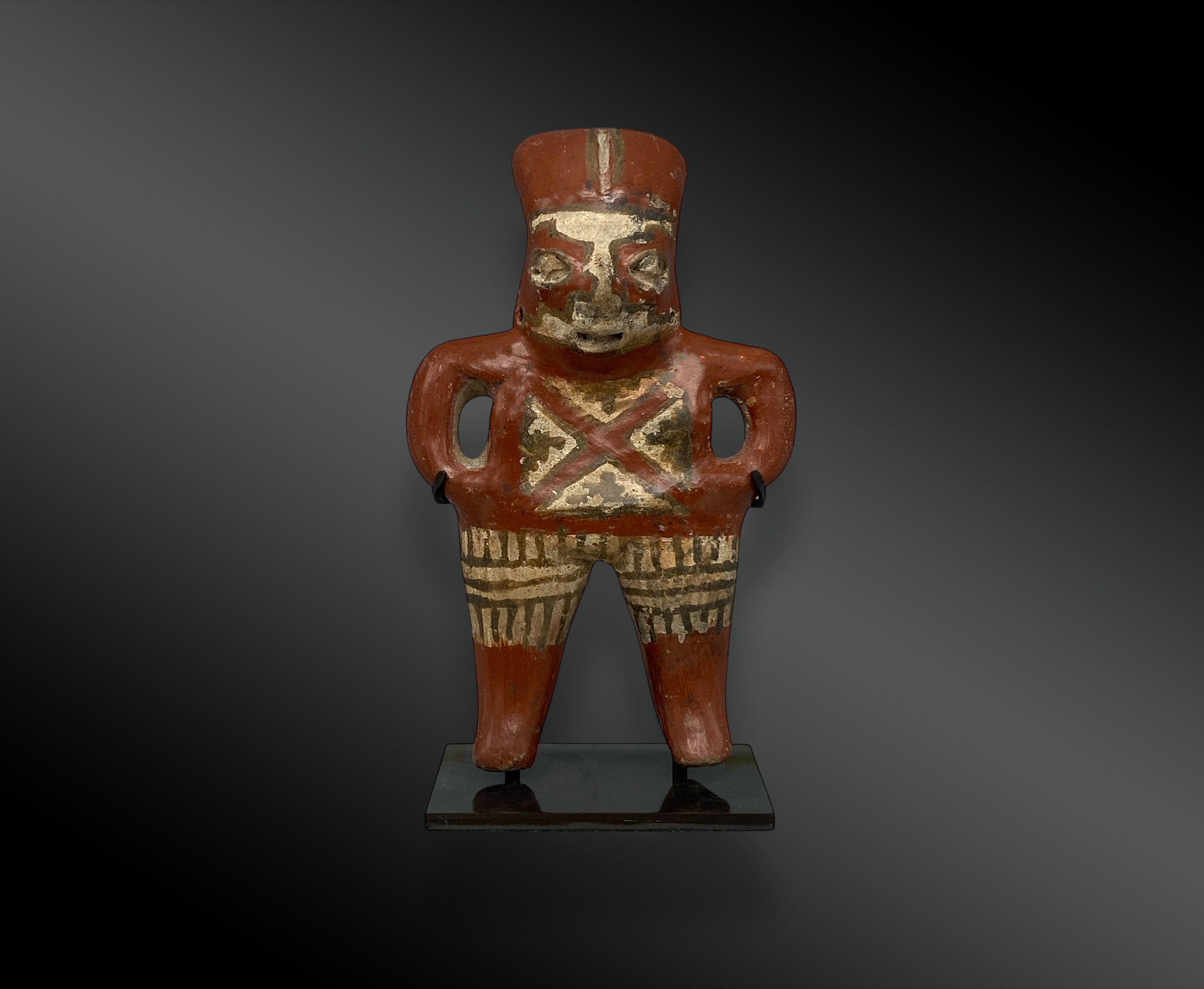
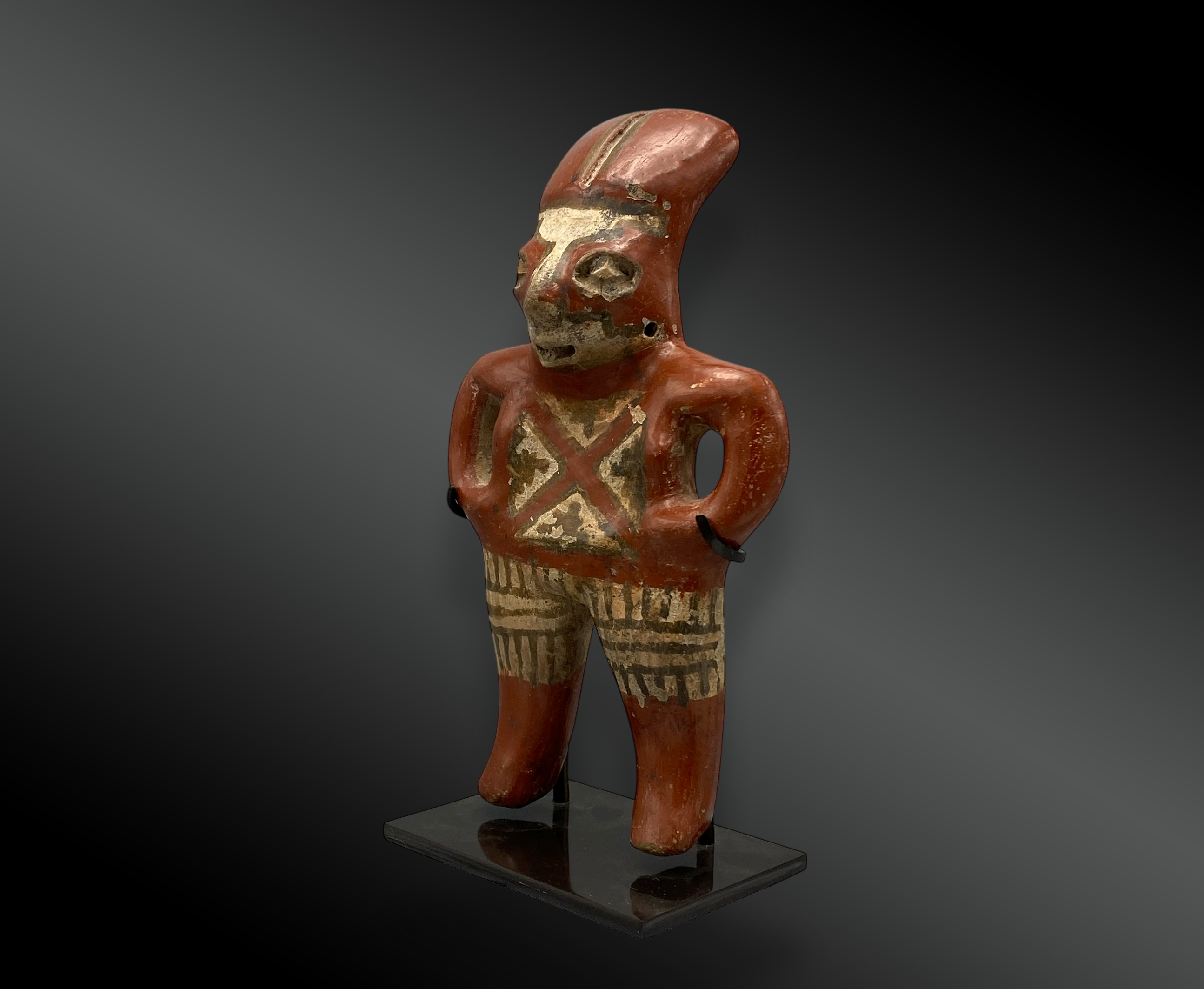
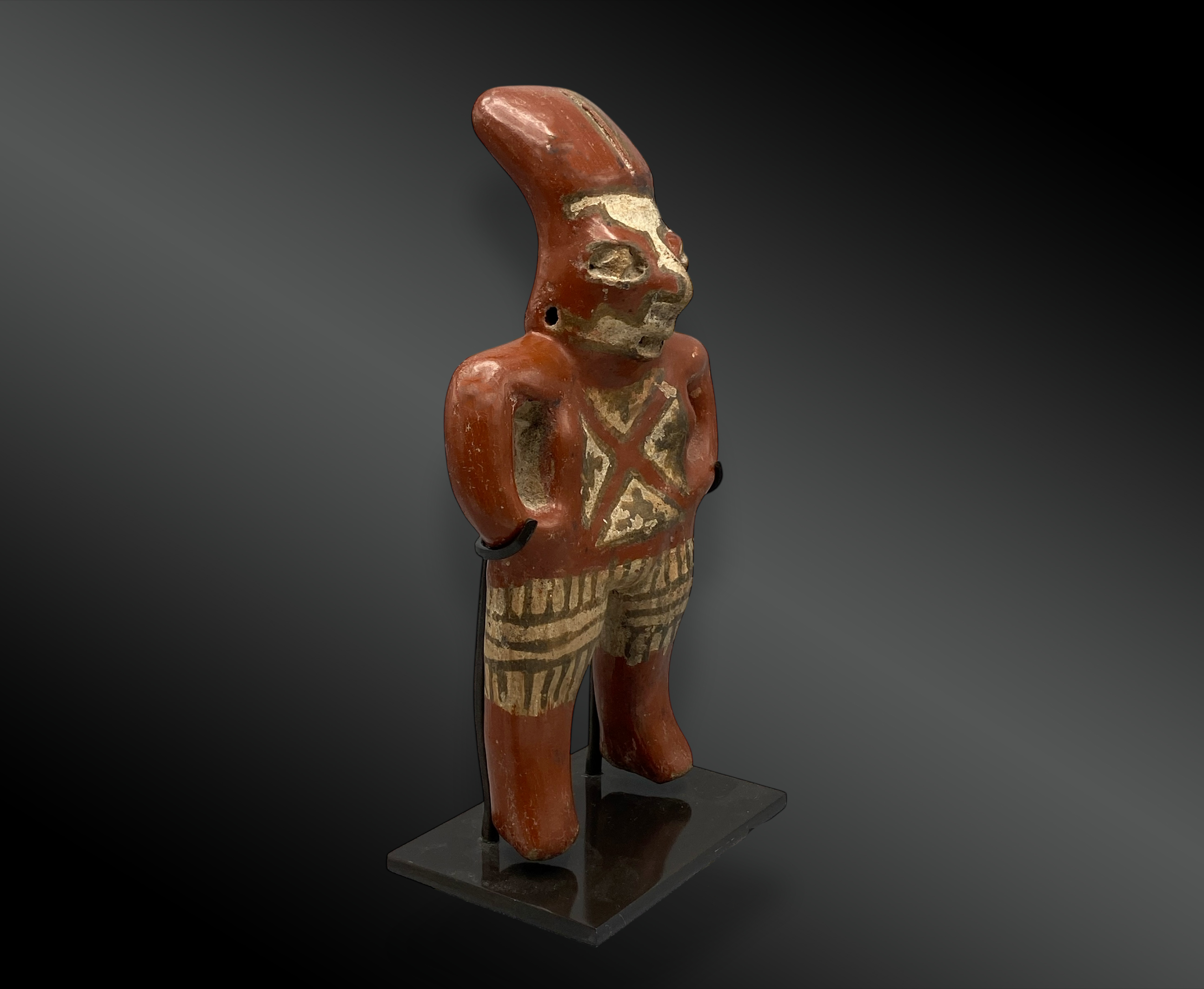
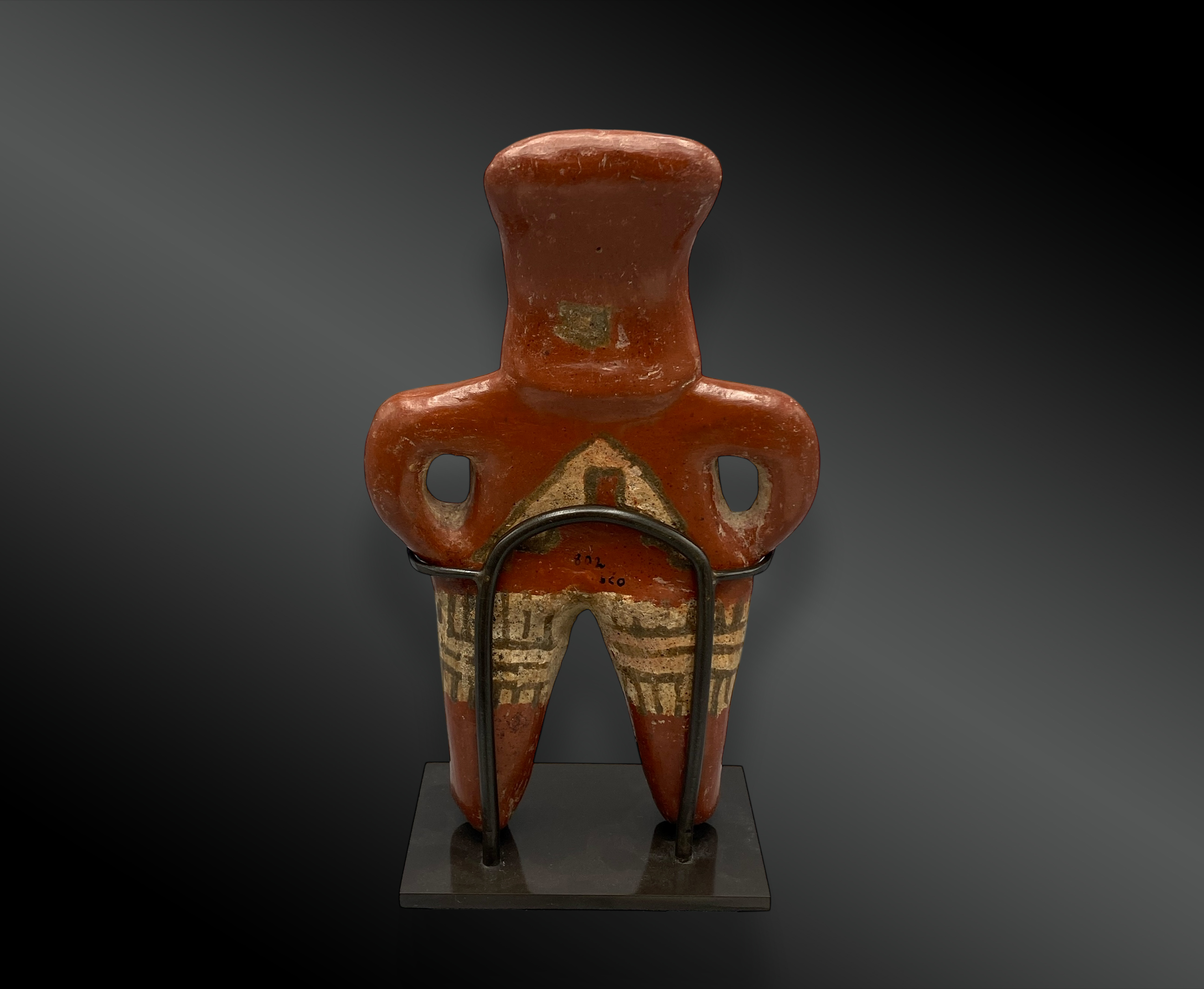
This female figure stands on a pair of separate legs, her body entirely covered in red slip, punctuated with body paint drawn in cream slip, outlined in black. These details refer to a conception of the universe organized around a central point where the four cardinal directions rise between celestial and subterranean axes.
According to Brigitte Faugère, an archaeologist specializing in the Americas, "the placement of these decorations corresponds well to that of the major and minor animic forces, notably the center of the torso where one of the major centers is located, the heart (yóllotl) associated with vital force and the surface of the earth, and the head with the frontal cleft, the seat of the tonalli."
Her wide hips, adorned with painted frieze ribbons, her slightly defined breasts and her hands placed on her lower abdomen, refer to fertility and femininity.
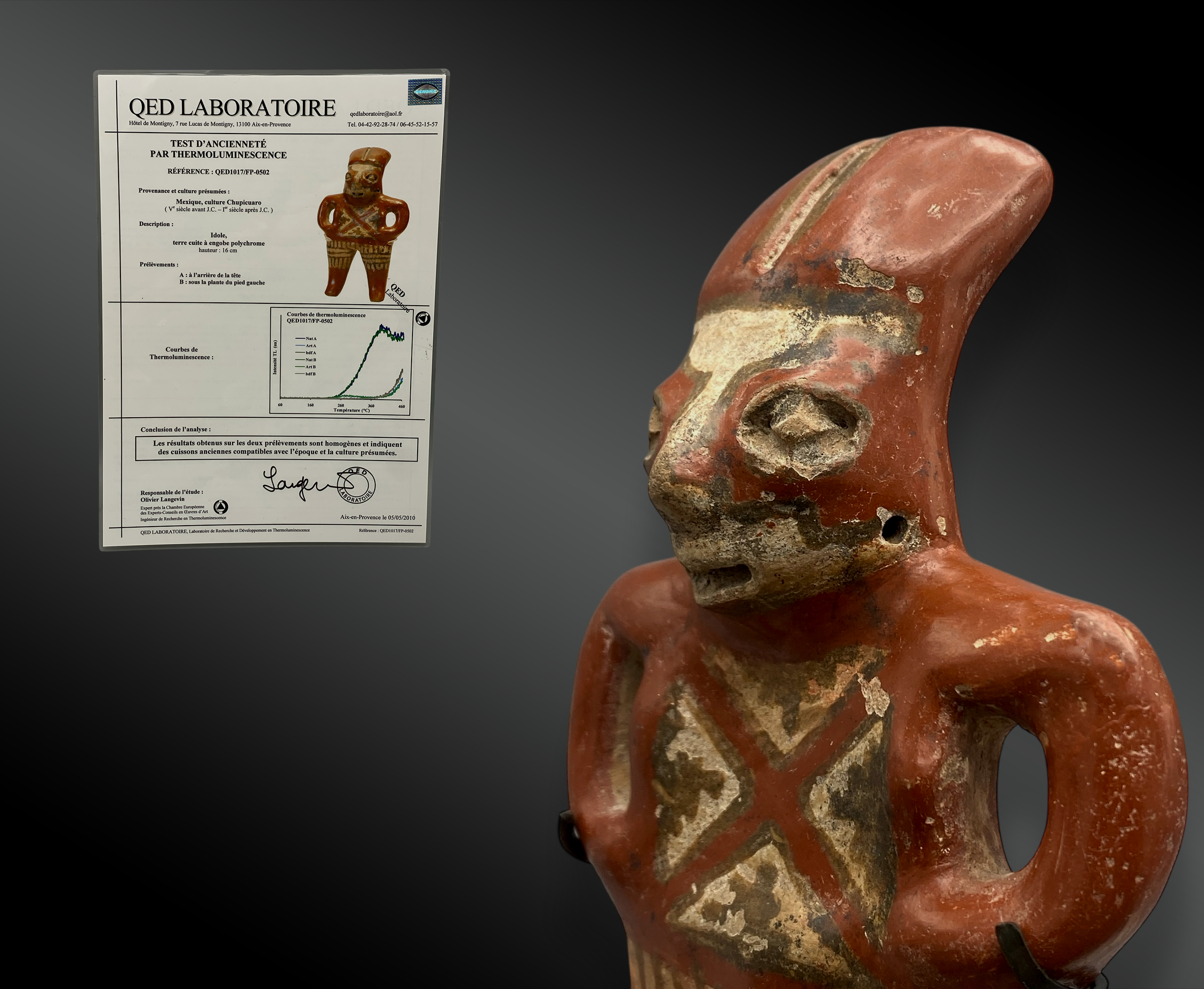
Her face is shaped into a distinctive tapered skull, featuring a central groove, and her earlobes are pierced.
Most of these Chupicuaro statuettes are female, an important sign of the significant role played by the cult of motherhood. According to information gathered at the Quai Branly Museum, this type of statuette likely comes from a burial site.
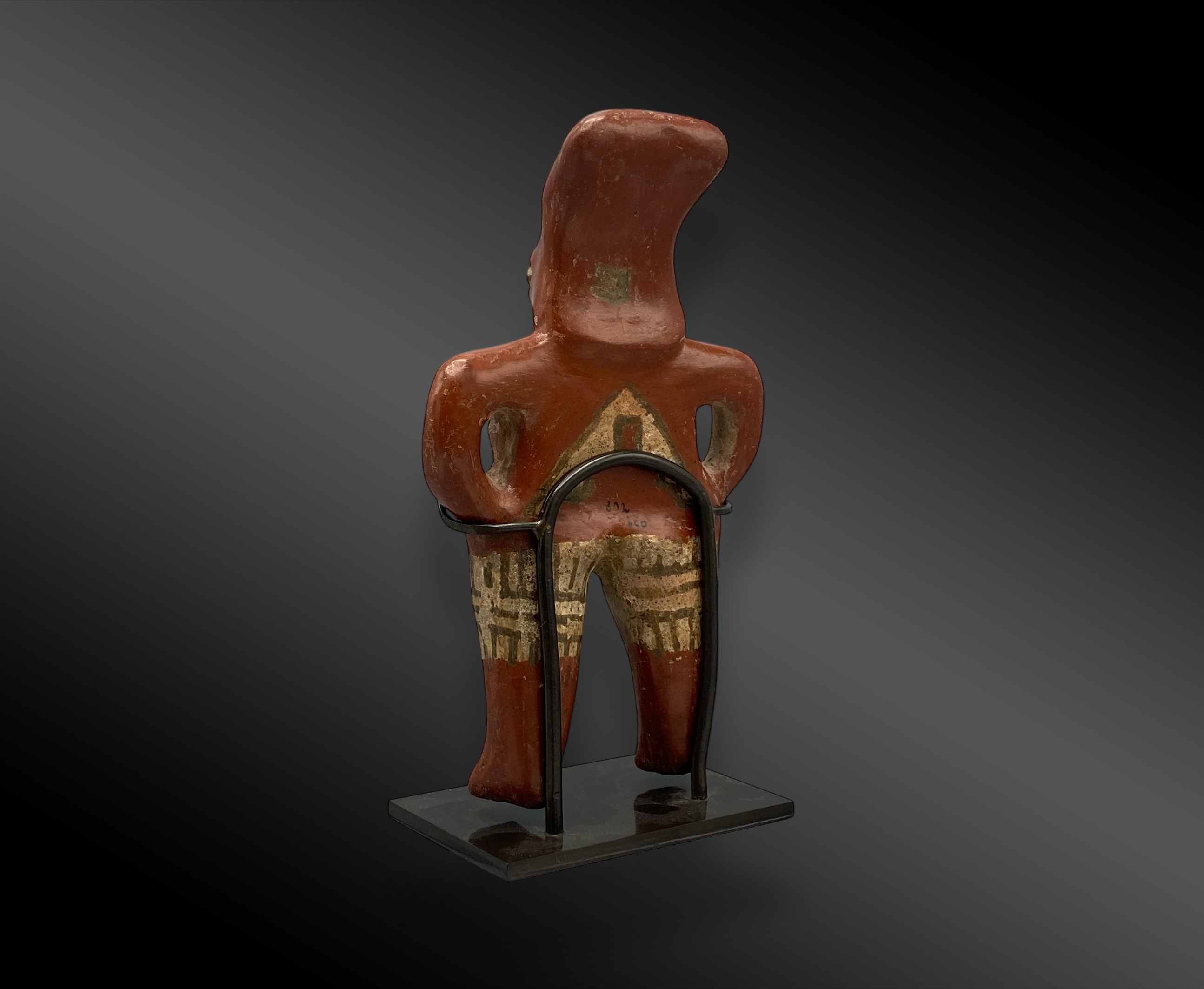
Old collection number handwritten on the back.
The Thermoluminescence test, issued on May 5, 2010, indicates these presumed origins and cultures: Mexico, Chupicuaro culture, 5th century BC – 1st century AD
Origins:
- Exhibited at the Bruneaf fair in June 2010 by Galerie 1492, Paris.
- Private collection, Paris, France.
Bibliography:
A comparable example is kept at the Musée du quai Branly under inventory number 70.2000.18.1, another at the Art Institute of Chicago, under number 2007.348.
Text and photos © FCP CORIDON
LP.6541