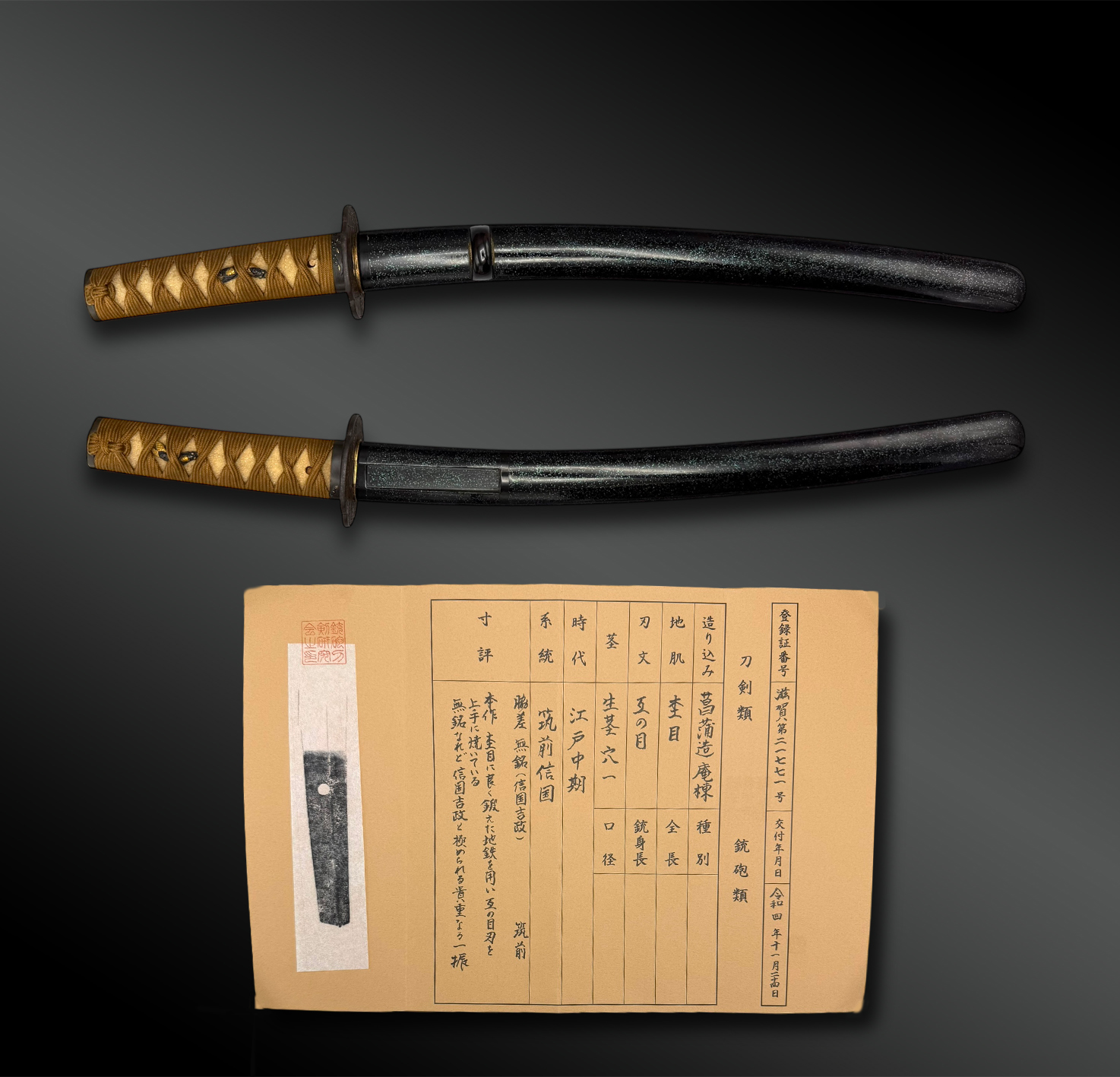
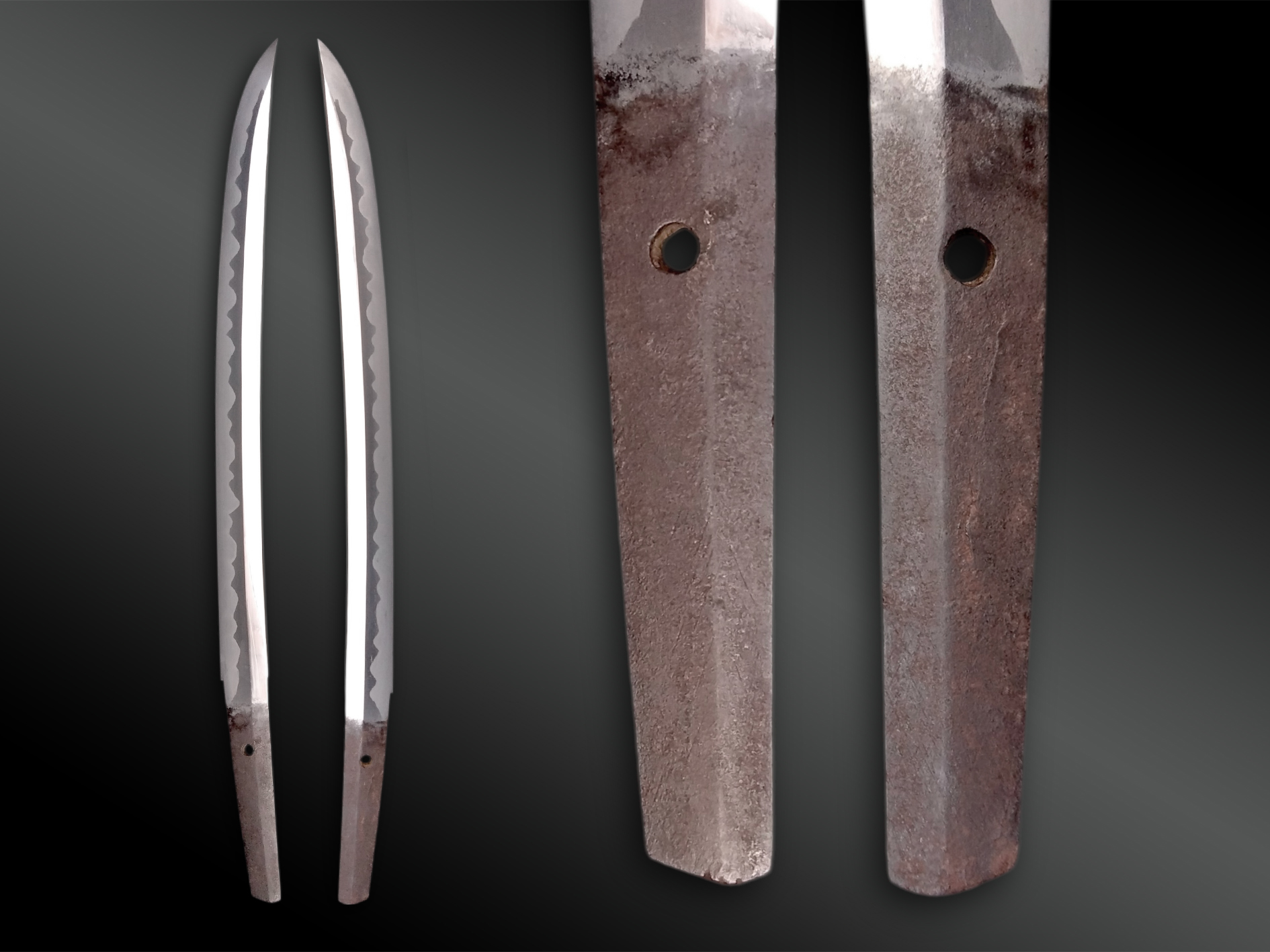
A sword called Wakizashi, attributed to Nobukuni Yoshimasa, with certificate
Chikuzen Province, Japan
Edo period (1603-1868)
Steel, wood, lacquer, copper, horn, gold, shakudo, iron, silver
Nagasa: 37.3; Nakago: 13 cm
Sori: 0.7 cm
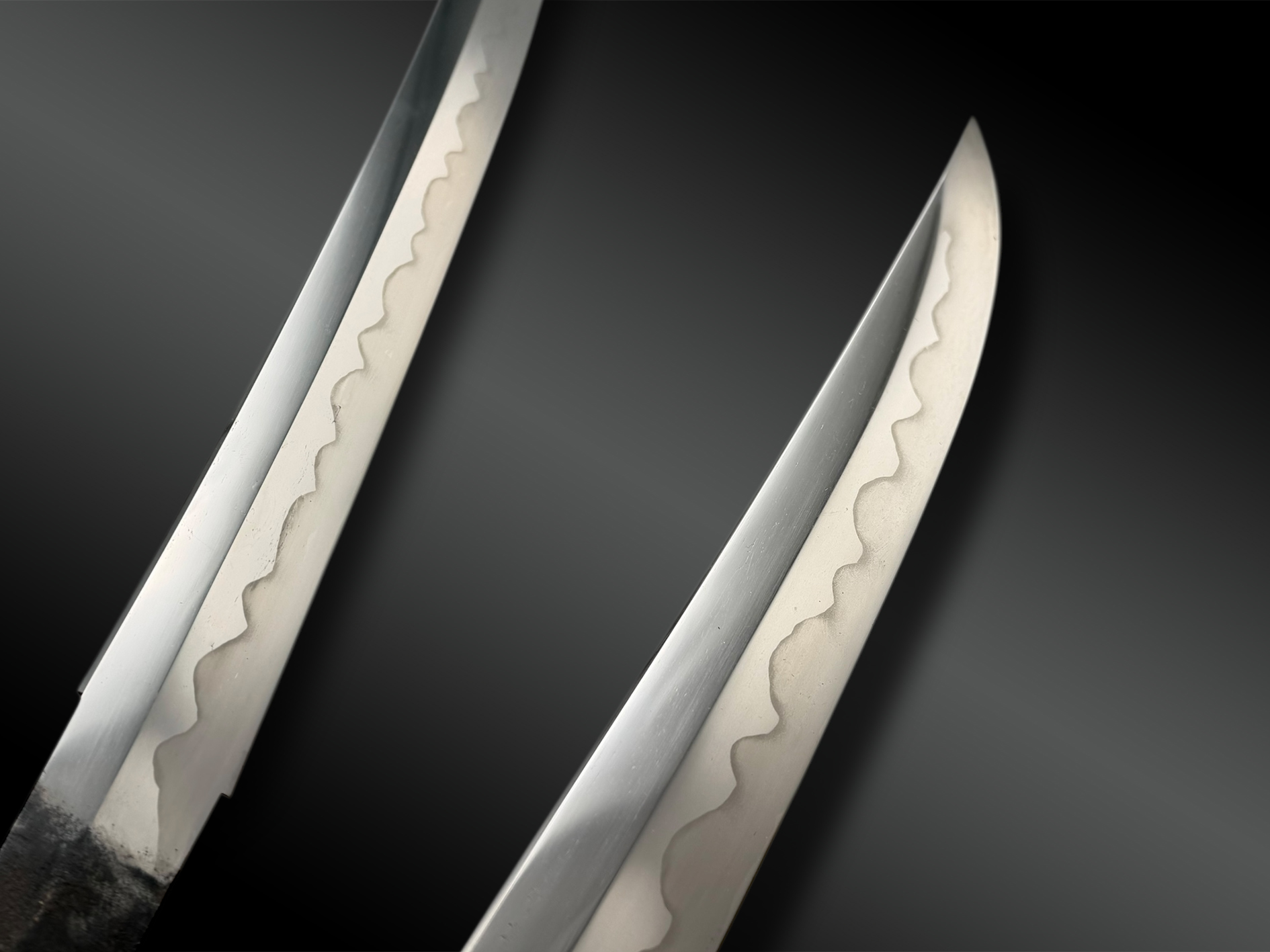
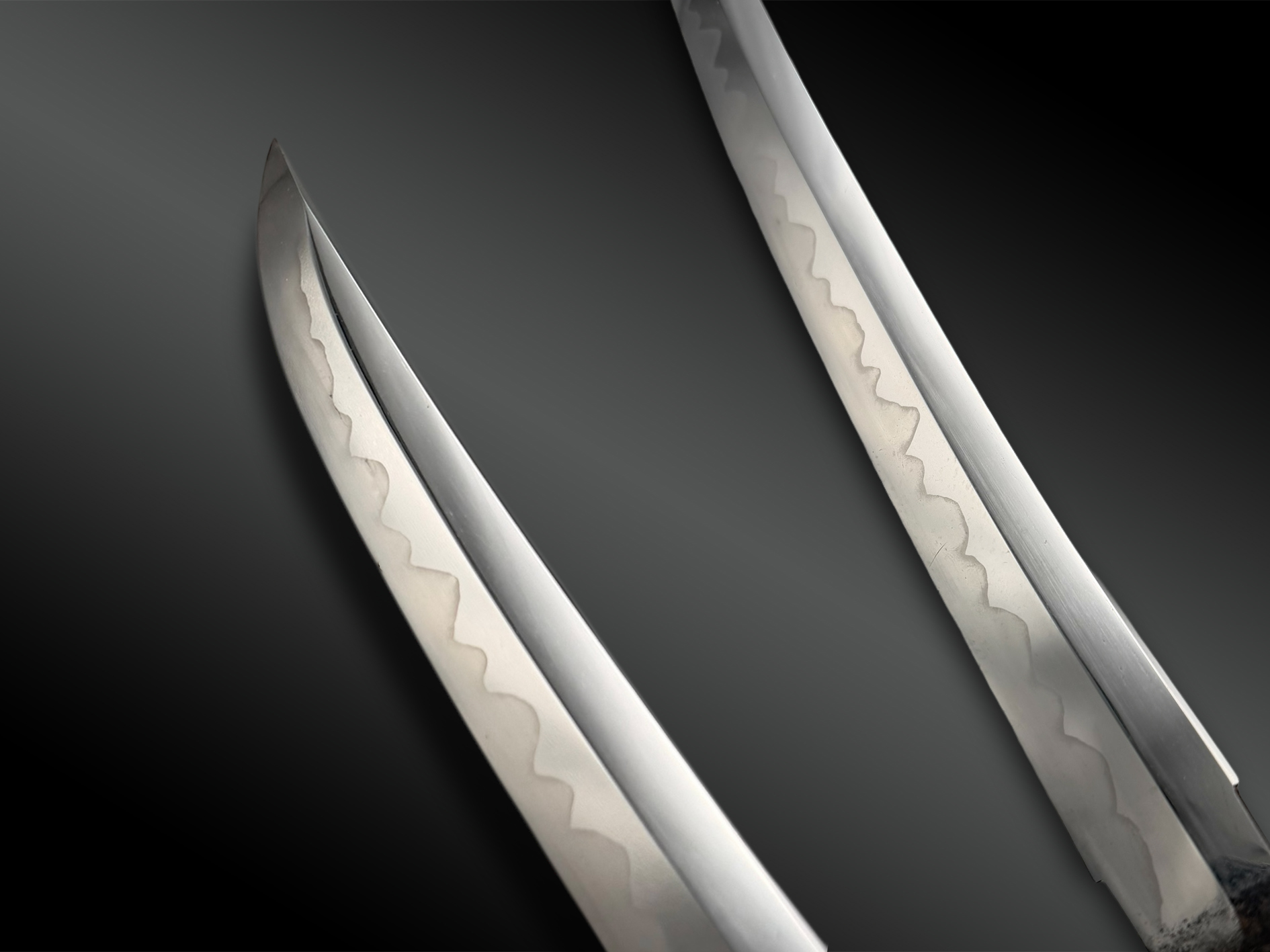
Shobu tsukuri type blade, mune takashi, choji ashi iri type hamon.
Kaeri asashi type boshi.
Nakago funa gata and kata yamagata.
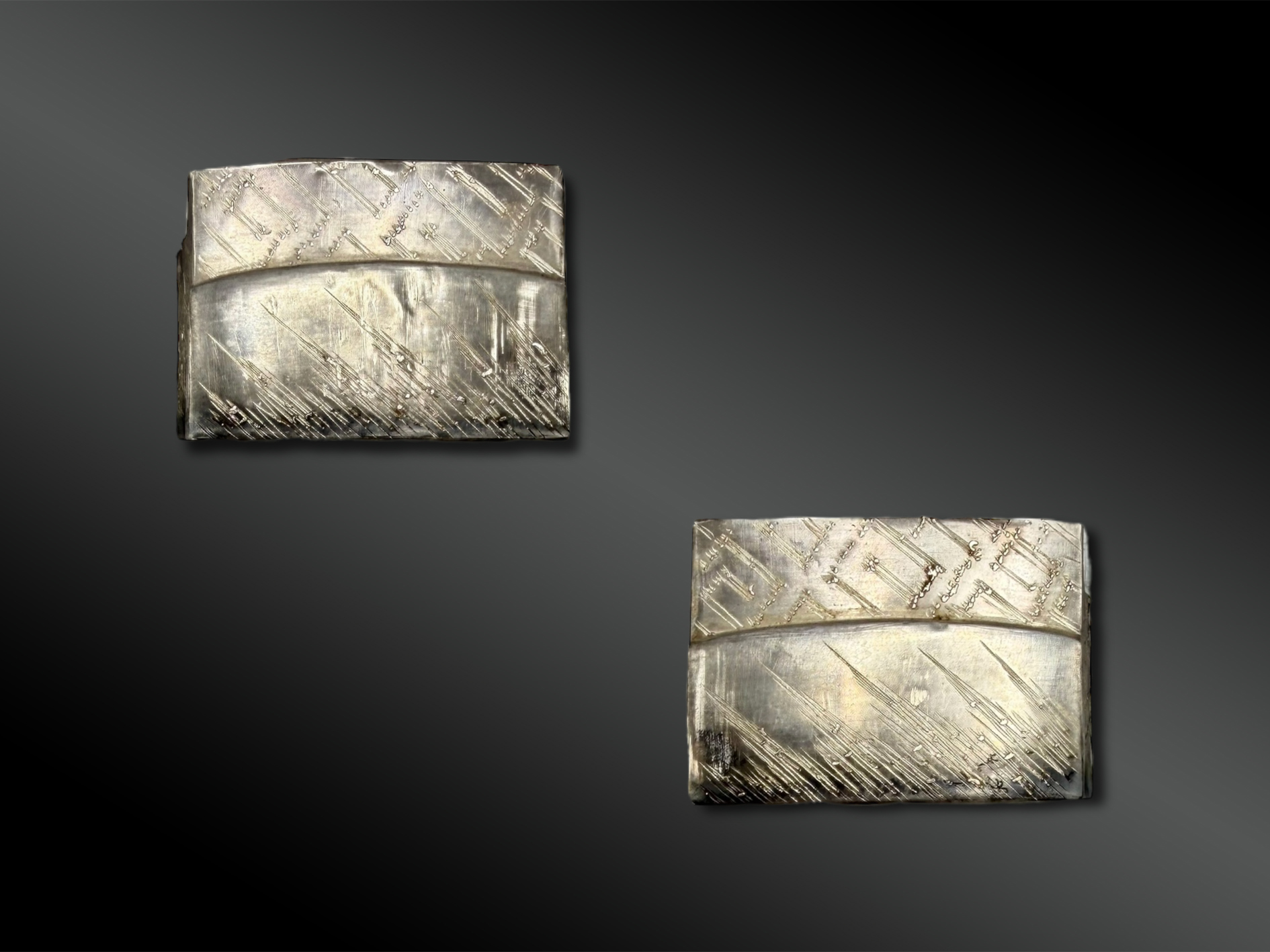
Daitsuki-niju-habaki in silver-covered copper, chiseled with geometric patterns.
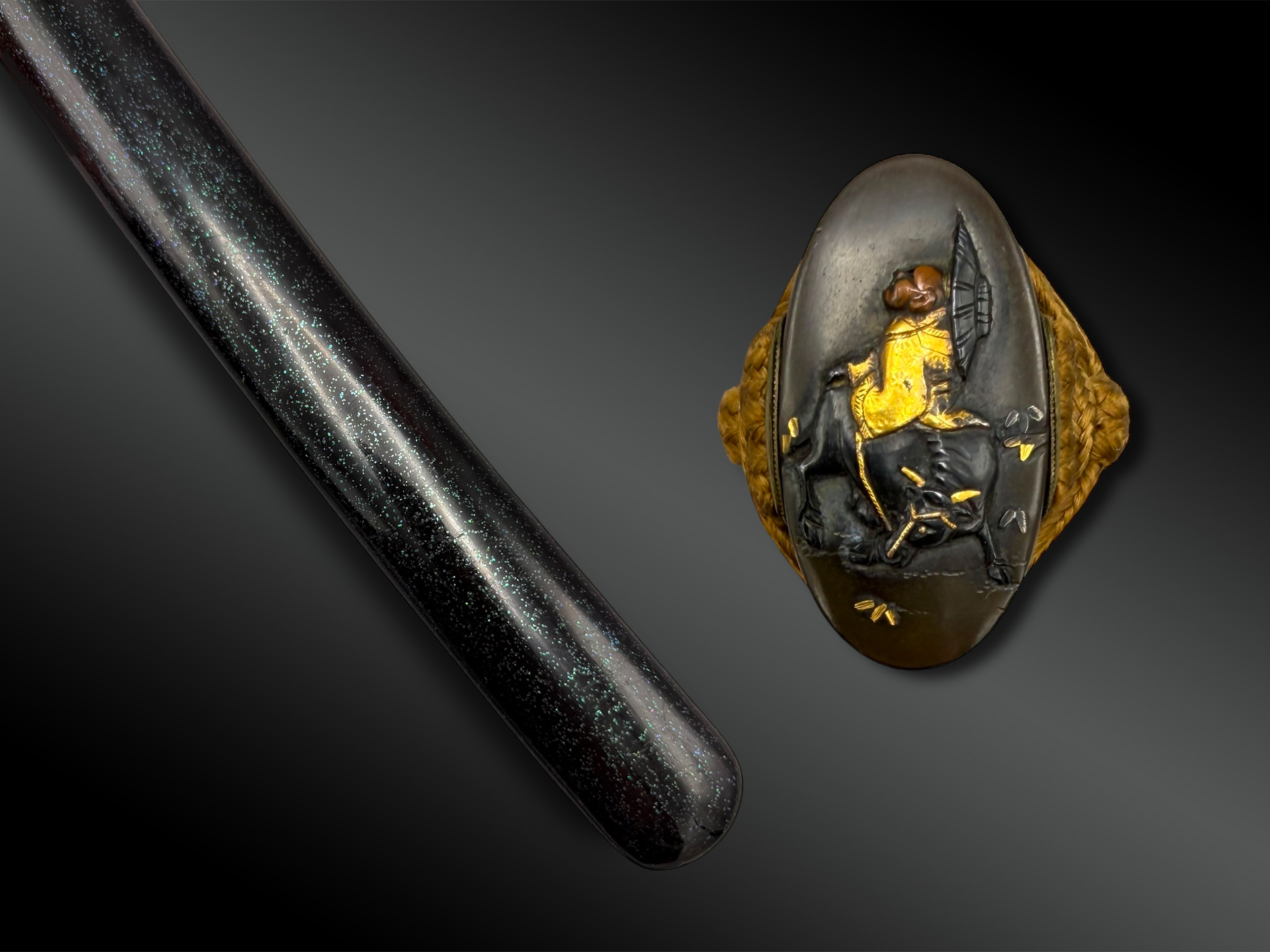
Saya made of wood covered with black lacquer, glittered green and blue.
Kuri gata and koi guchi in lacquered buffalo horn.
Chiseled brass shitodome.
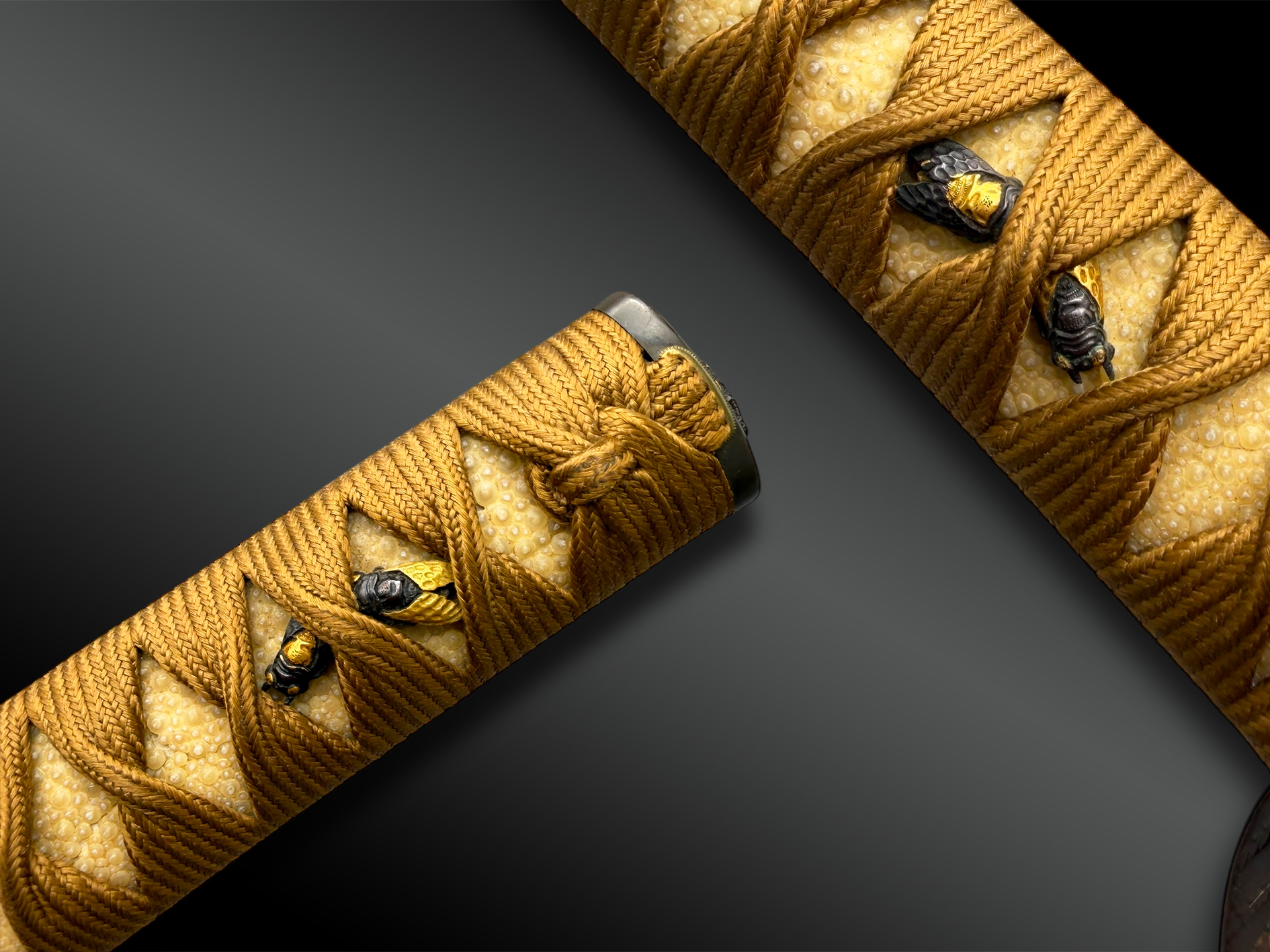
Wooden tsuka ito, covered in shagreen, braided with brown silk.
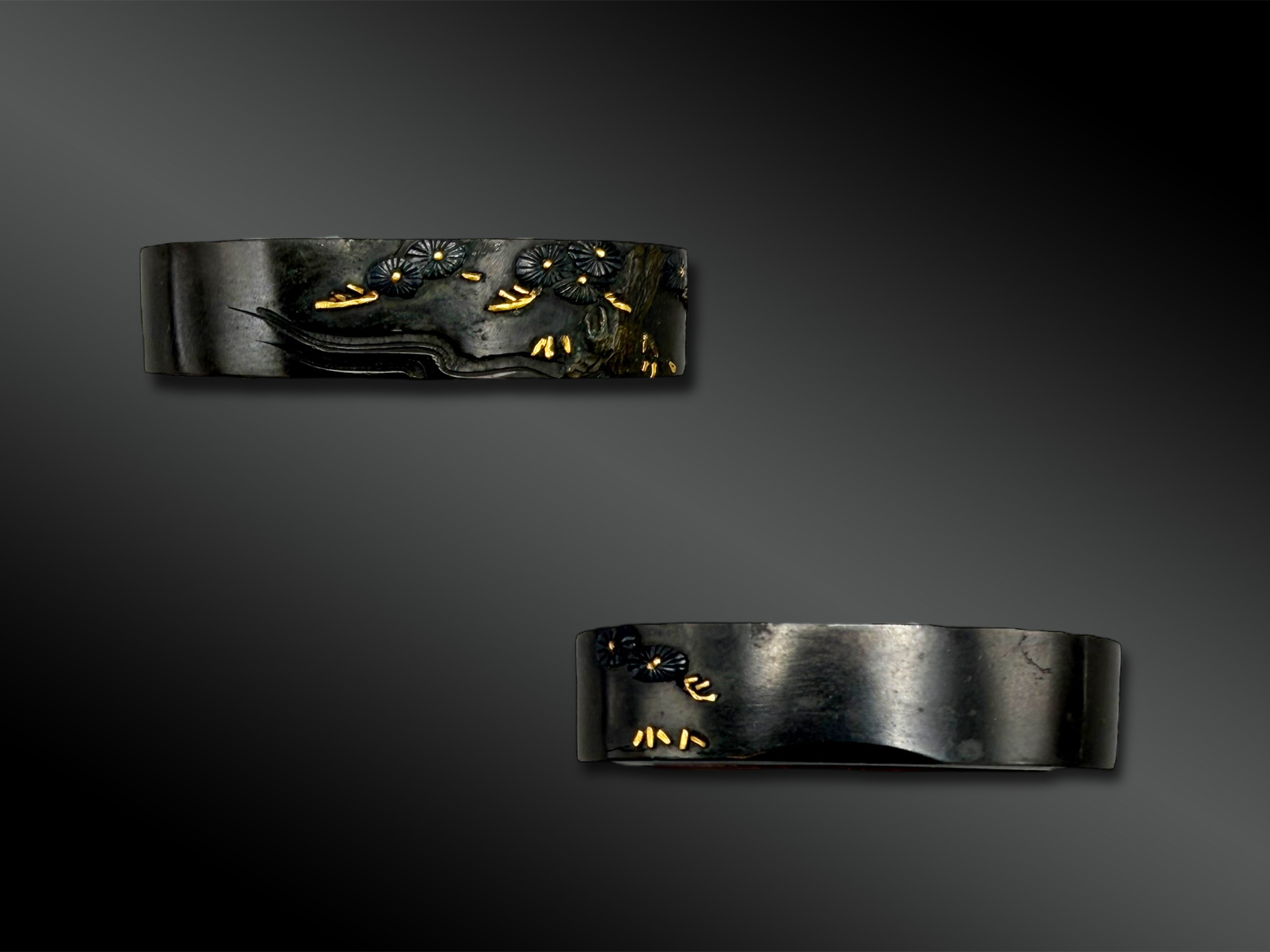
Copper fuchi covered with shakudo, engraved with a flowering tree, enhanced with gold and shakudo.
Kashira in shakudo, carved with a man in a gold kimono and copper face, carrying a kasa in shakudo, alongside a buffalo in shakudo and gold.
Menuki depicting four bees in shakudo and gold.
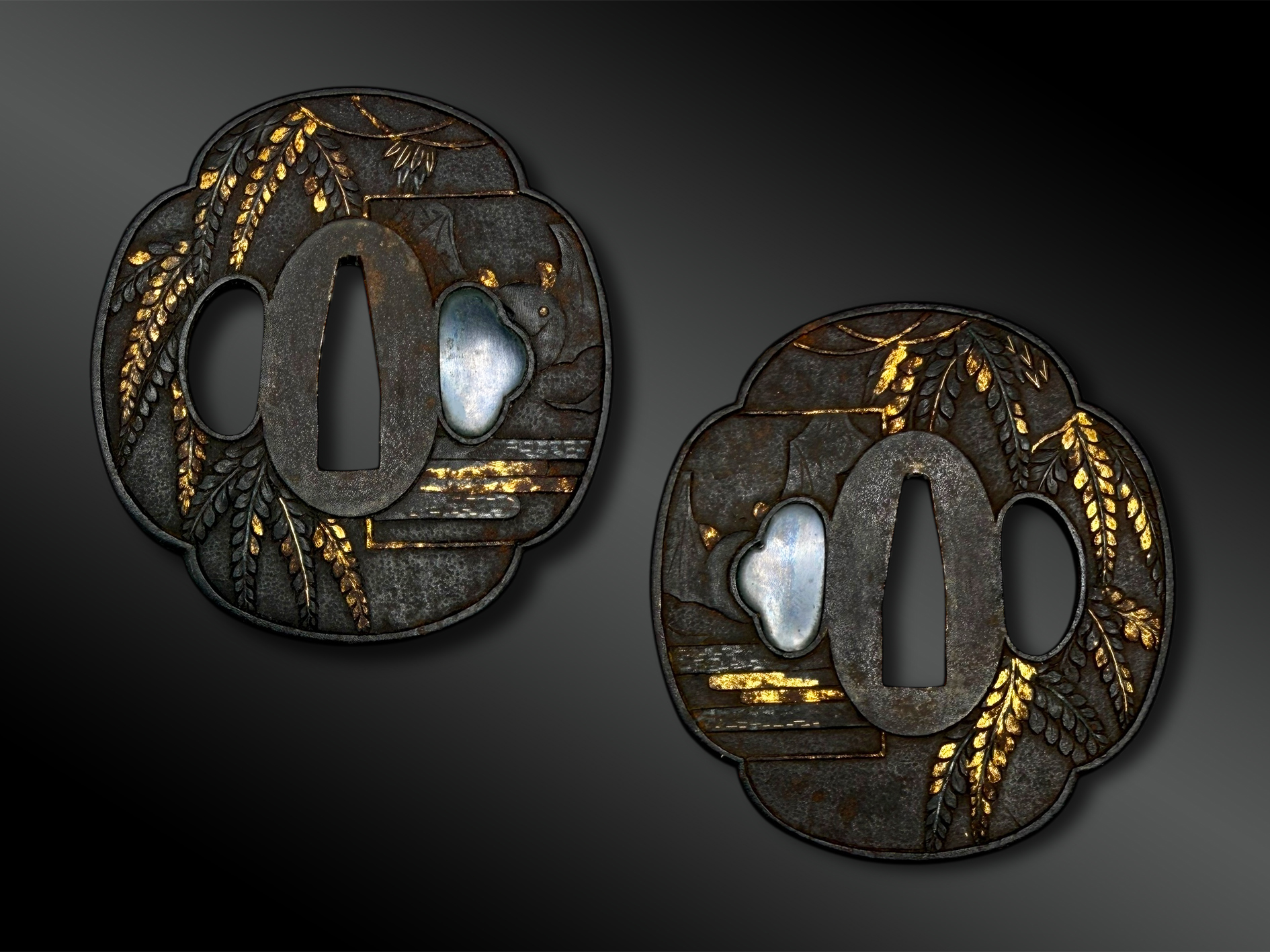
An iron tsuba mokko gata, chiseled with foliate motifs highlighted in gold and a bat – the yamachichi is a yōkai mentioned in Ehon Hyaku Monogatari. Its name could be formed from ateji combining the idea of "mountainous region" and "breast" or "milk".
According to legend, this creature was originally a bat. After living for a very long time, it transformed into Nobusuma, a bat with supernatural powers, before finally becoming a yamachichi.
According to tradition, he lives in the mountains of northeastern Japan. At night, he descends to neighboring dwellings and enters the houses.
The creature would then approach a sleeping person to suck in their snores, then punch them in the chest before fleeing. After such an attack, the victim would die the next day, unless someone had spotted the yamachichi. In that case, it would flee and the victim's lifespan would be extended.
Kotsuka-hitsu in shakudo.
Seppa in gilded copper.
Katana attributed to Nobukuni Yoshimasa (信國吉政), Keito school.
Certificate.
Ref.: 6925
Text and photos © FCP CORIDON