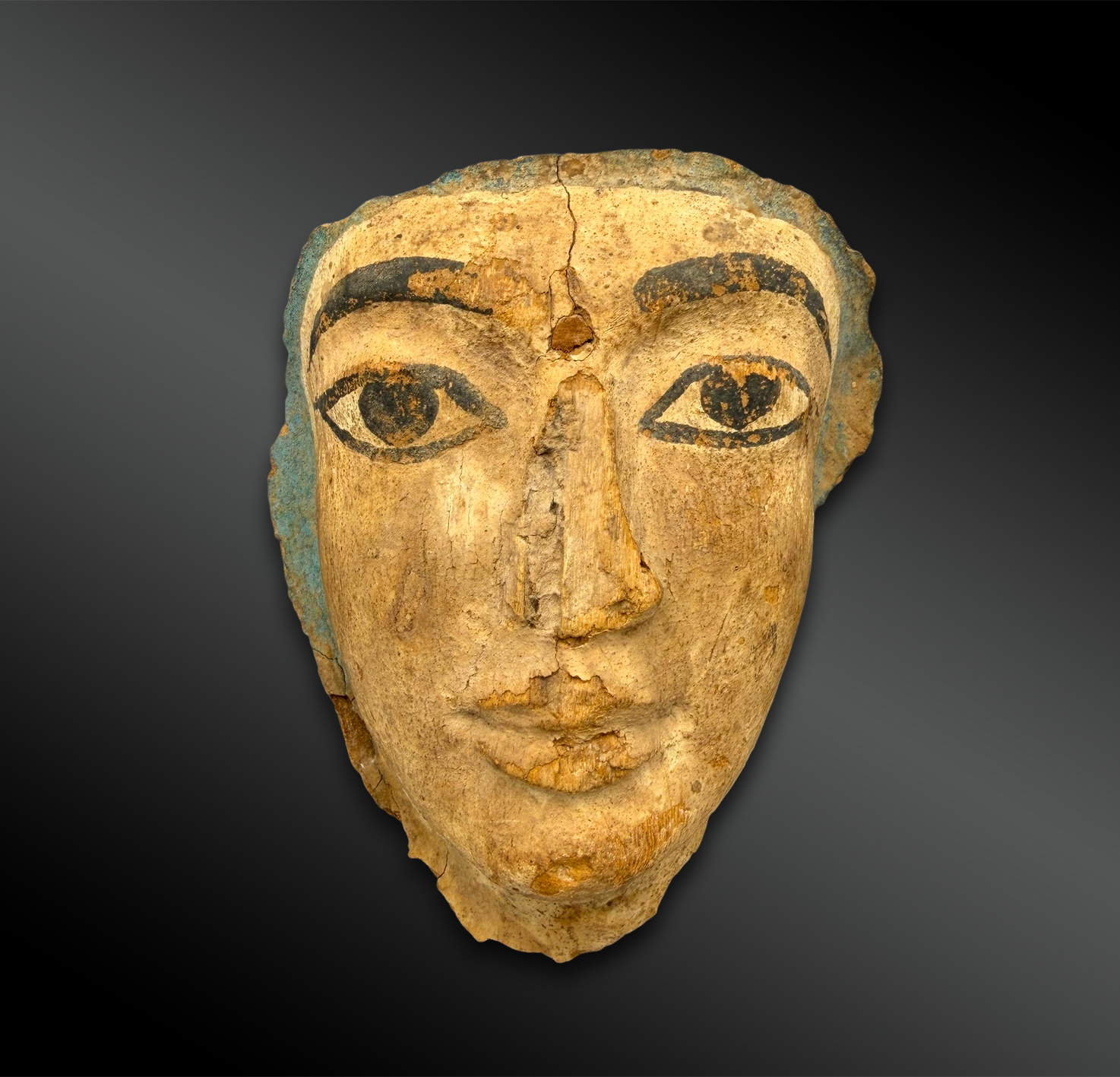
MUMMY MASK
Egypt
New Kingdom or Third Intermediate Period (1292 – 664 BC)
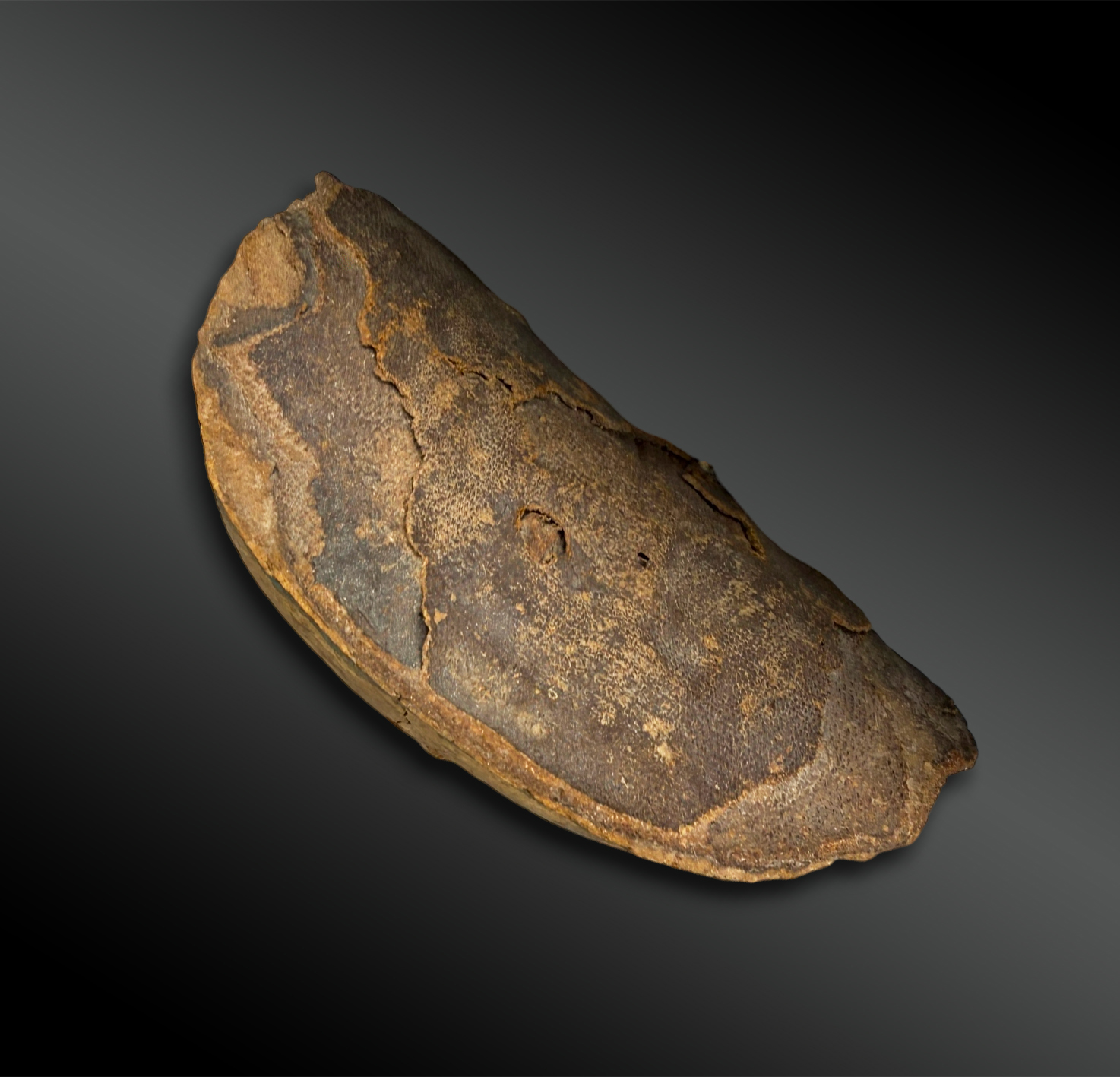
Wood, pigments and remnants of linen fabric
Height: 14 cm; Width: 10 cm
(old accident)
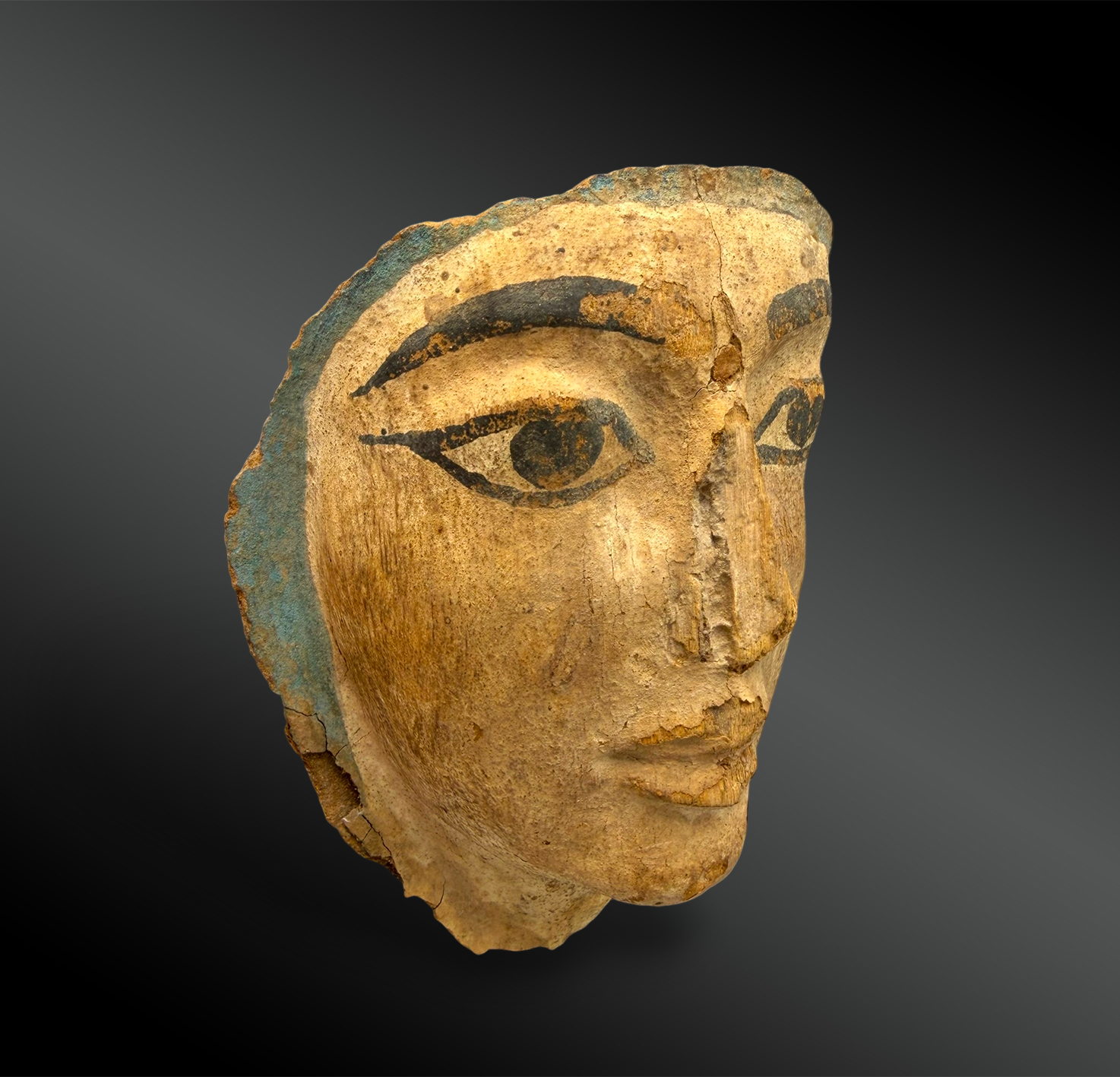
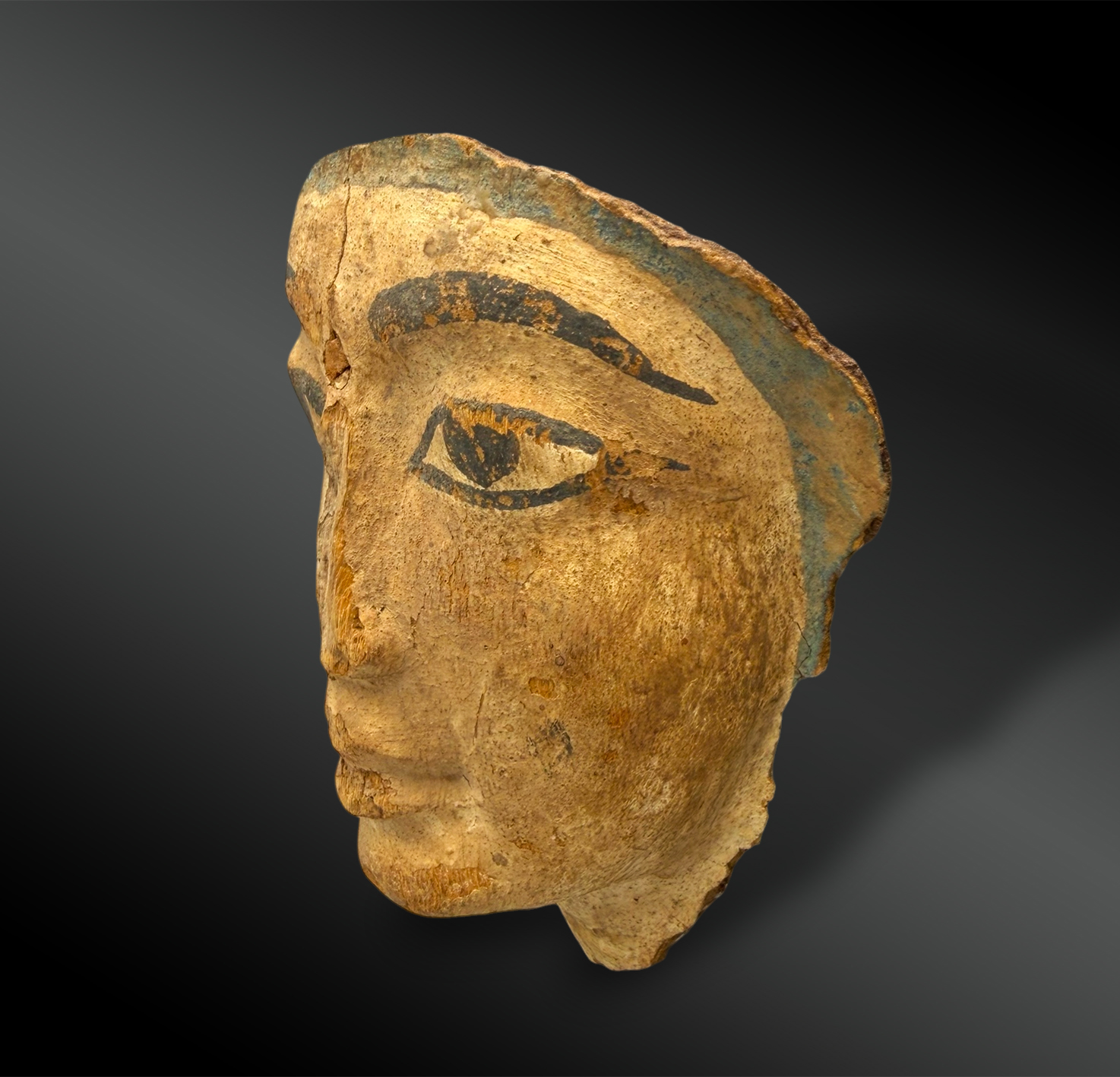
A wooden funerary mask with fine modeling, highlighted with black pigments for the iris, eye makeup, and eyebrows, and blue for the band on the border, likely representing a cloth or headdress. The complexion is colored with white ochre pigments.
Her small mouth has full lips, and her philtrum is slightly prominent.
In the book "Masks of Mummy Children from the Egyptian Middle Kingdom: The Discoveries of Mirgissa," by Patricia Rigault-Déon, published in 2012, Henri Loyrette, then President-Director of the Louvre Museum, wrote:
"Mummification is undoubtedly one of the most emblematic practices of ancient Egypt. Above all, it reflects the ancient Egyptians' belief in the continuity of life beyond death."
Without this preservation of the body, the different elements that made up the being in life could not be reunited in the afterlife.
The Egyptians quickly adopted the practice of covering the faces of their mummies with masks, a practice that continued until Roman times.
Provenance: Galerie David Ghezelbash, Paris.
Text and photos © FCP CORIDON
Ref.: 7302