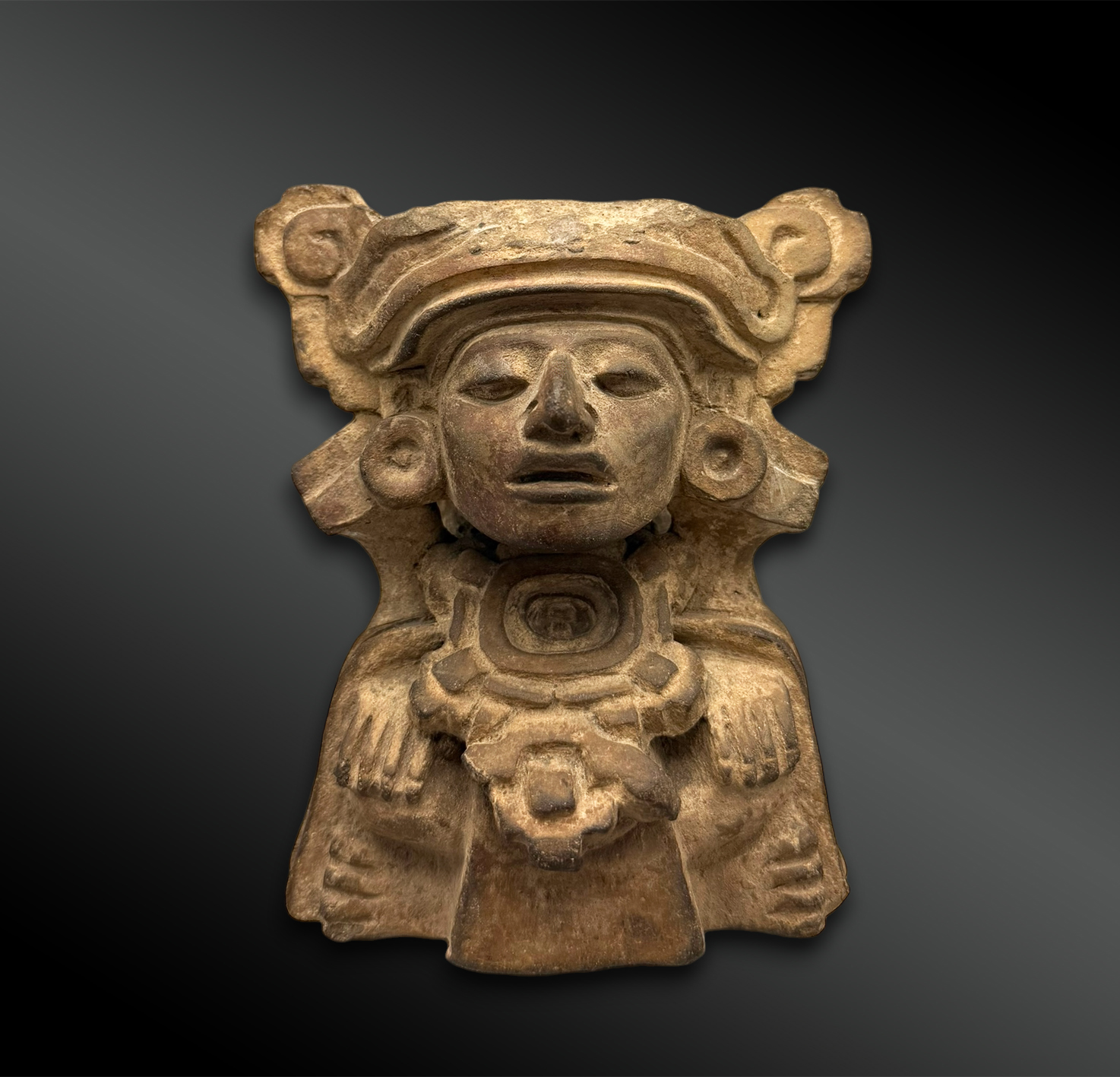
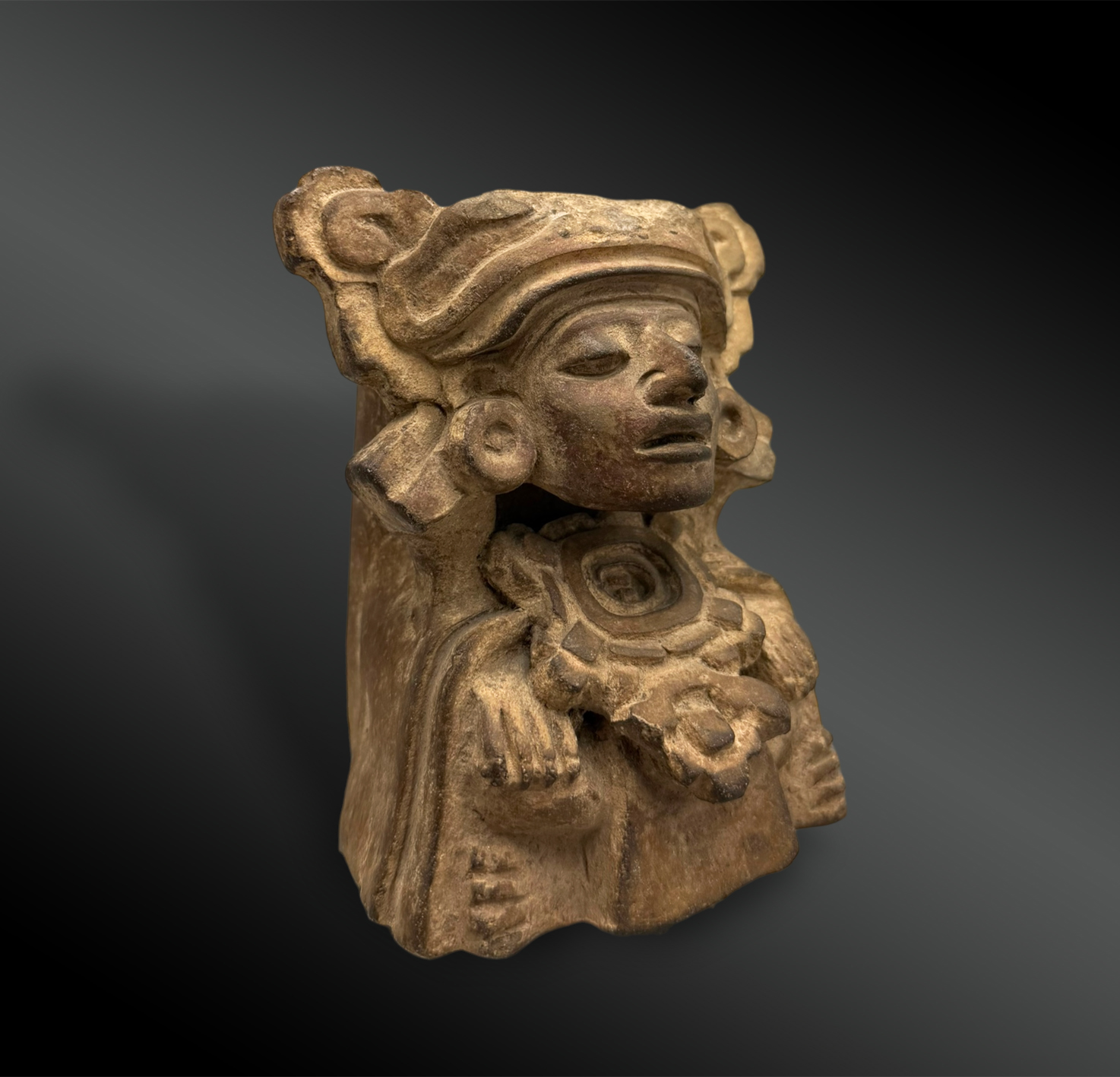
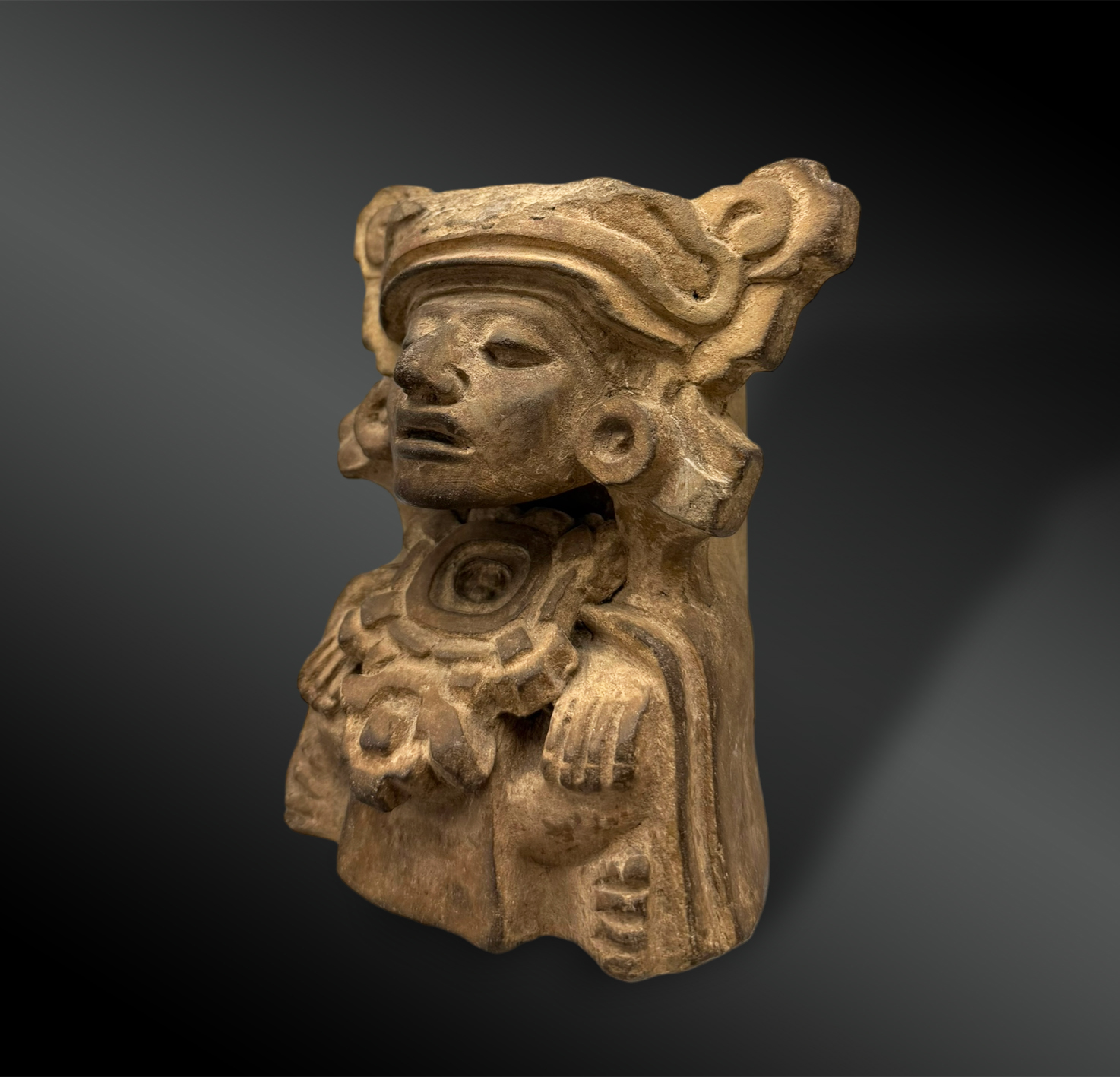
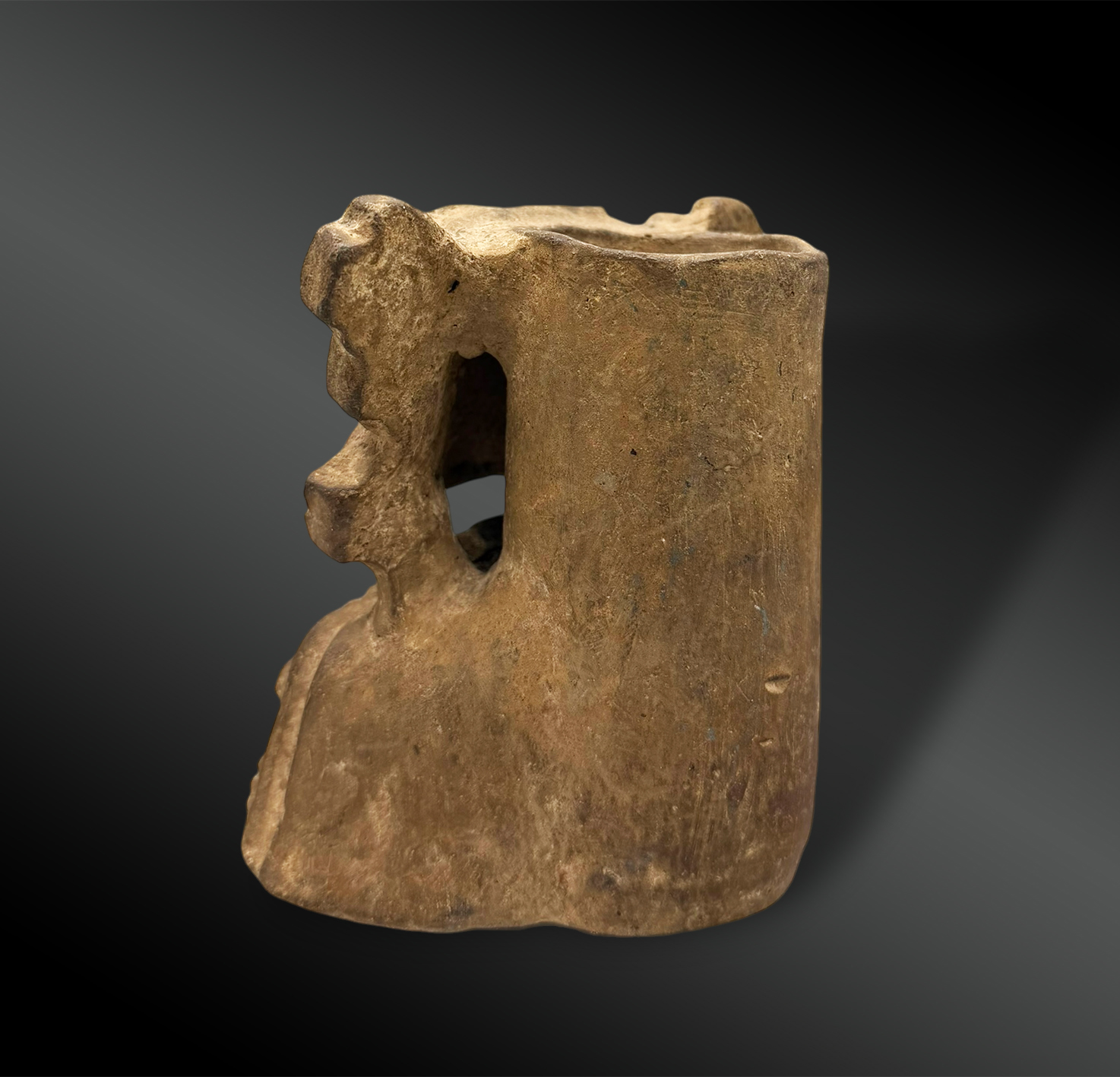
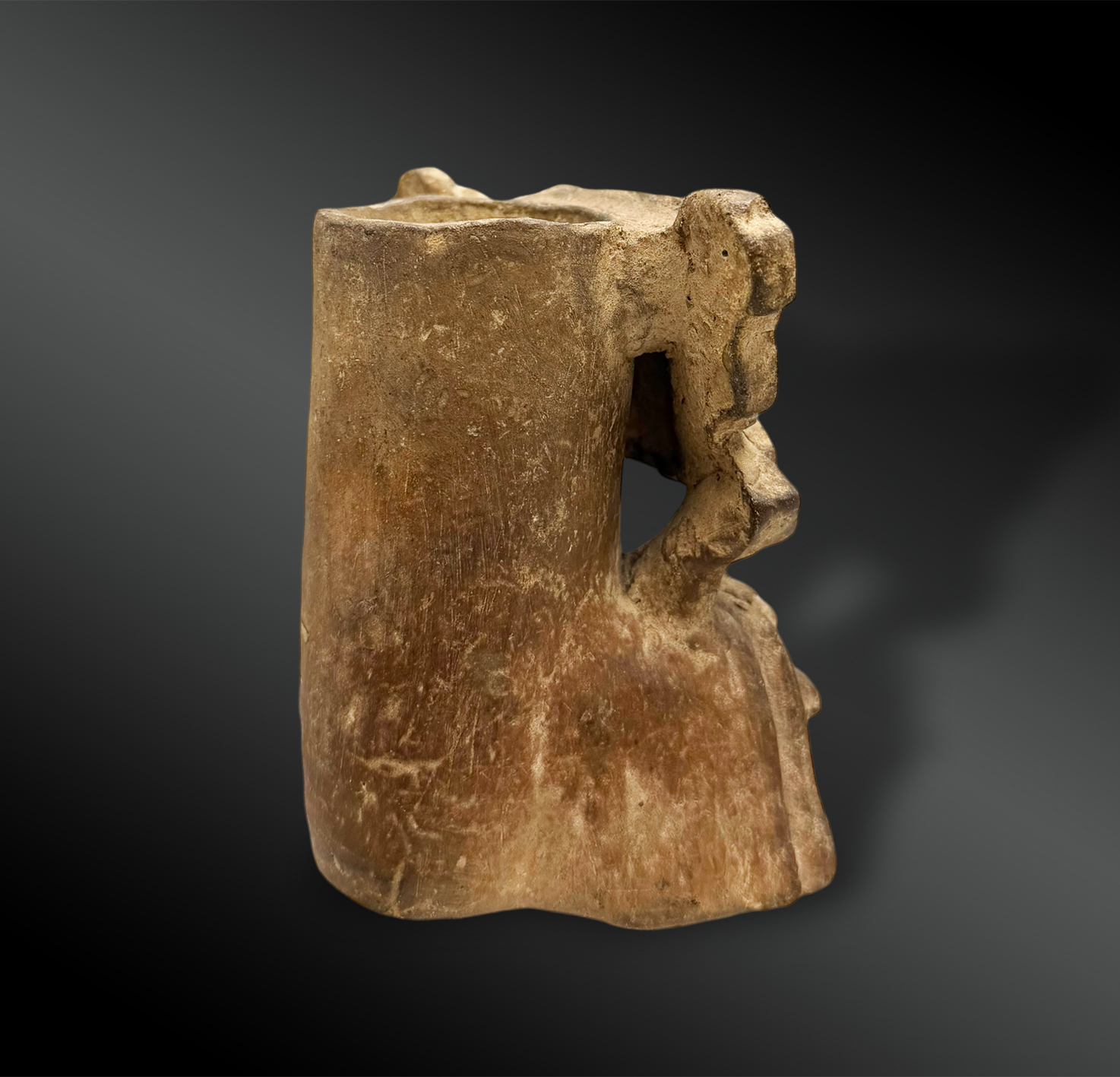
funeral urn
Zapotec culture, Mexico
600-900 AD
Terracotta
Height: 13.5 cm; Width: 12 cm
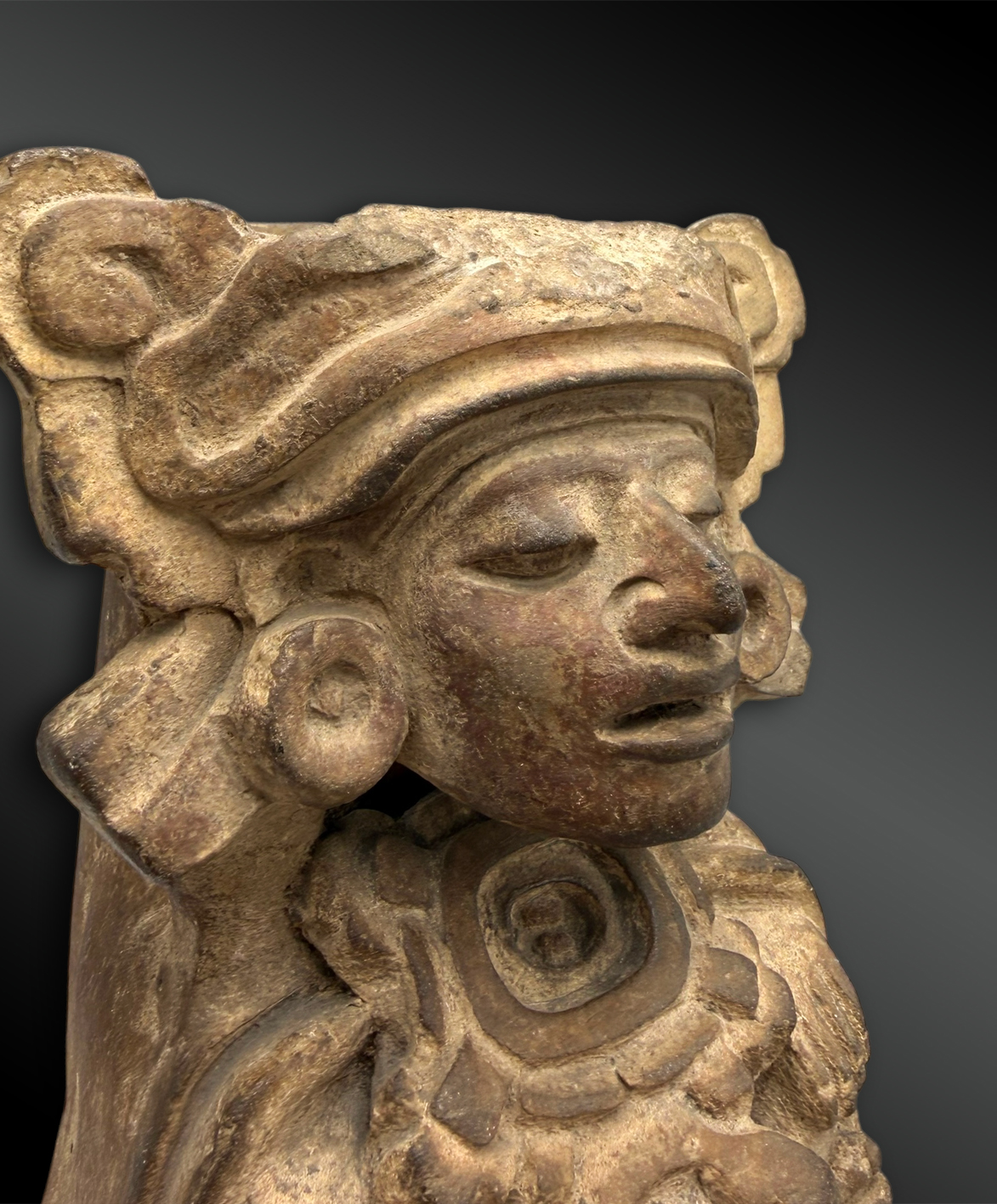
This urn depicts a seated figure emerging from its cylindrical body. Dressed in a tunic, it is generally interpreted as a priest or a huía tao ("Great Seer"). The spiral motifs incised on either side of its eyes are also characteristic attributes of this ritual function.
The figure is more suggested than truly sculpted. Composed of anatomical elements and ceremonial attributes applied to the surface of the vessel, it stands out from the cylindrical shape of the urn, which it almost entirely conceals when viewed from the front. The figure is adorned with ear ornaments, a broad pectoral, and a loincloth.
These urns are generally interpreted as representations of the ancestors of the principal deceased buried in the tomb. Adorned with the attributes of deities, these ancestors acted as intermediaries between the living and the supernatural world. Their presence in the tombs allowed for a connection to be established with the gods through them.
The tombs were regularly visited over generations and constituted veritable places of worship dedicated to the ancestors. Relatives would leave offerings there—incense, fresh blood, chocolate, and fermented pulque—in order to solicit their protection and intercession on behalf of the living.
A thermoluminescence seniority test was issued on July 8, 2014 by the QED laboratory.
Ref.: 7306
Text and photos © FCP CORIDON