Cabinet called Kôdansu
Japan
Meiji period (1868-1910)
Wood, lacquer, mother-of-pearl, ivory, shakudo, gold, silk
H.: 46.2; Long. : 42.3; L.: 28.7 cm
(Minor accidents and omissions)
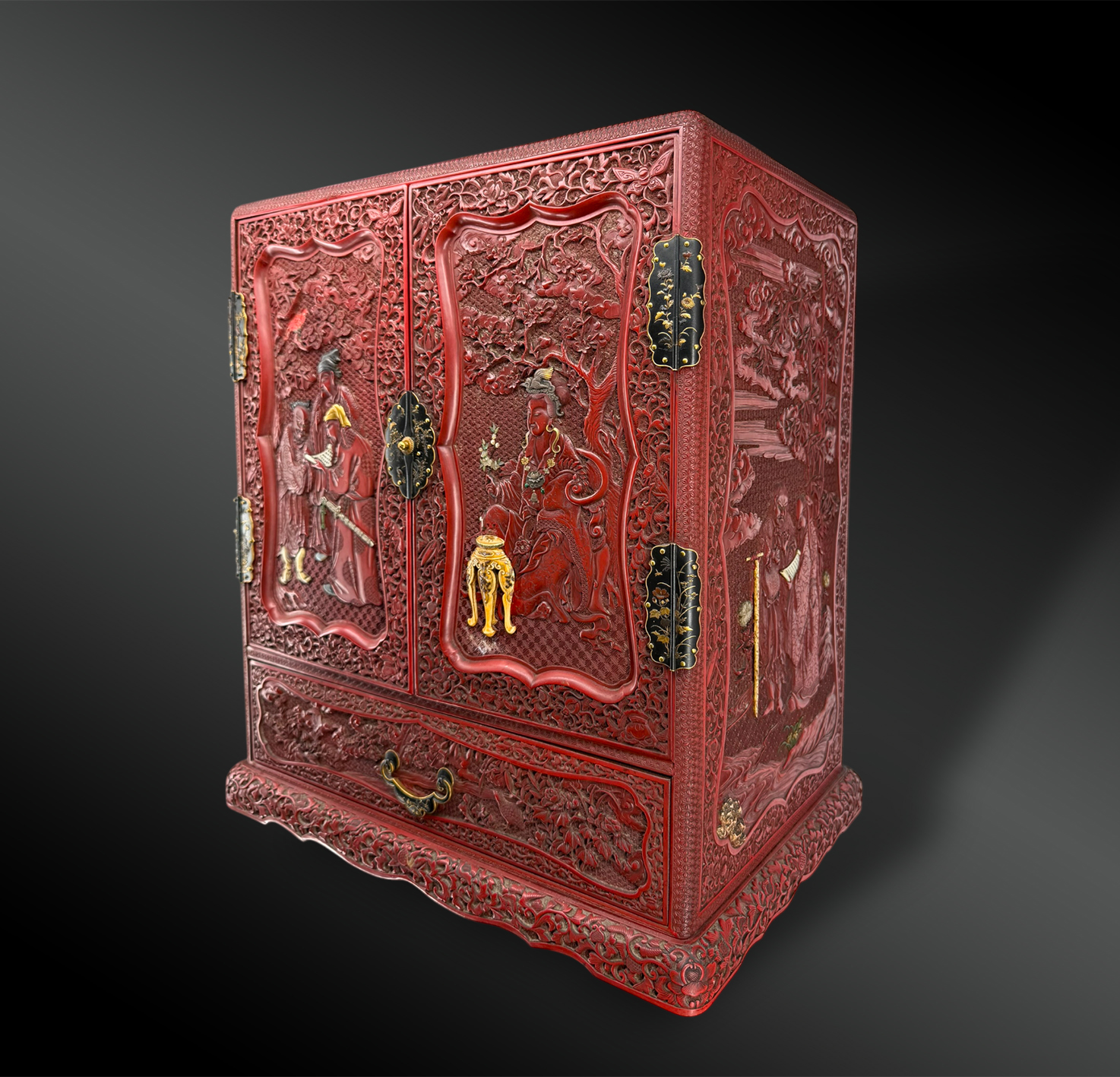
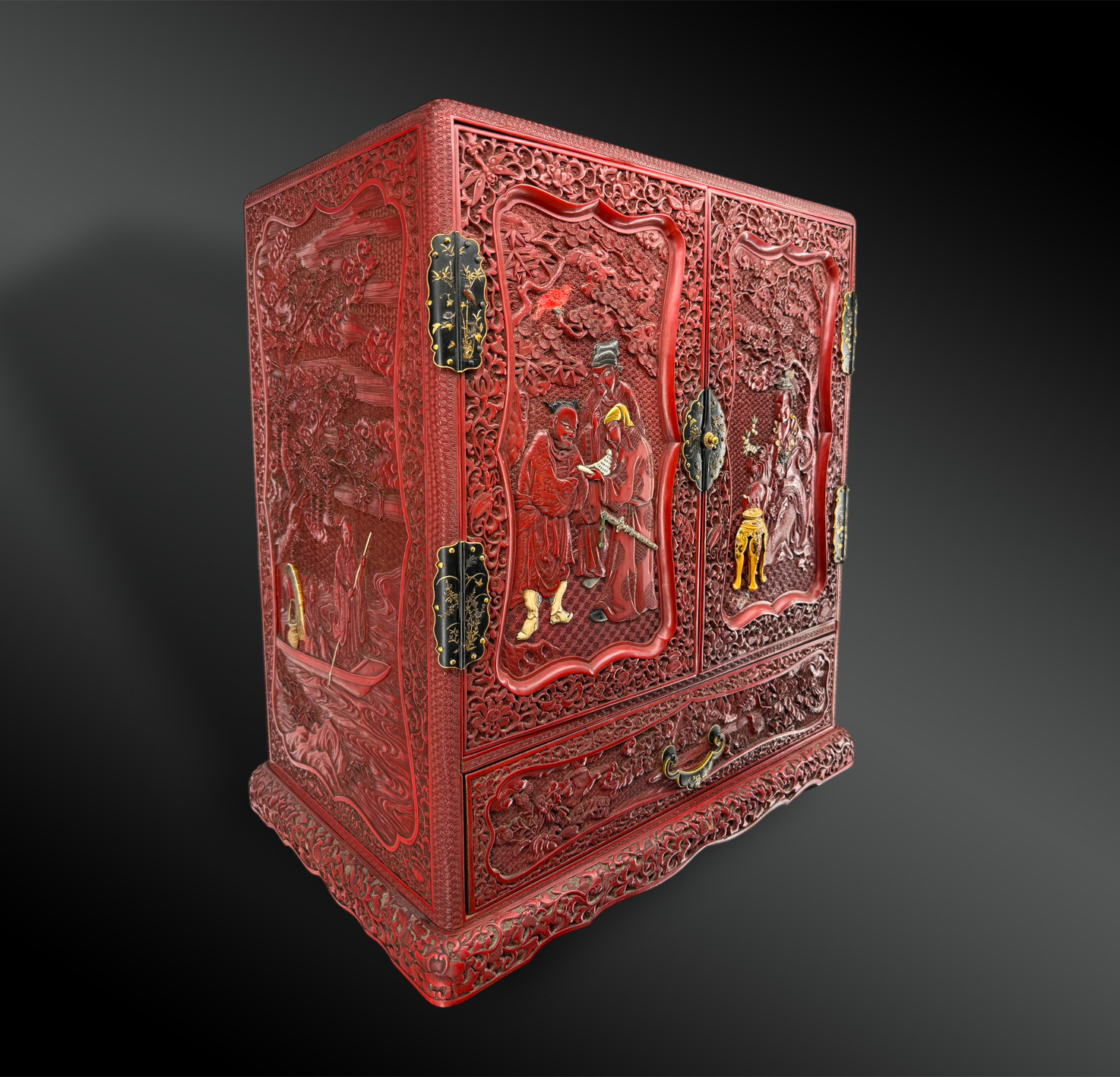
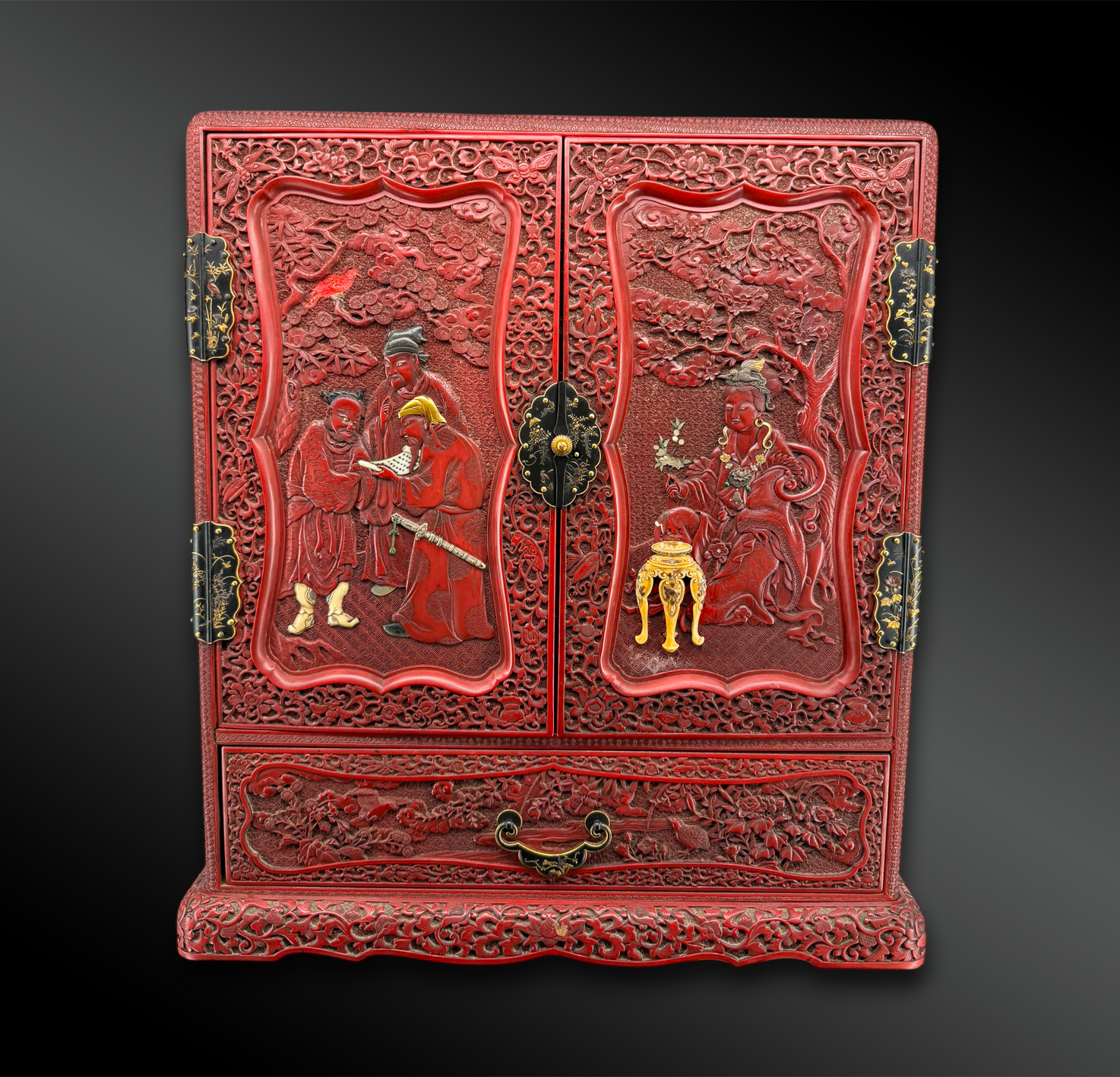
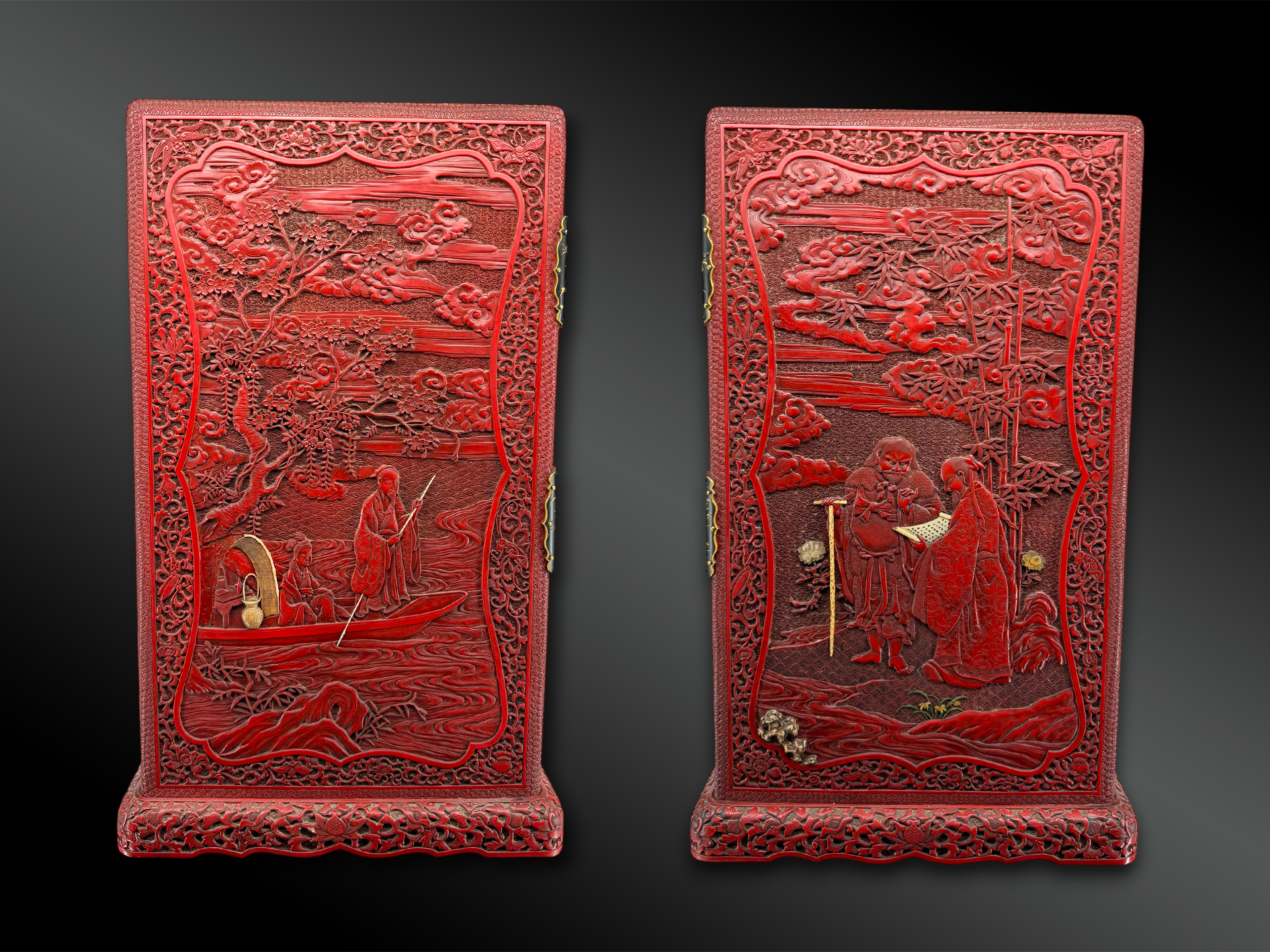
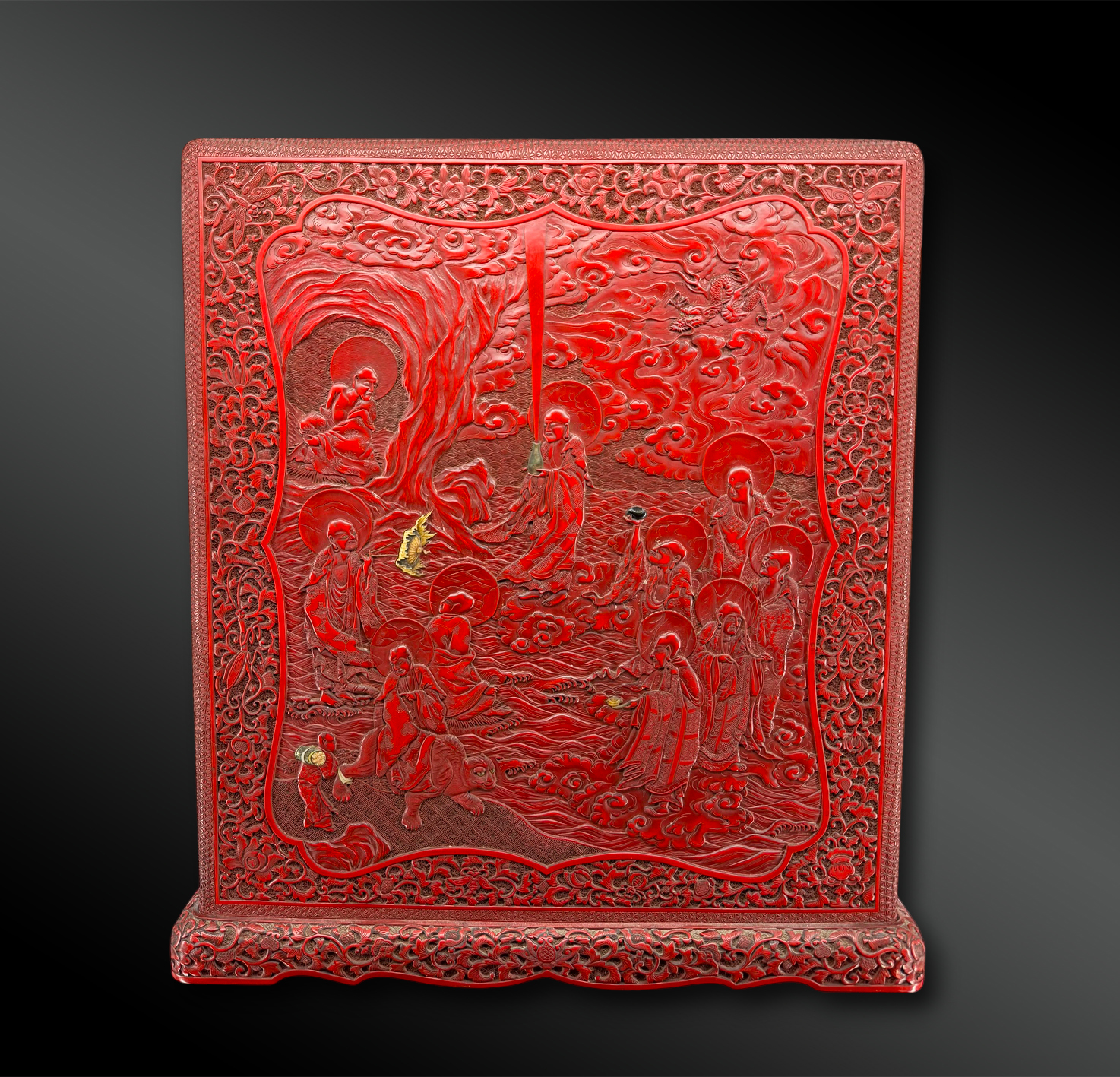
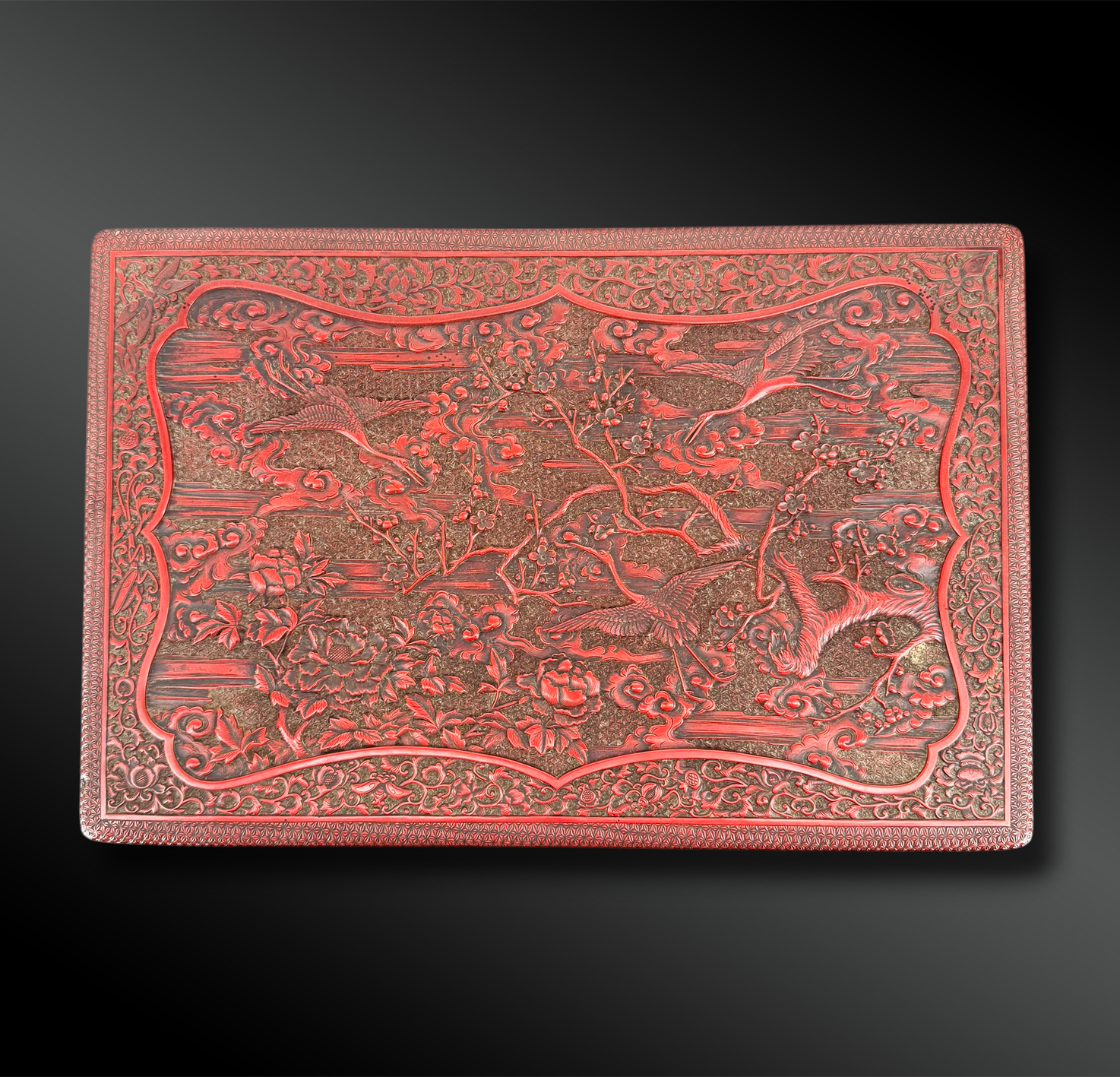
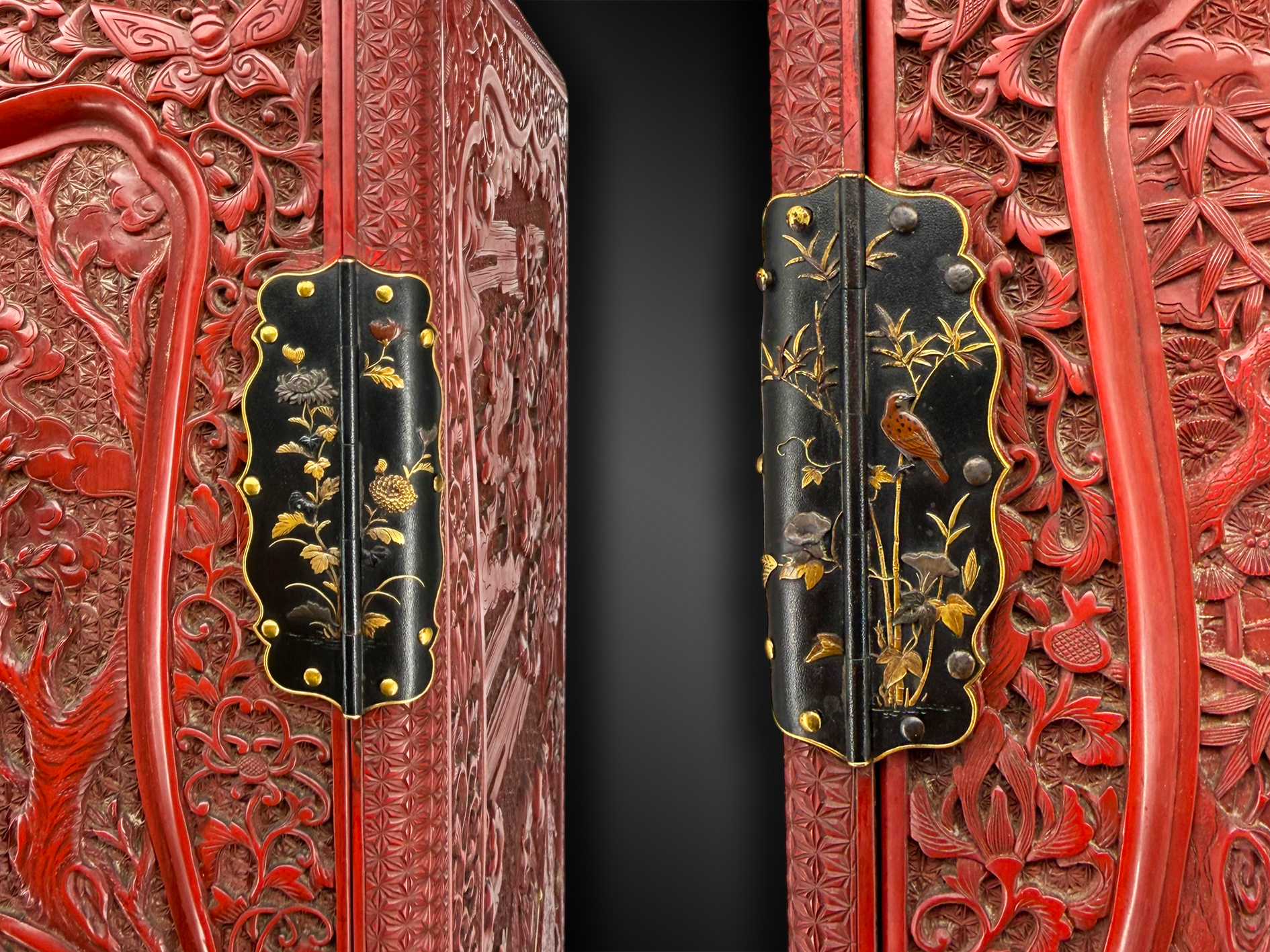
Red lacquered wood cabinet (tsuishu), carved with a lively decoration of deities and legendary figures such as the goddess Benten, the three Chinese generals, rakan - saints of Buddhism, appearing in polylobed cartouches on a background of floral scrolls, embellished with butterflies and other insects; enhanced with mother-of-pearl and ivory inlays.
Shakudo fittings chiseled with gilded floral motifs.
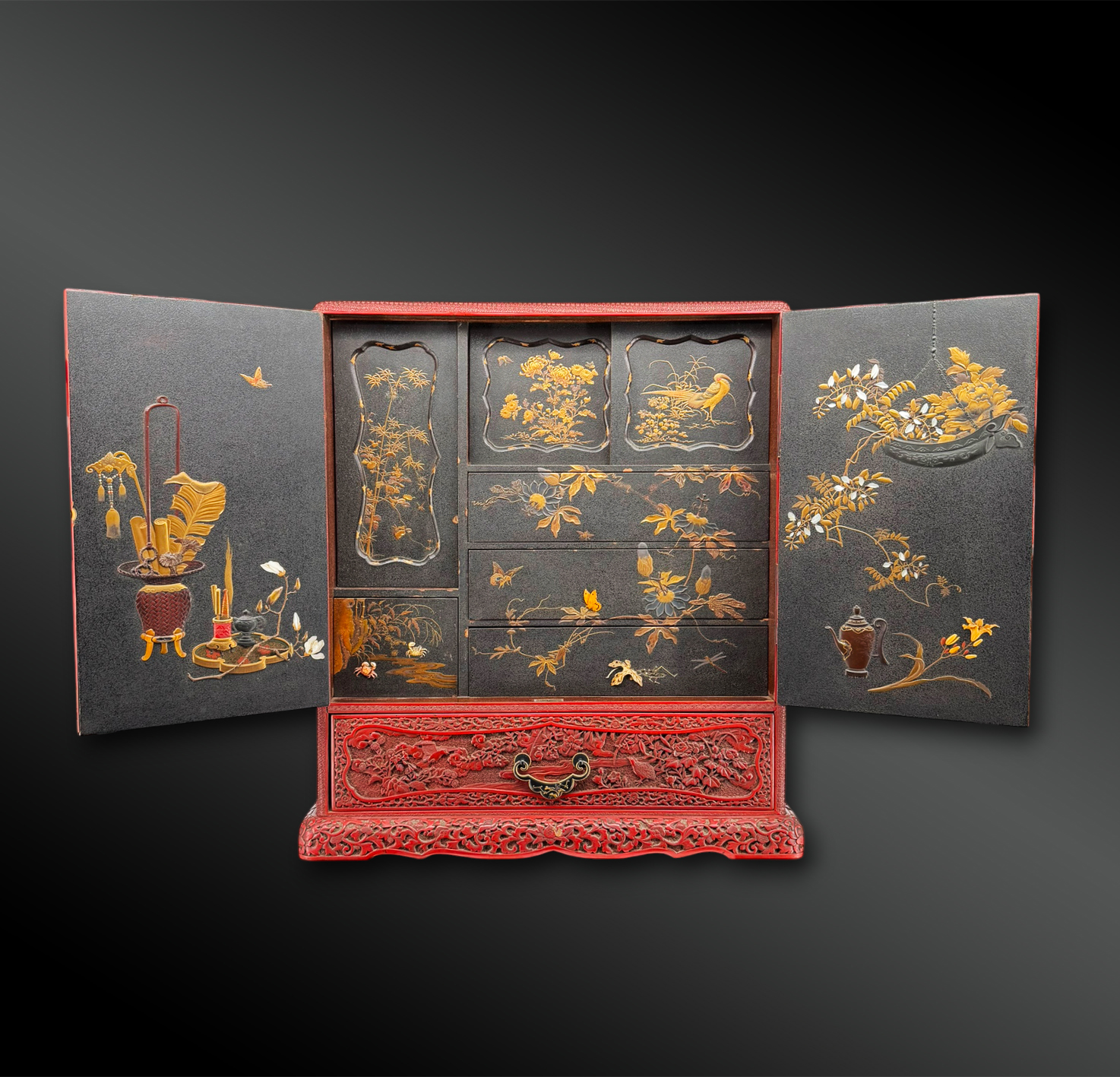
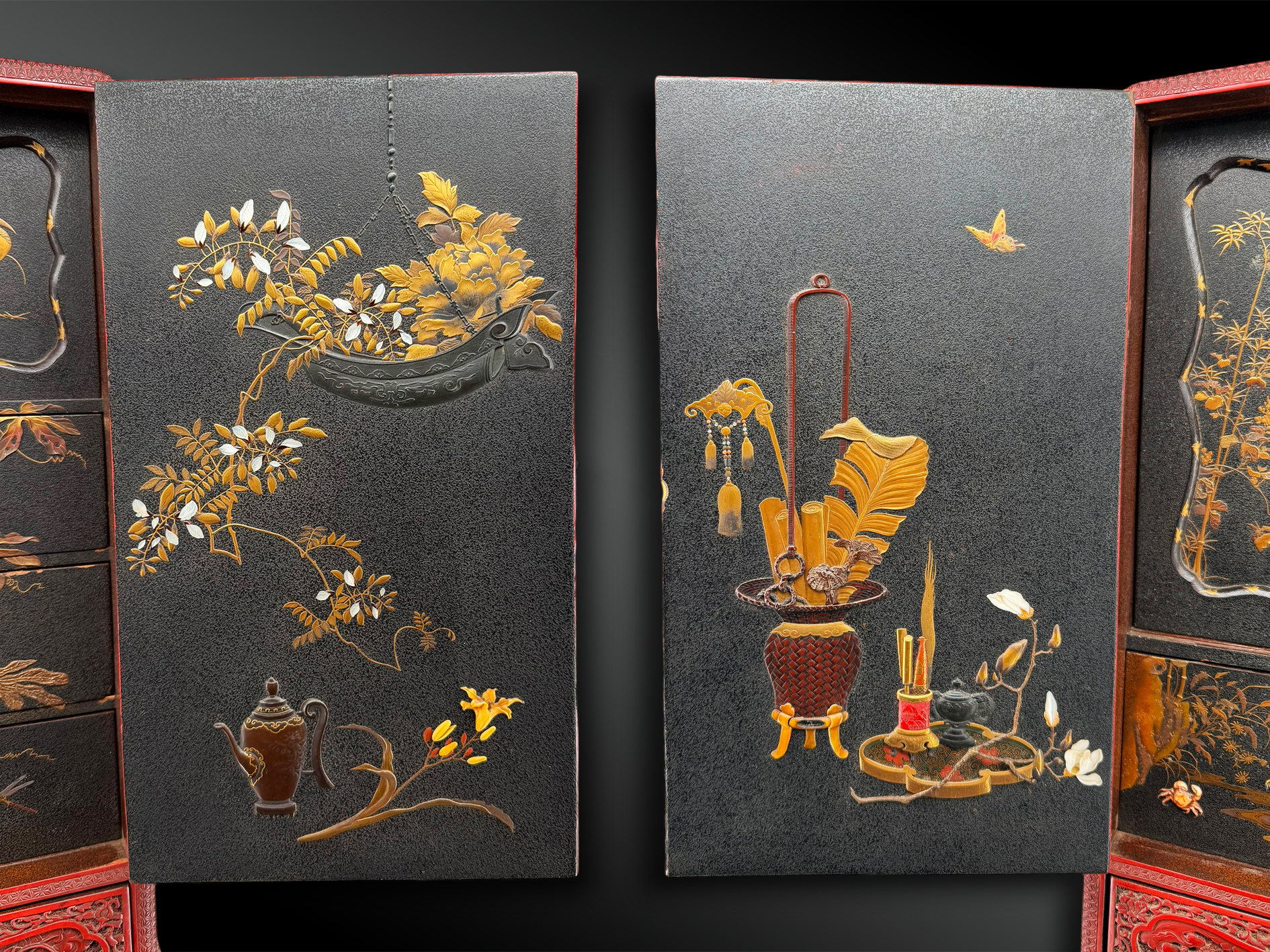
Facade with one drawer and two doors, revealing four drawers and three sliding or removable panels; all lacquered black and decorated in hira and takamaki-e with gold and polychrome lacquer, and inlays of mother-of-pearl and elephant ivory, furniture, flowers, birds, butterflies, crabs by the water.
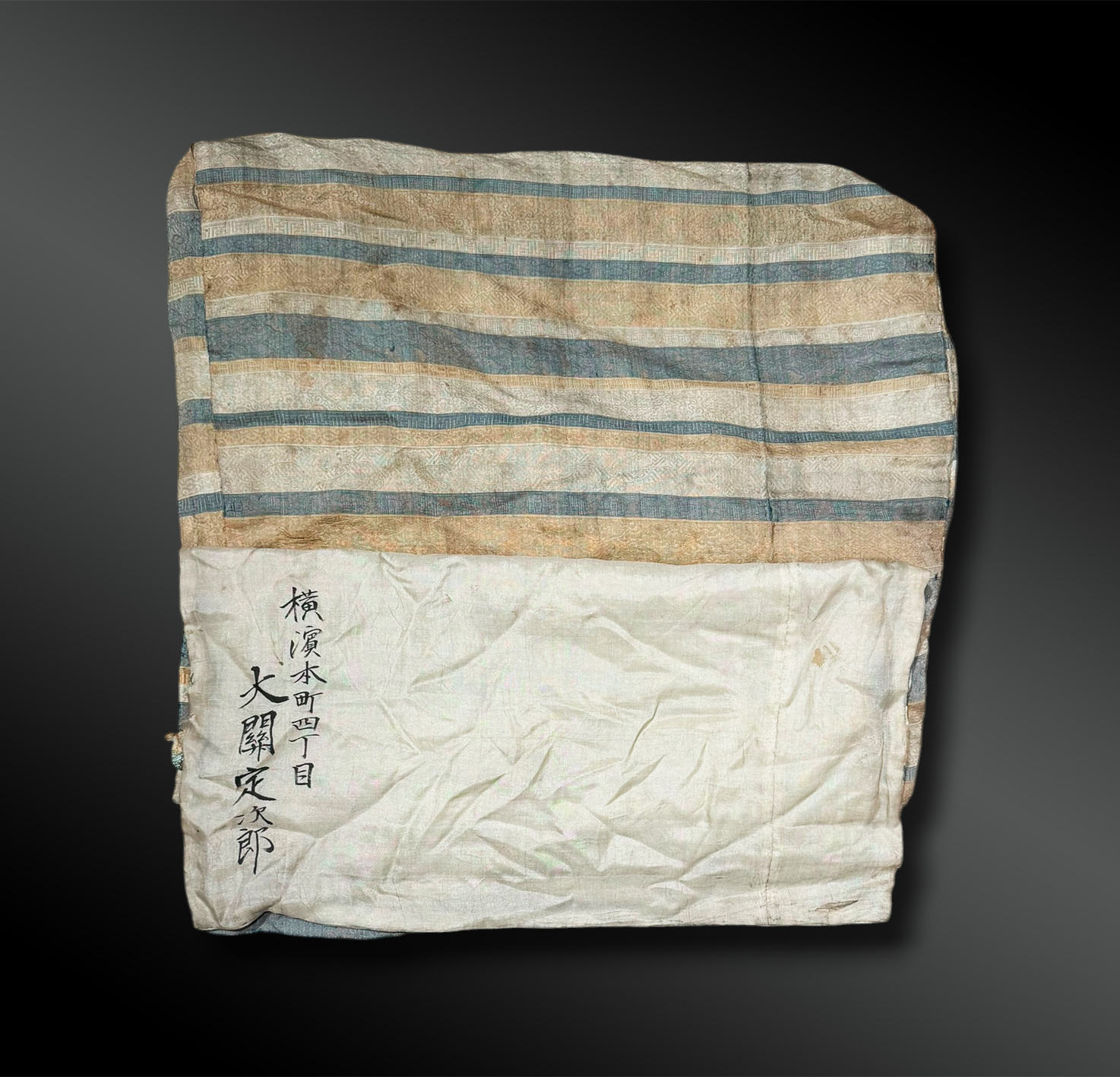
Protective silk cover, marked Ozeki Tadajiro Yokohama Honmachi 4 Chome.
The inscription on the cabinet's protective cover reveals its origin. It refers to Ozeki Sadajiro, who, along with his father Ozeki Yahei, founded the Musashiya company, specializing in the sale of high-quality Japanese art objects commissioned from artists and artisans. Active at the very end of the Edo period and throughout the Meiji era, the company notably expanded its business internationally.
This focus on exports became particularly evident after the opening of a branch of the company in Yokohama in 1859, which appears to have been placed under the direction of Ozeki Sadajiro. The presence of his inscription on the cover suggests that the cabinet was marketed by Musashiya and probably intended from the outset for the Western market.
It could therefore have been acquired by a prominent European dealer or collector in the second half of the 19th century, a period marked by a growing enthusiasm for Japanese art, which gave rise to the cultural phenomenon of Japonisme. It is also possible that this cabinet was designed or selected for display at one of the World's Fairs held in France and Europe from the mid-19th century onwards, events that played a major role in the dissemination and recognition of Japanese art in the West.
Document accompanied by a CIC registered under No. FR2408300176-K, dated September 5, 2024.
Text and photos © FCP CORIDON