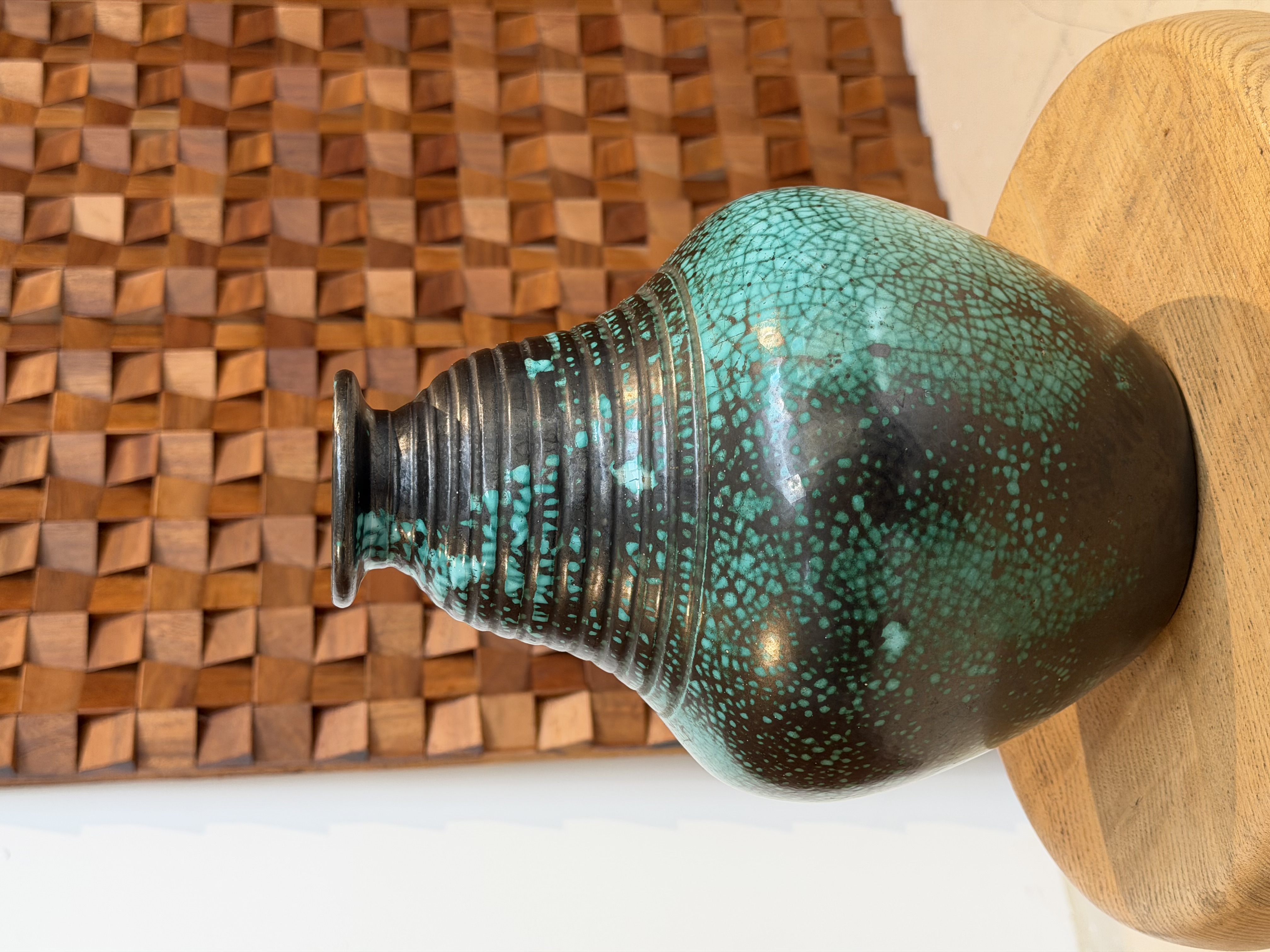
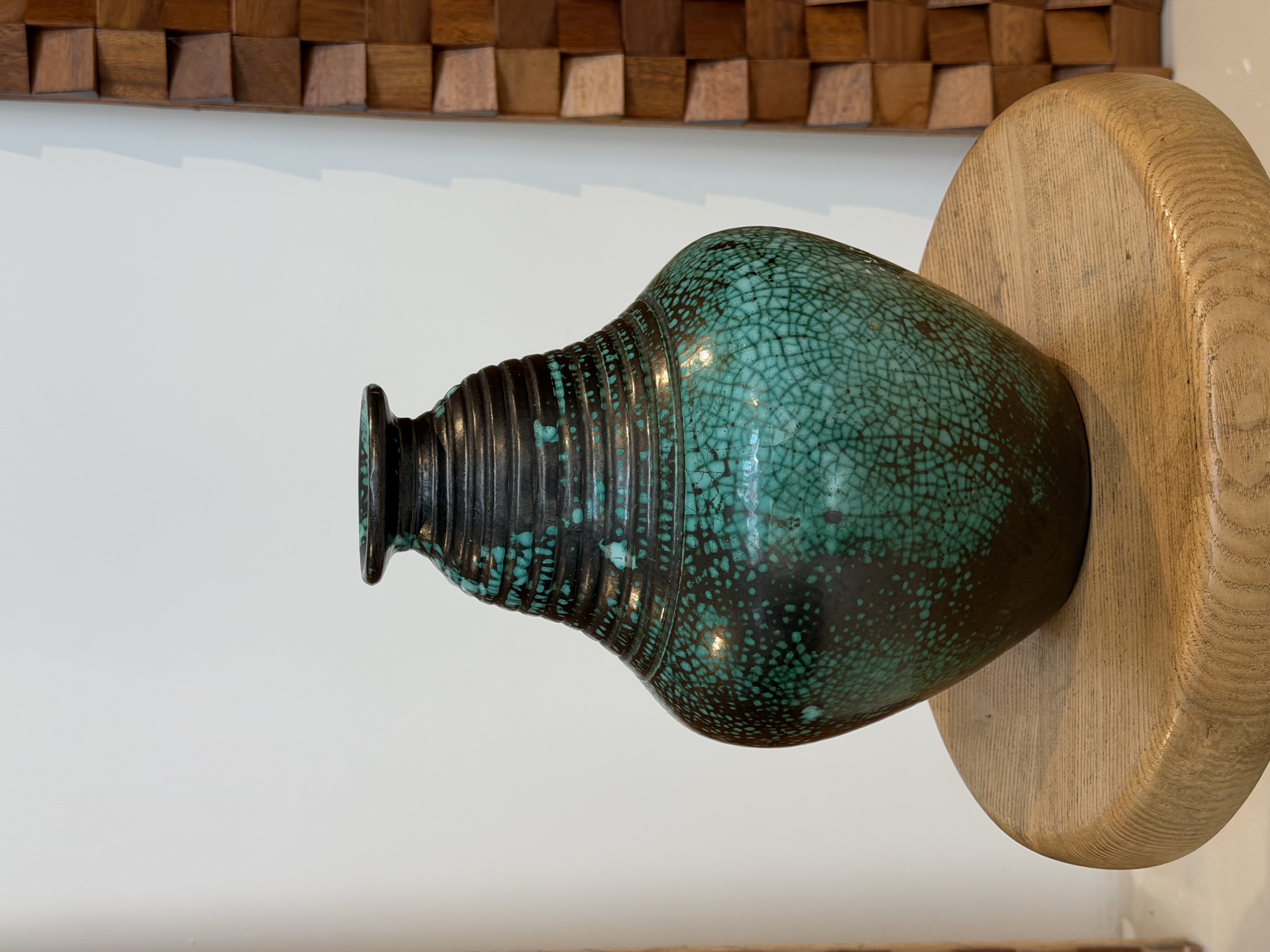
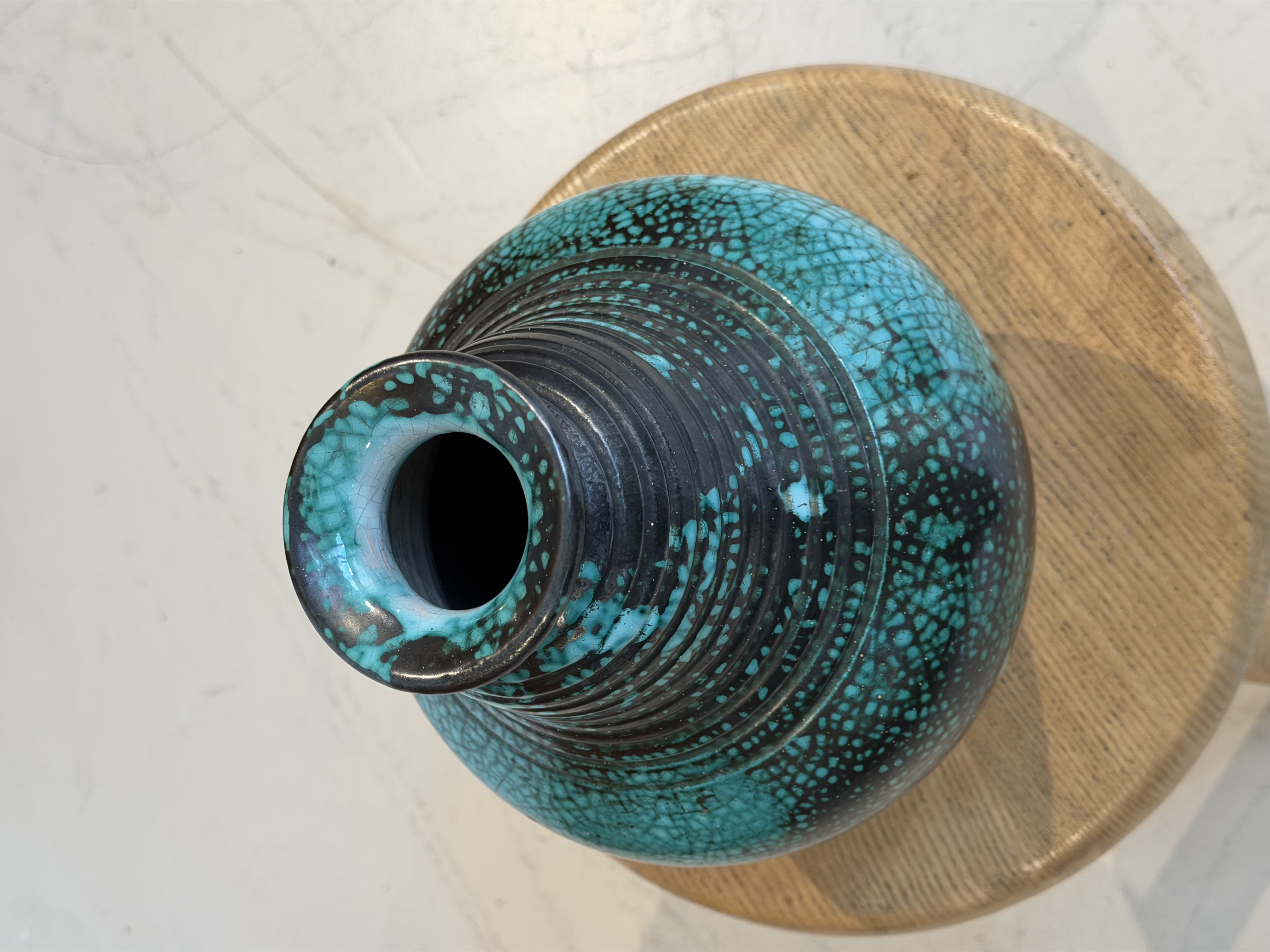
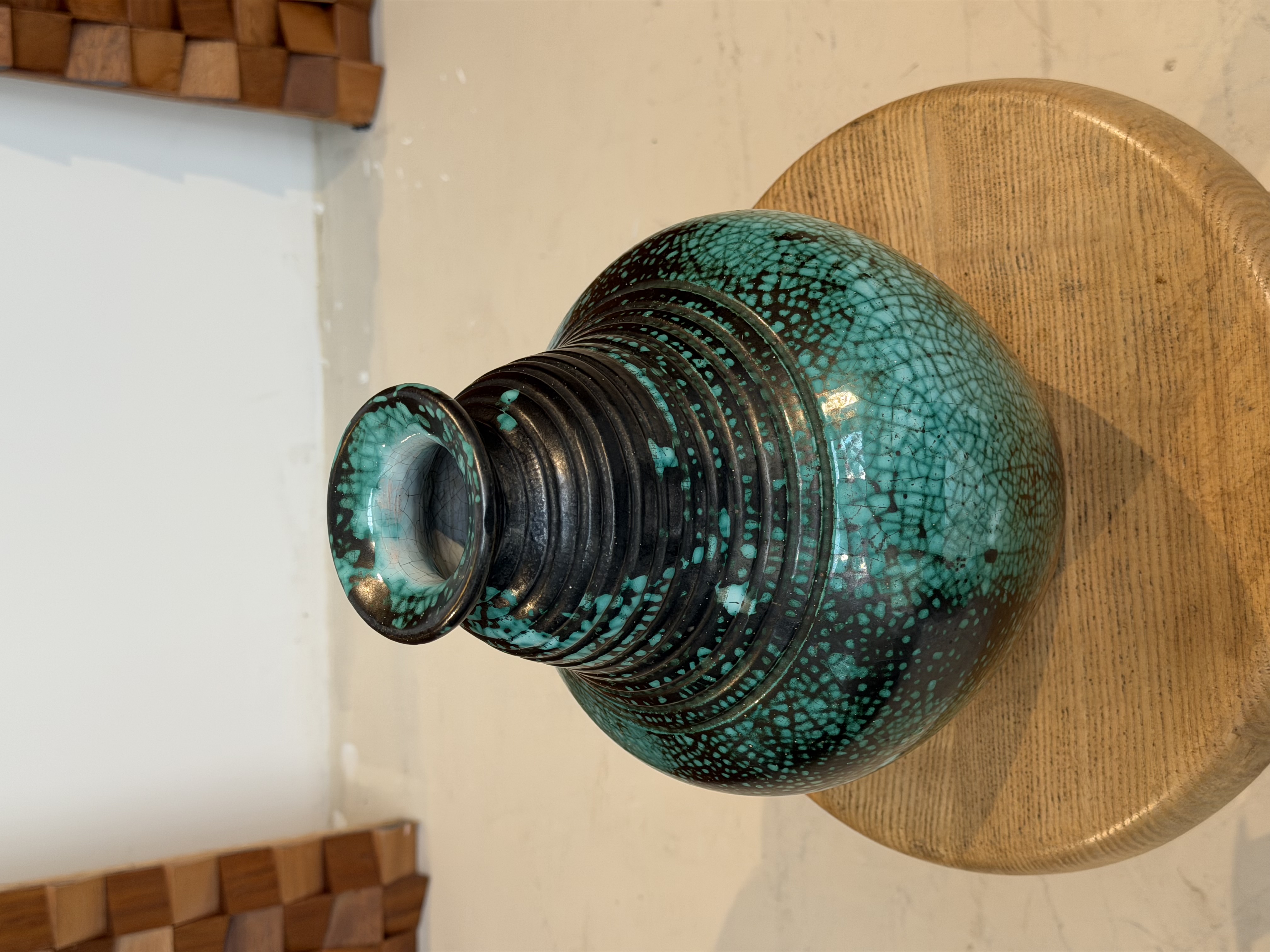
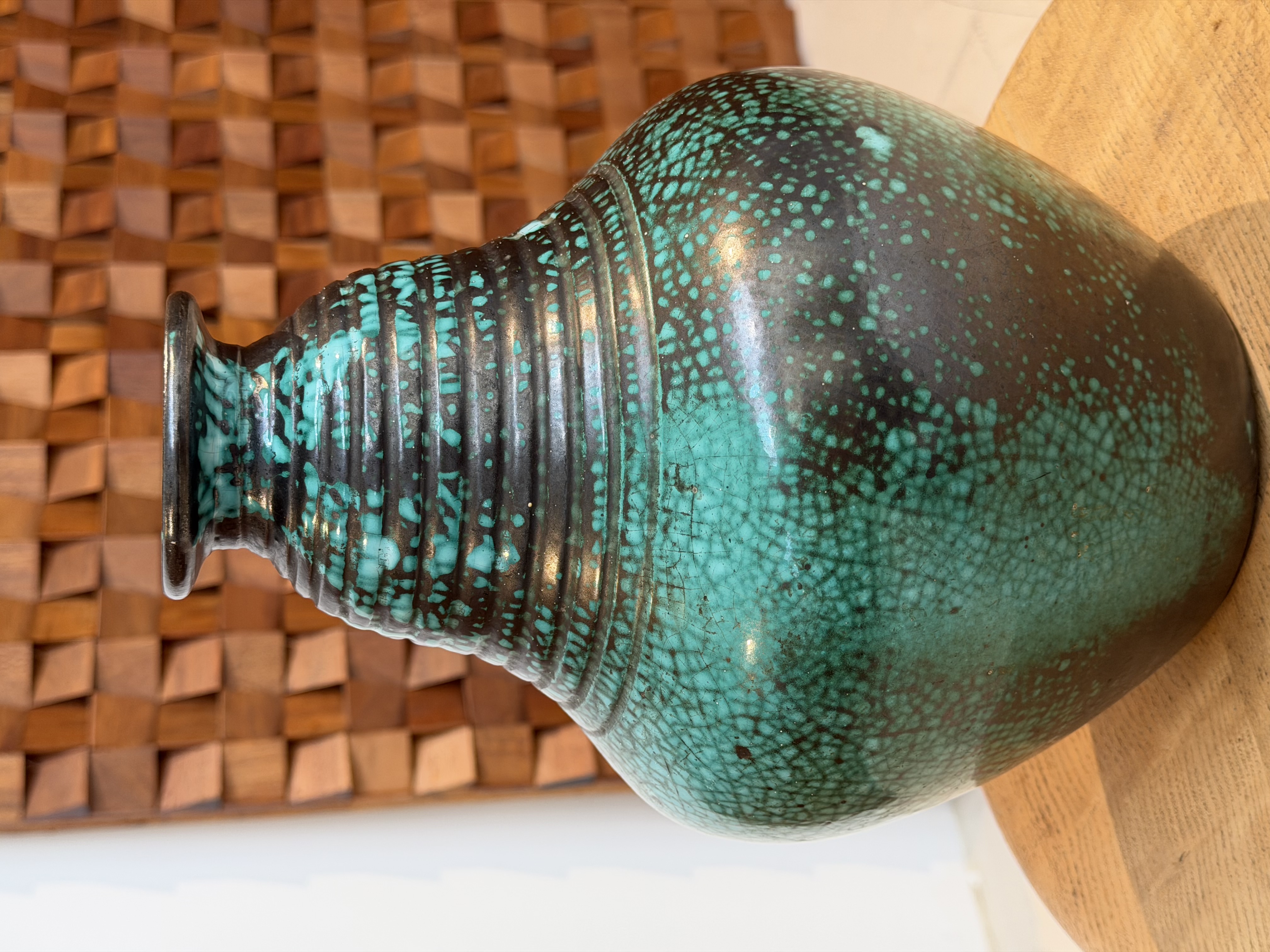
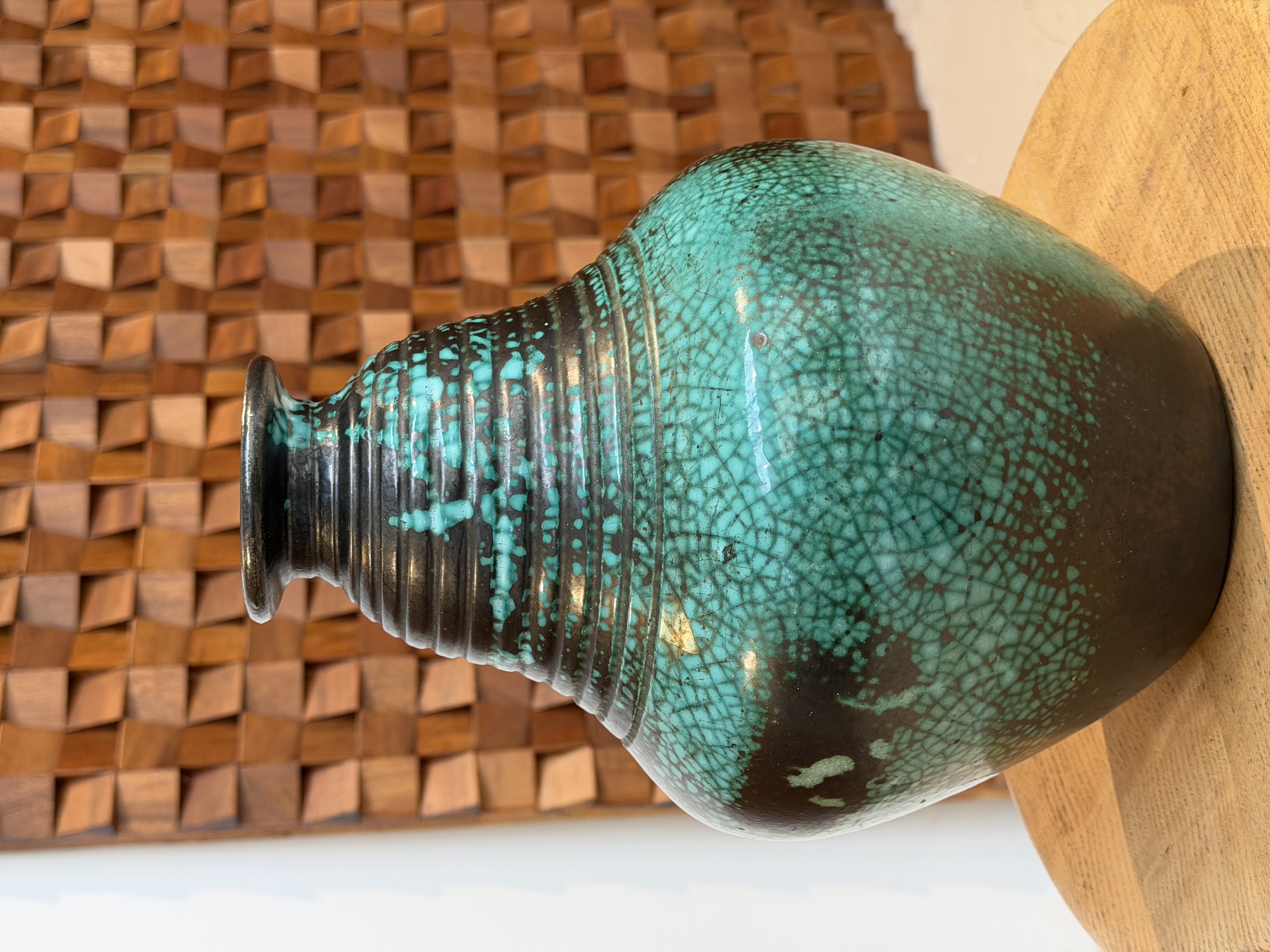
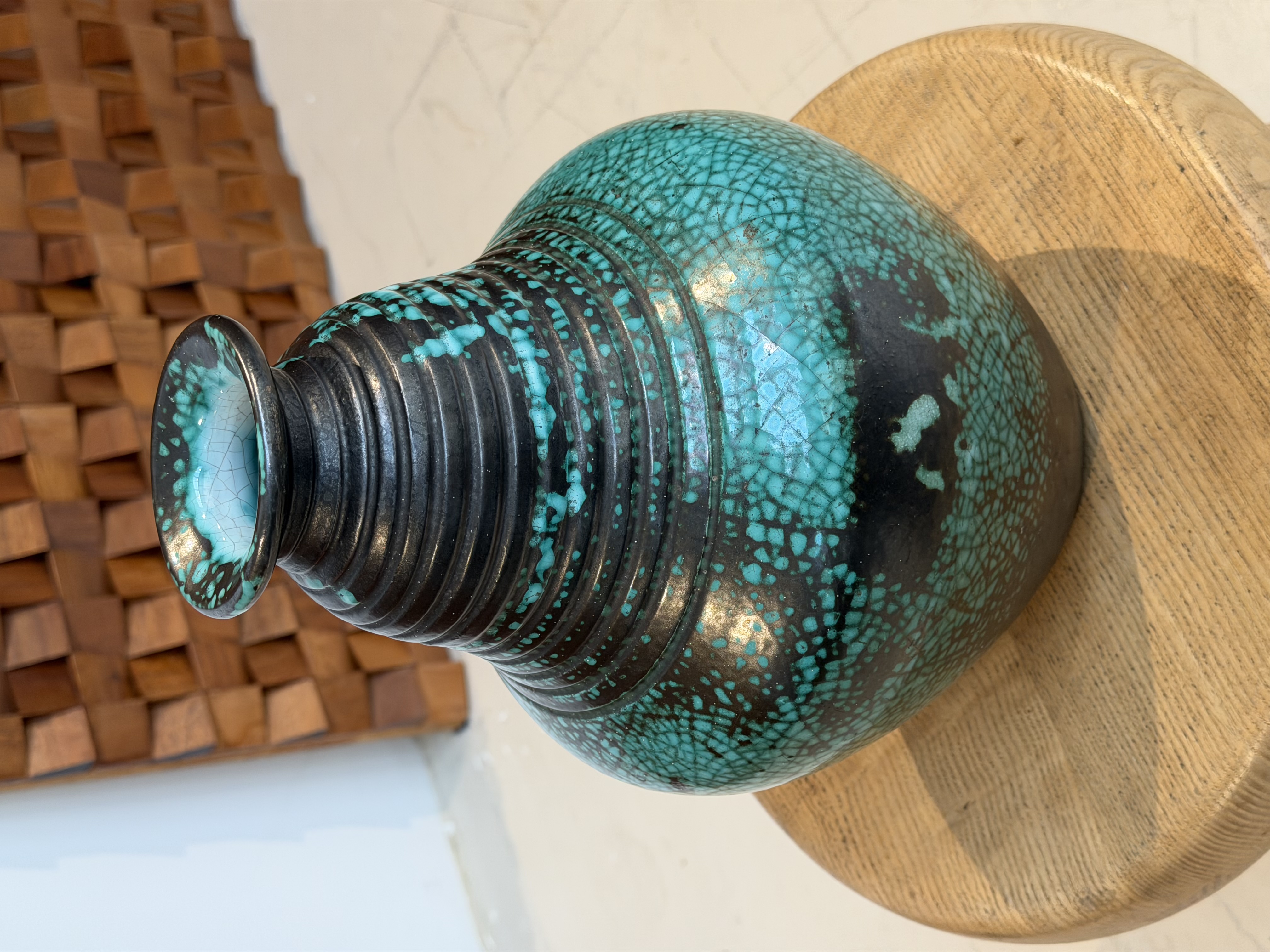
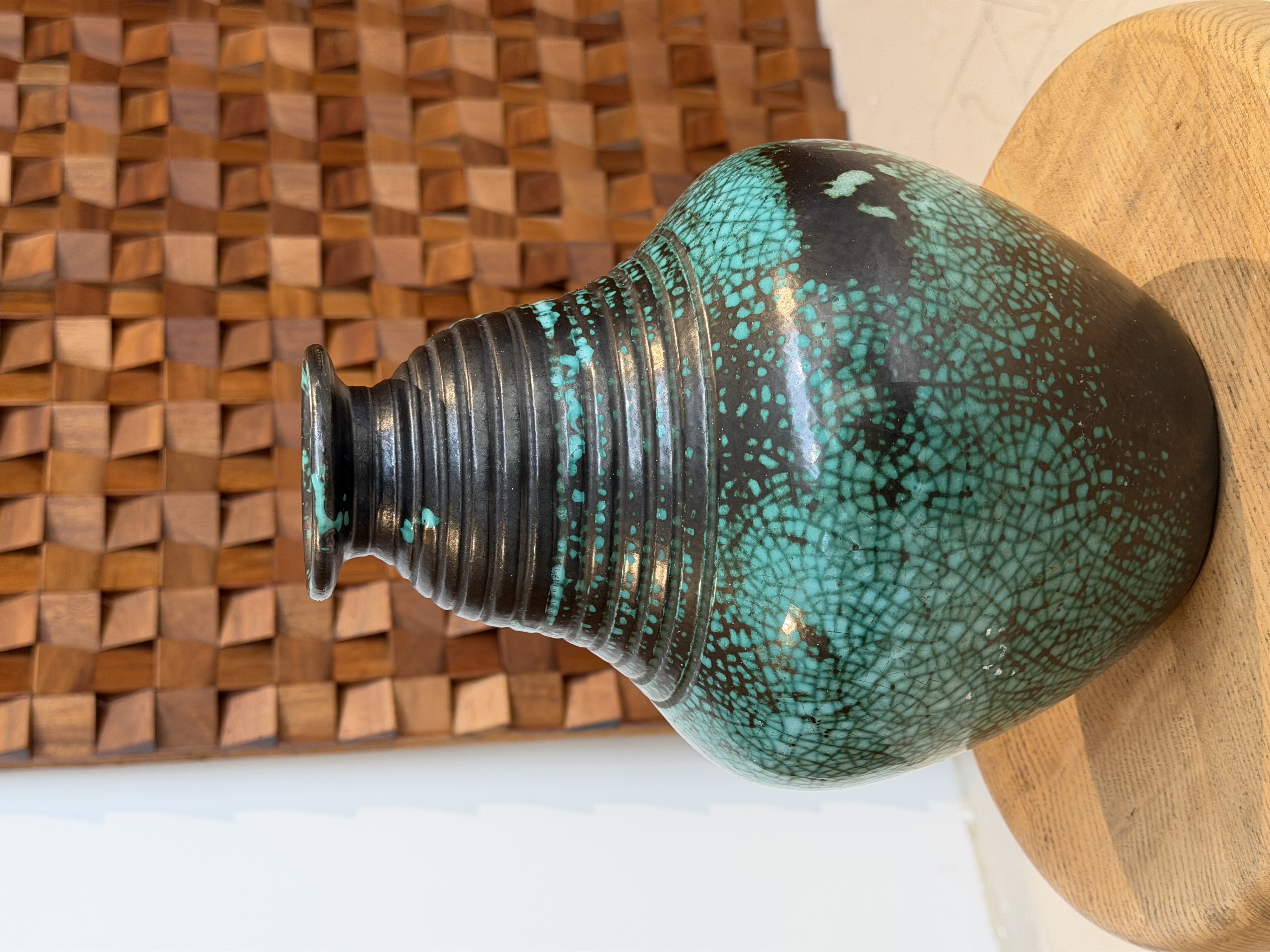
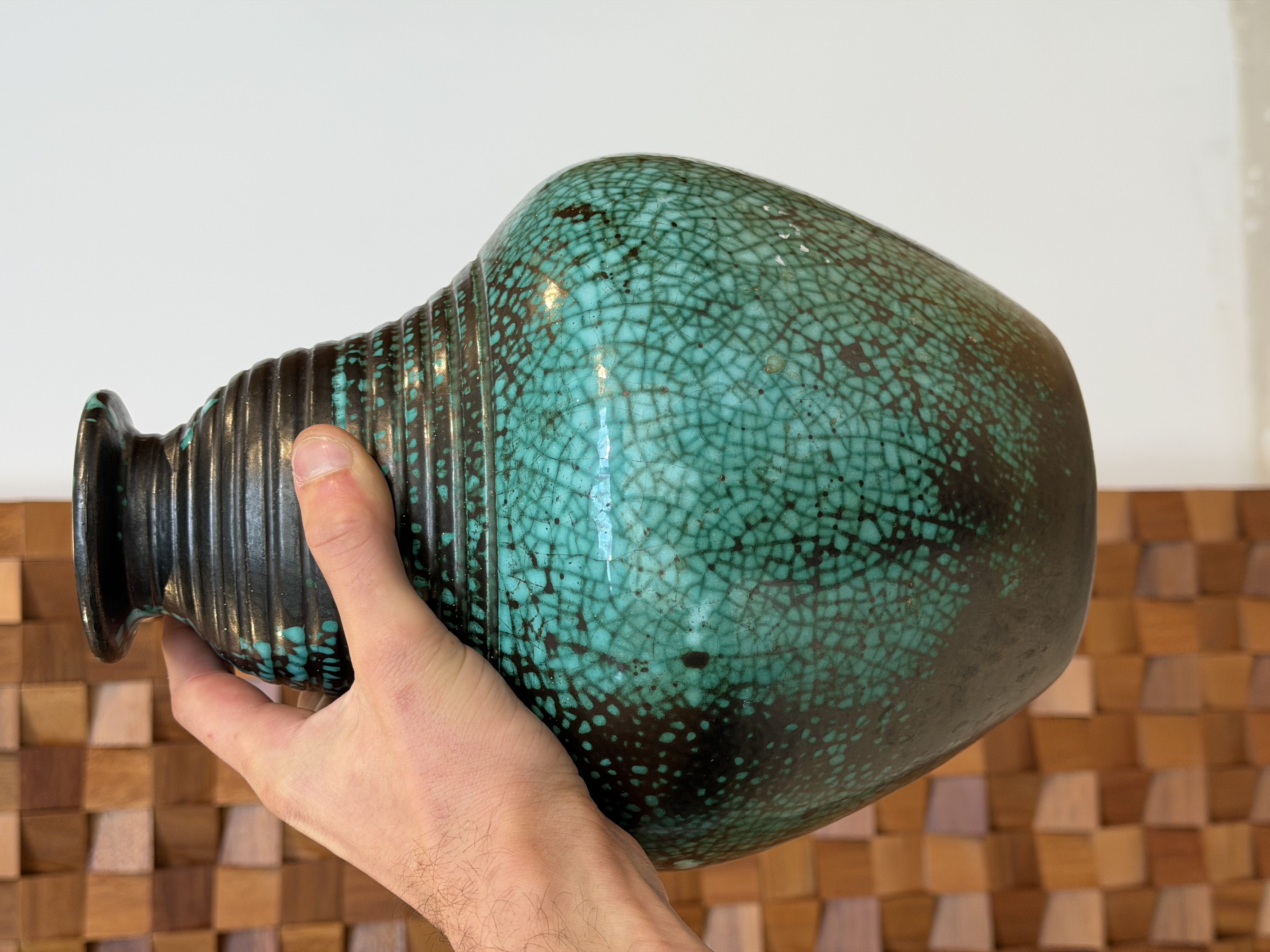
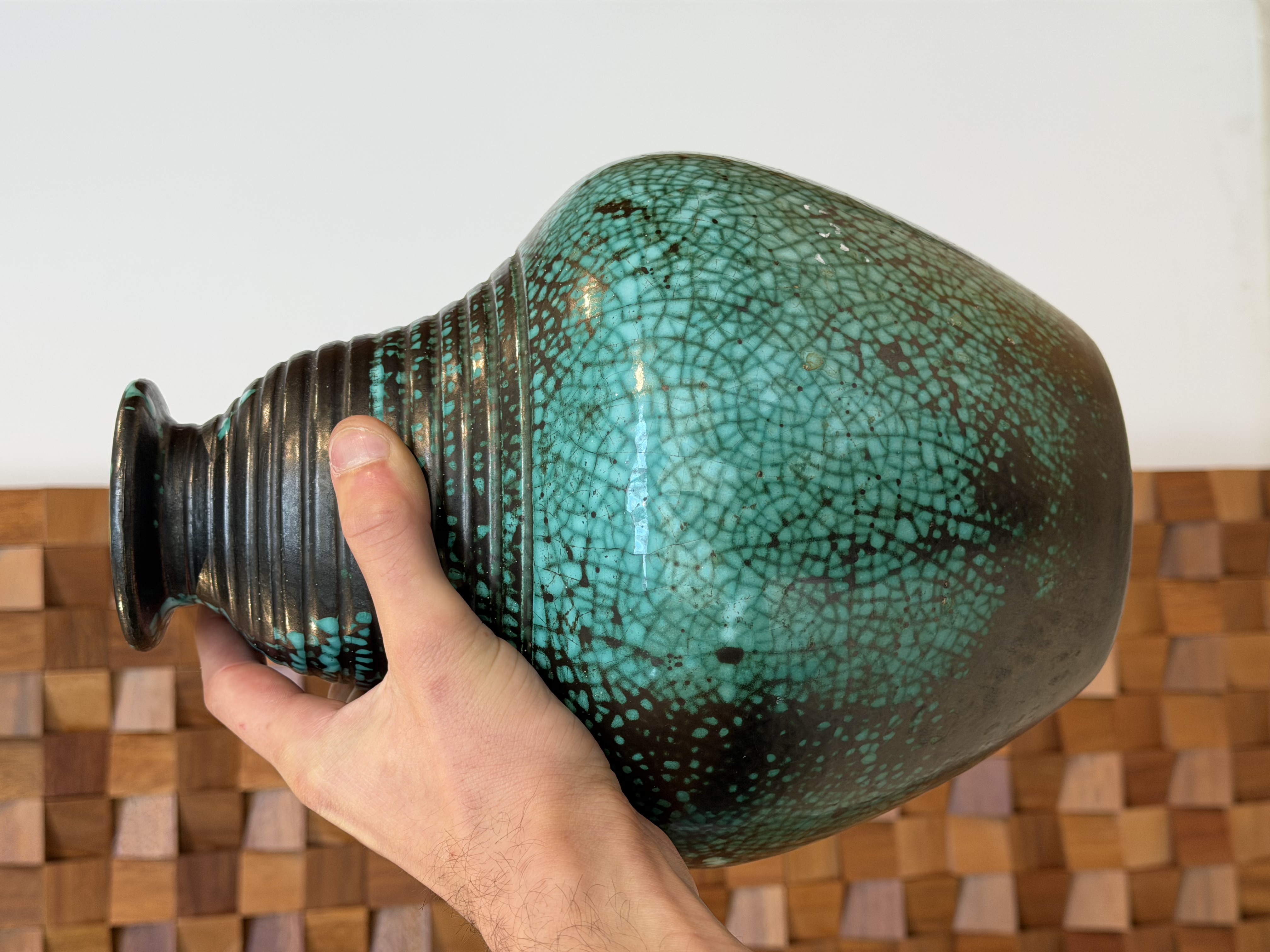
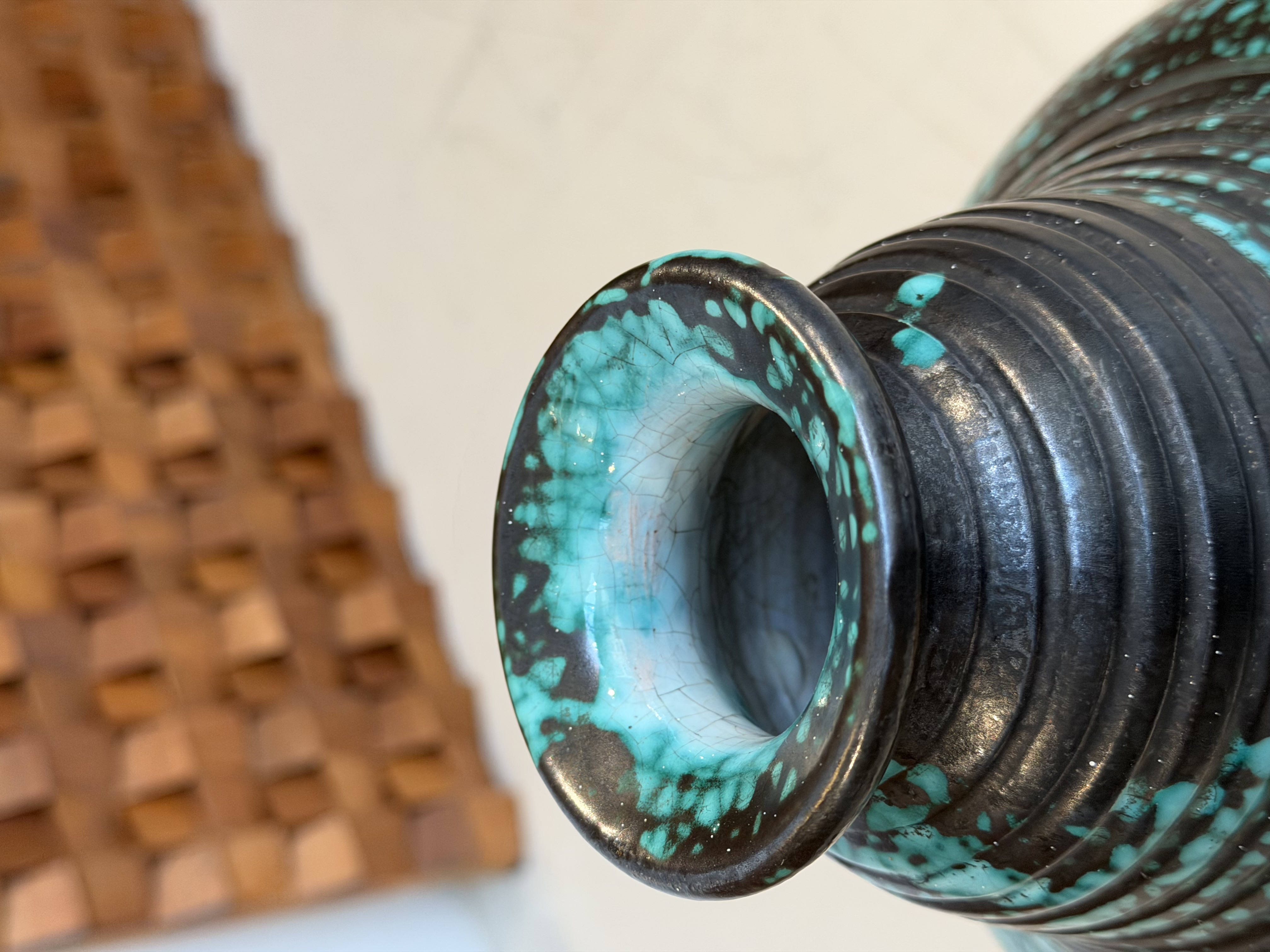
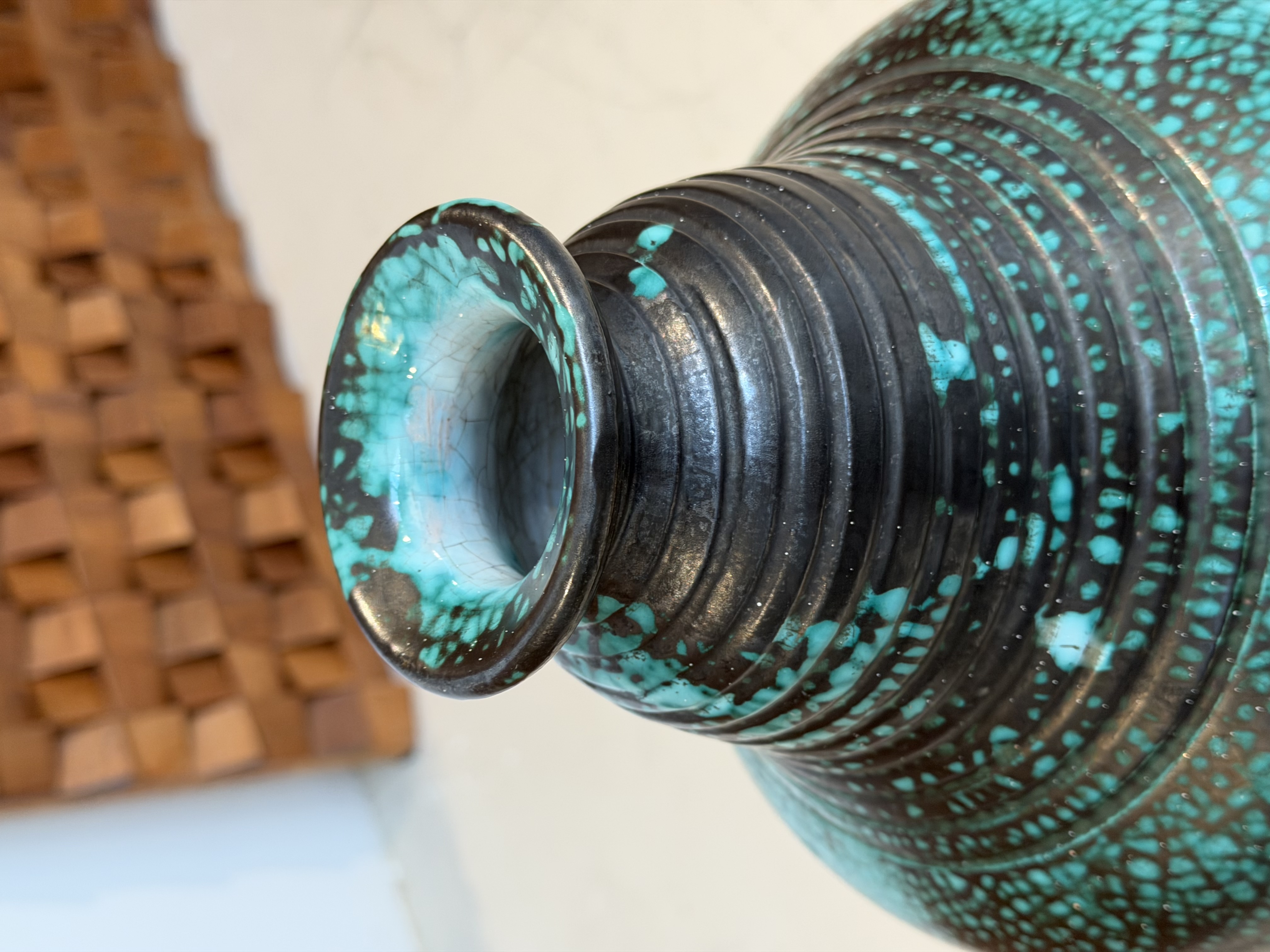
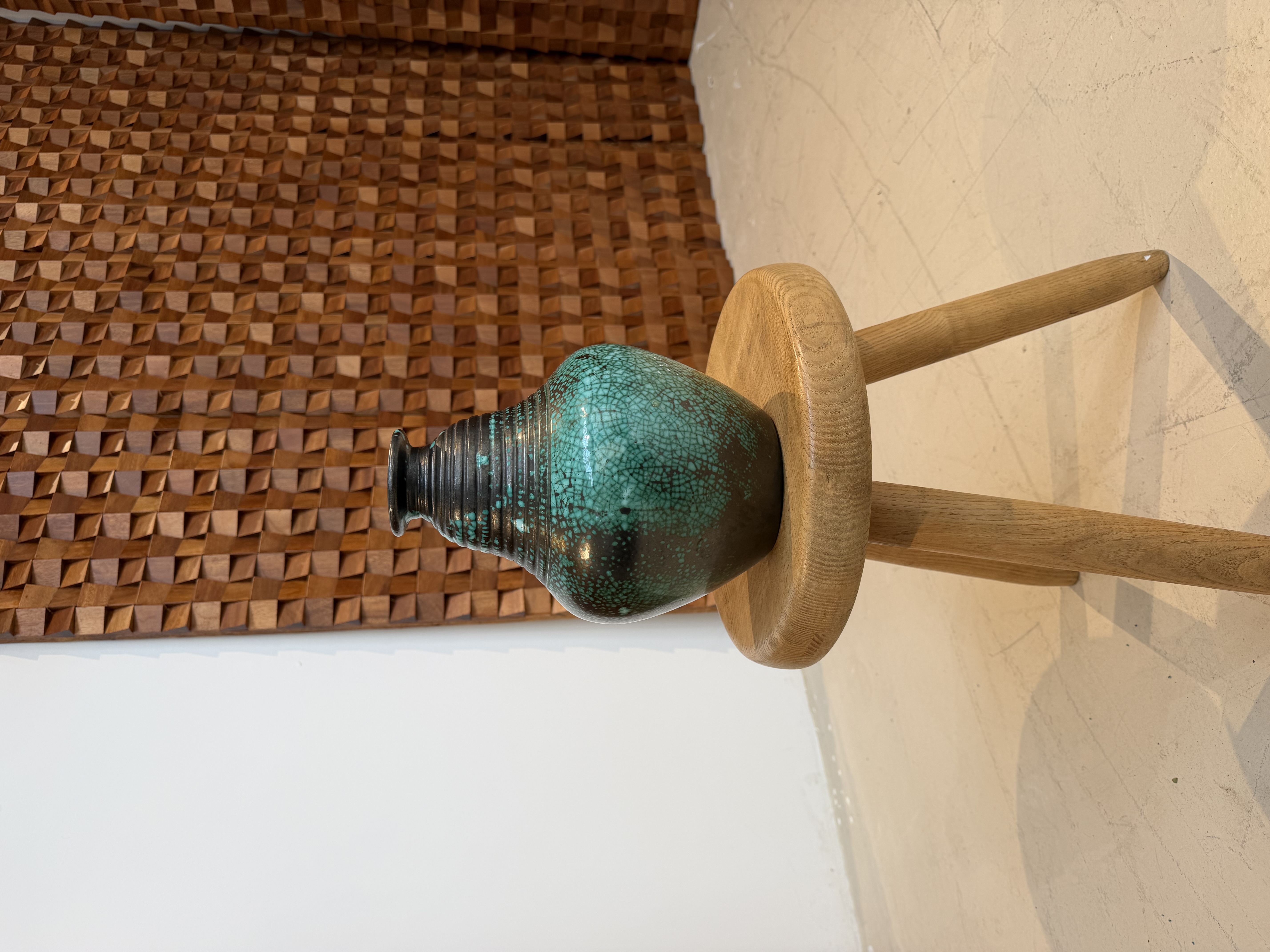
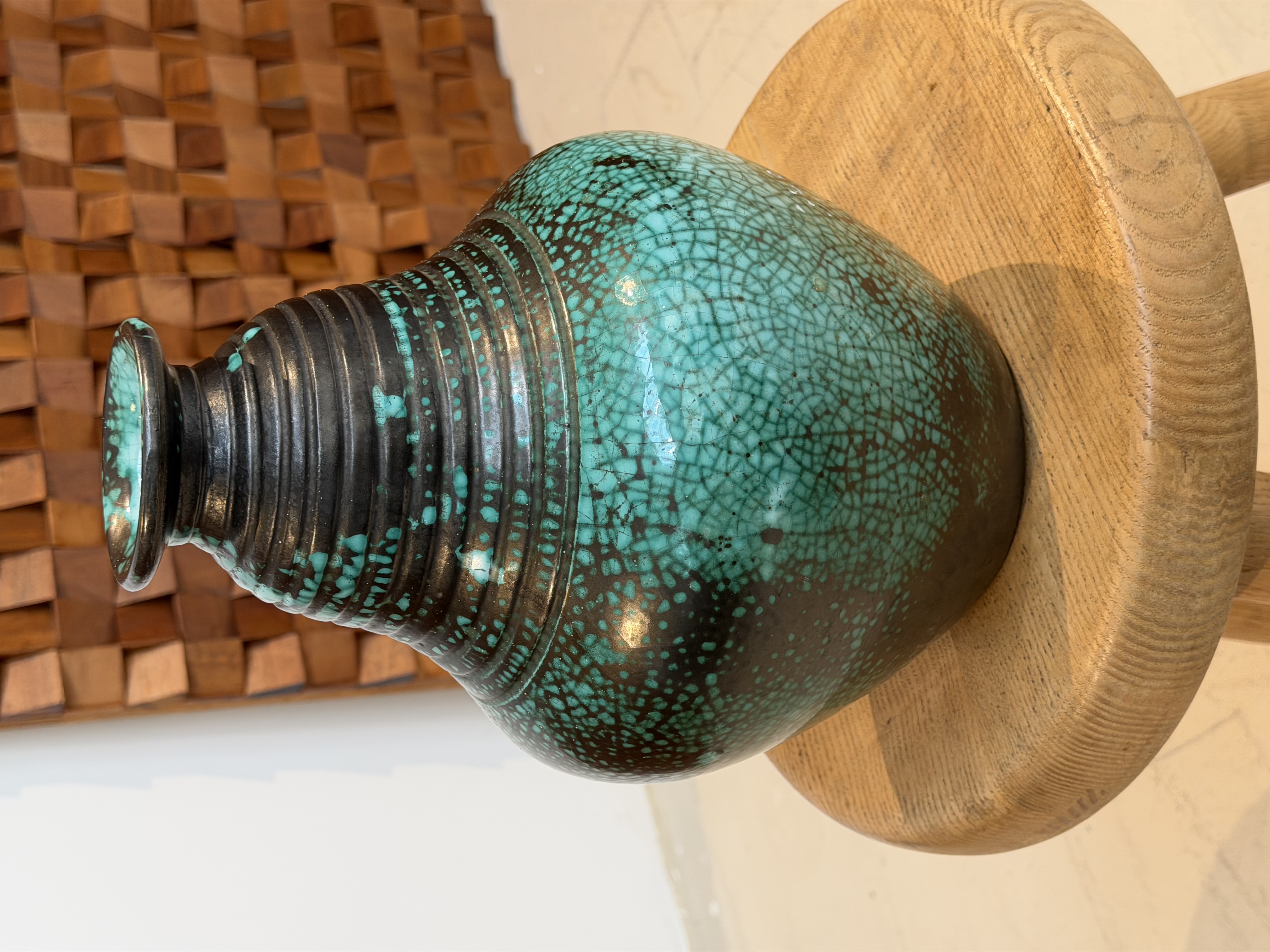
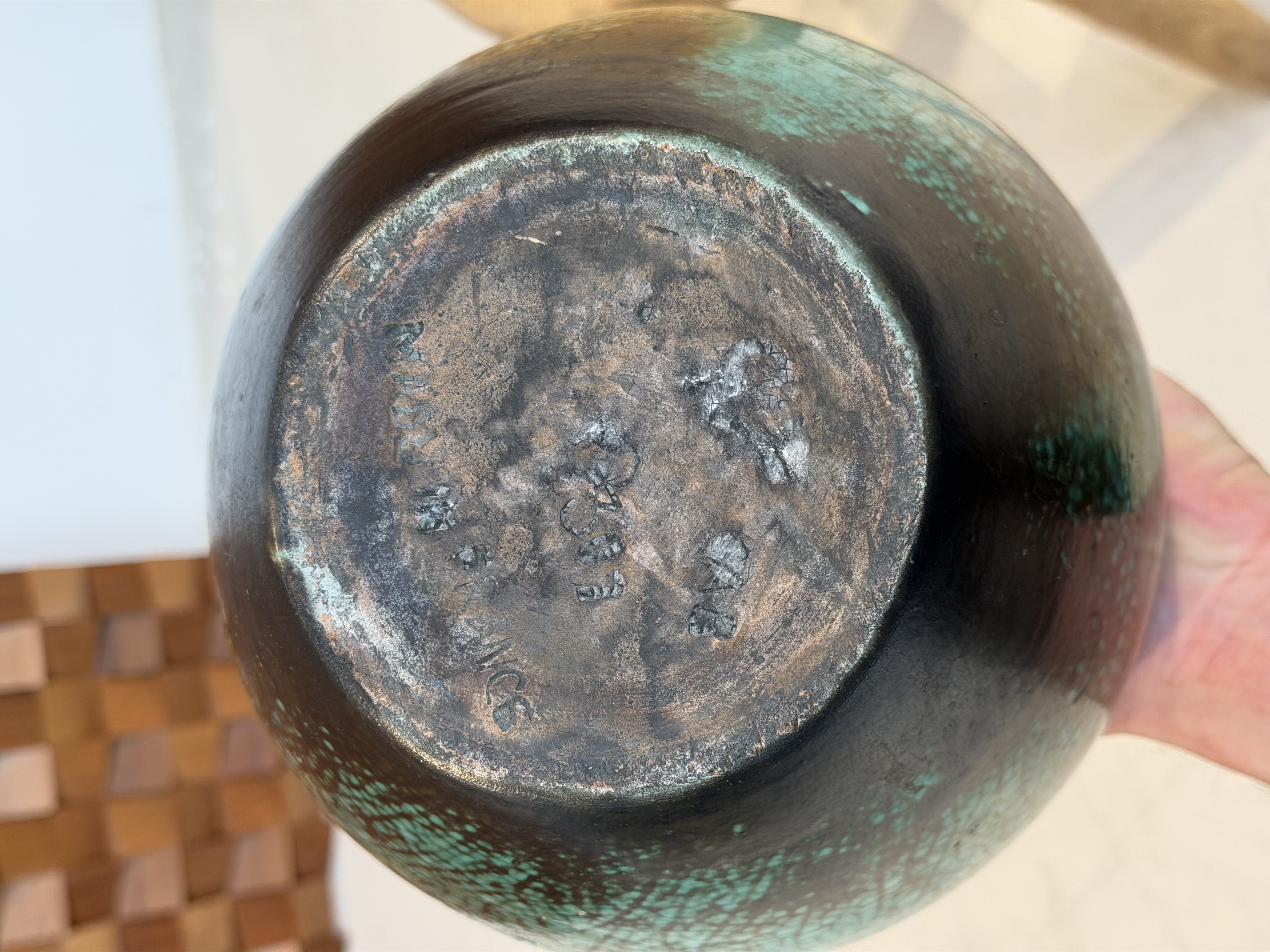
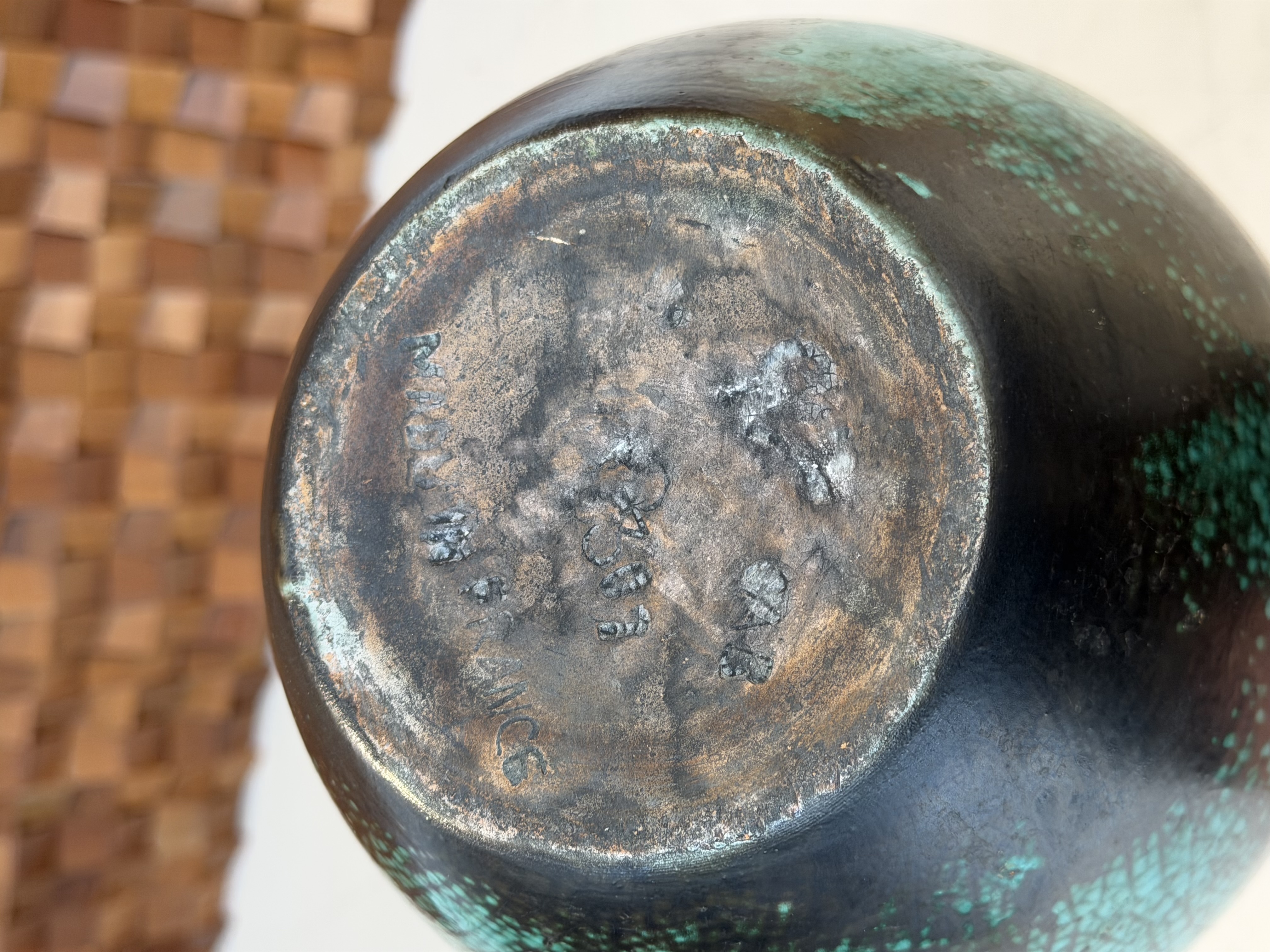
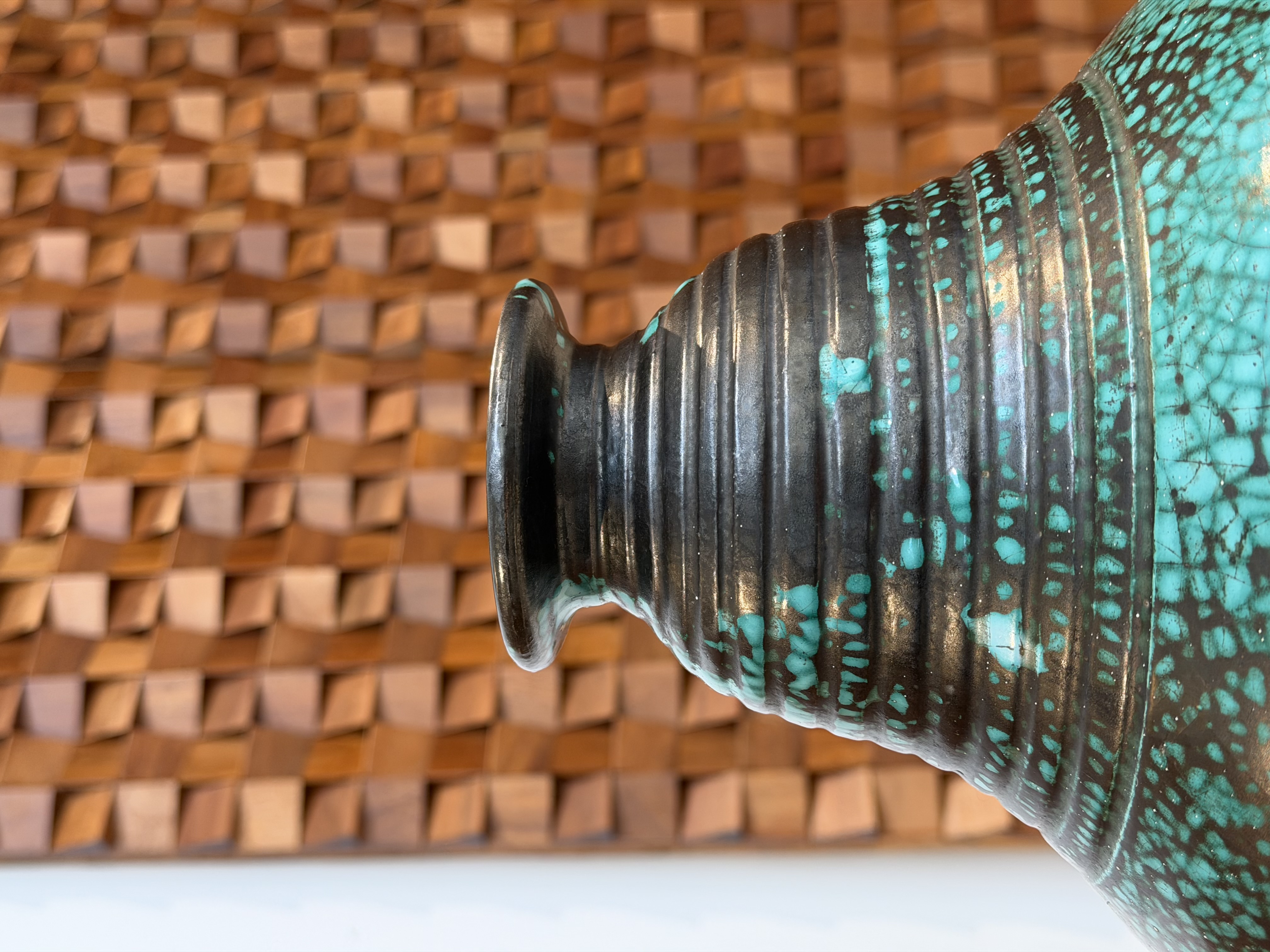
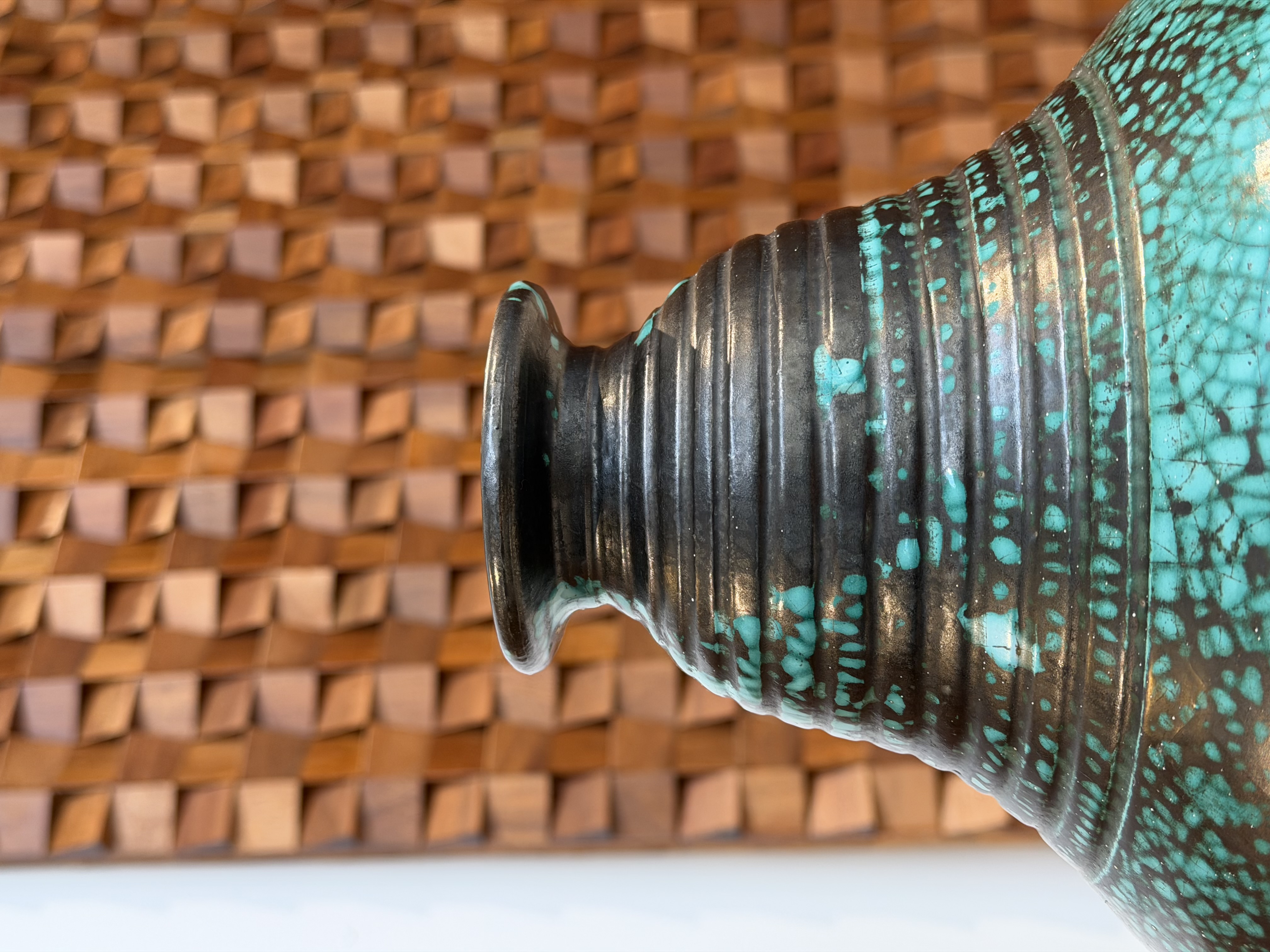
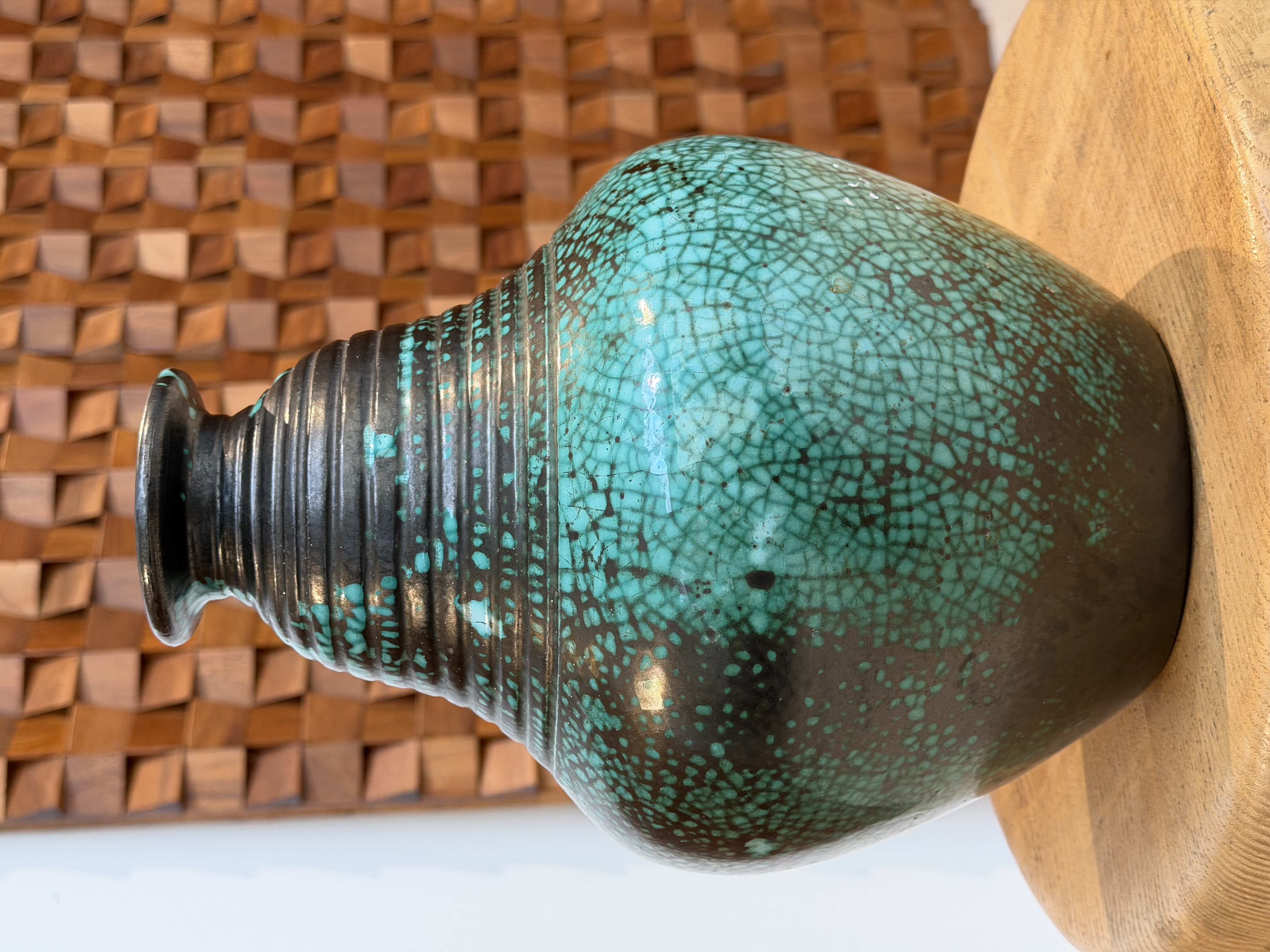
Vase by Primavera
The Primavera art studio, launched in 1912, was the fruit of a fruitful collaboration between Gustave Laguionie, director of the Printemps department stores, his son Pierre who would succeed him, and René Guilleré, a lawyer, collector, and founder of the Société des Artistes Décorateurs (SAD). These three men sought to innovate by marketing small series of utilitarian art objects at affordable prices, objects that were both beautiful and of high quality. Their shared vision and enthusiasm led to the opening of an original design studio within Printemps itself, which they named Primavera after the store. René Guilleré took the helm alongside his wife, Charlotte Chauchet, herself a painter and decorator.
The couple surrounded themselves with numerous collaborators and recruited trendy young artists such as Louis Sognot and Marcel Guillemard for the furniture department. Production, suspended during the First World War, immediately resumed in significant numbers and encompassed all aspects of interior decoration: furniture, lighting, wallpaper, rugs, mirrors, glassware, and more. It was the production of ceramics that would make Primavera popular and become its hallmark. The workshop commissioned and executed the designs proposed by its artists from small workshops such as those of Paul Jacquet and Simonod in Savoy, or from larger manufacturers like Longwy, Malicorne, Soufflenheim, Lunéville, and Quimper, which these orders helped to revitalize. The workshop even acquired some factories, such as the Sainte-Radegonde earthenware factory in Touraine and the Bordeaux Art Ceramics factory.
Significant resources are deployed by management to promote the art workshop, which participates in all the major exhibitions dedicated to decorative arts. The construction of a pavilion dedicated to Primavera productions on the esplanade of the Invalides during the 1925 International Exhibition of Modern Decorative and Industrial Arts marks the peak of its success, both popular, particularly among a modest clientele previously neglected, and critical.
The workshop continued for over thirty years under the direction of Colette Gueden. Its production ceased in 1972, although the Primavera brand continued to be used until 2007. These artisanal workshops undoubtedly allowed it to establish itself as a distributor firmly rooted in modernity. By being the first department store to offer this revolutionary concept, it paved the way for the creation of other initiatives of this kind, such as the Atelier de la Maîtrise at Galeries Lafayette under the leadership of Maurice Dufrêne (1922), the Pomone workshop at Le Bon Marché directed by Paul Follot (1923), and the Studium at Grands Magasins du Louvre run by the Martel-Kohlmann duo (1923).
Source: Marcilhac Gallery