


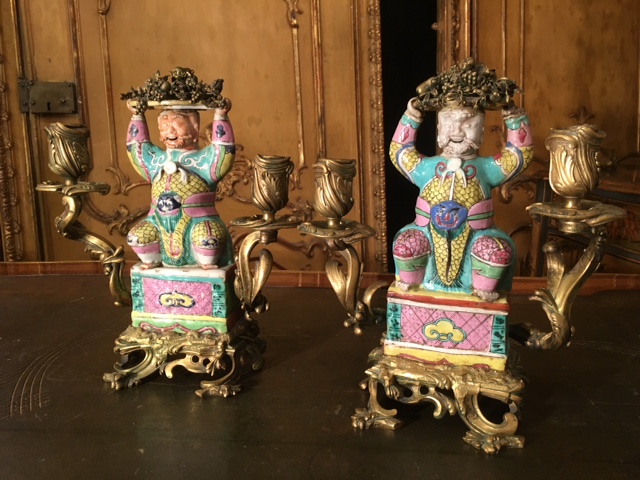
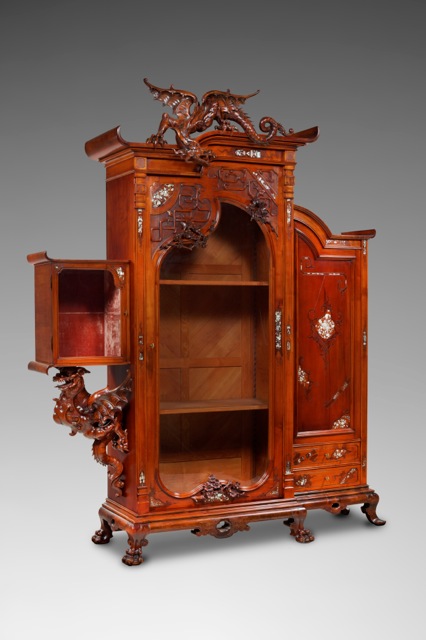
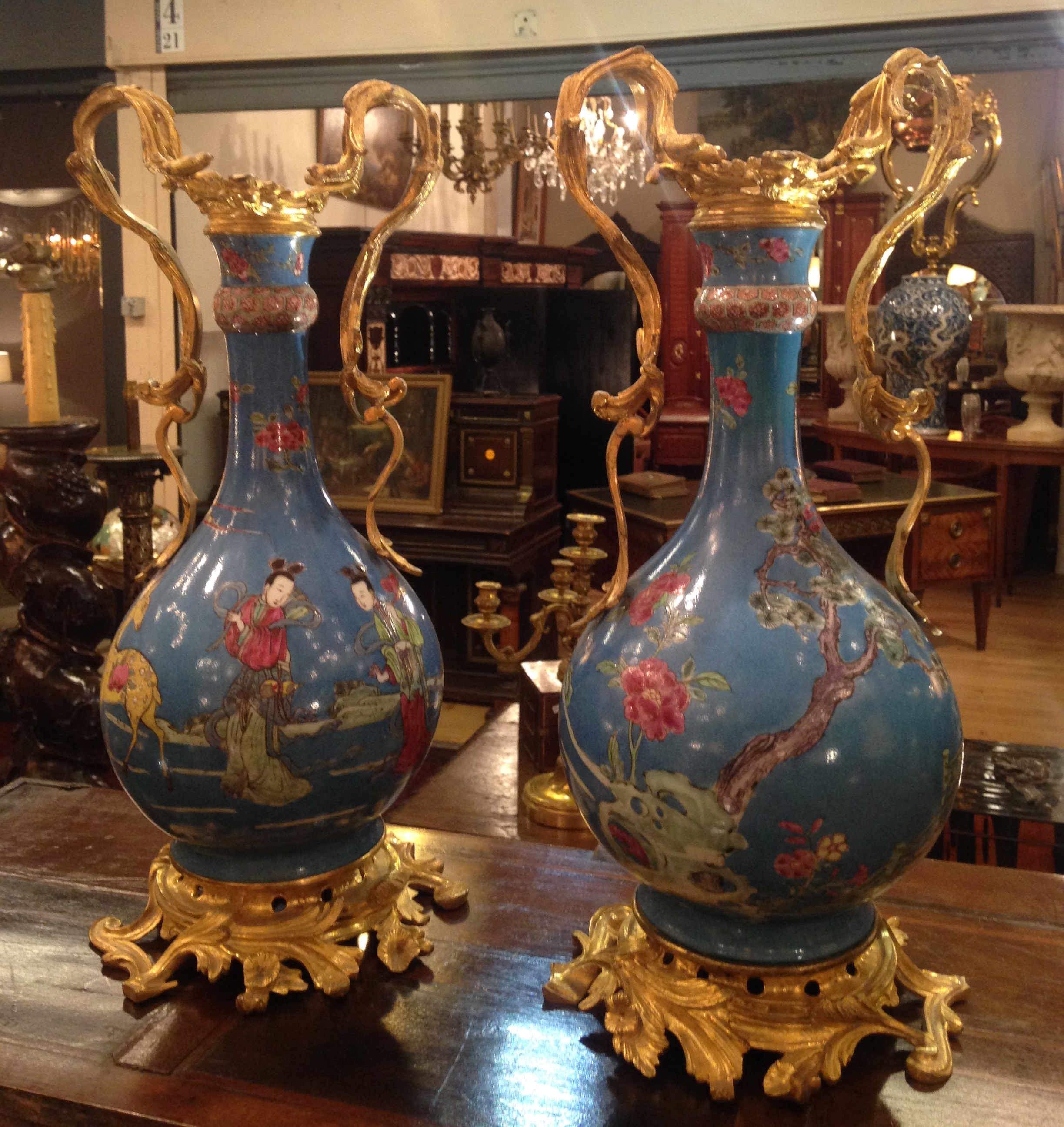
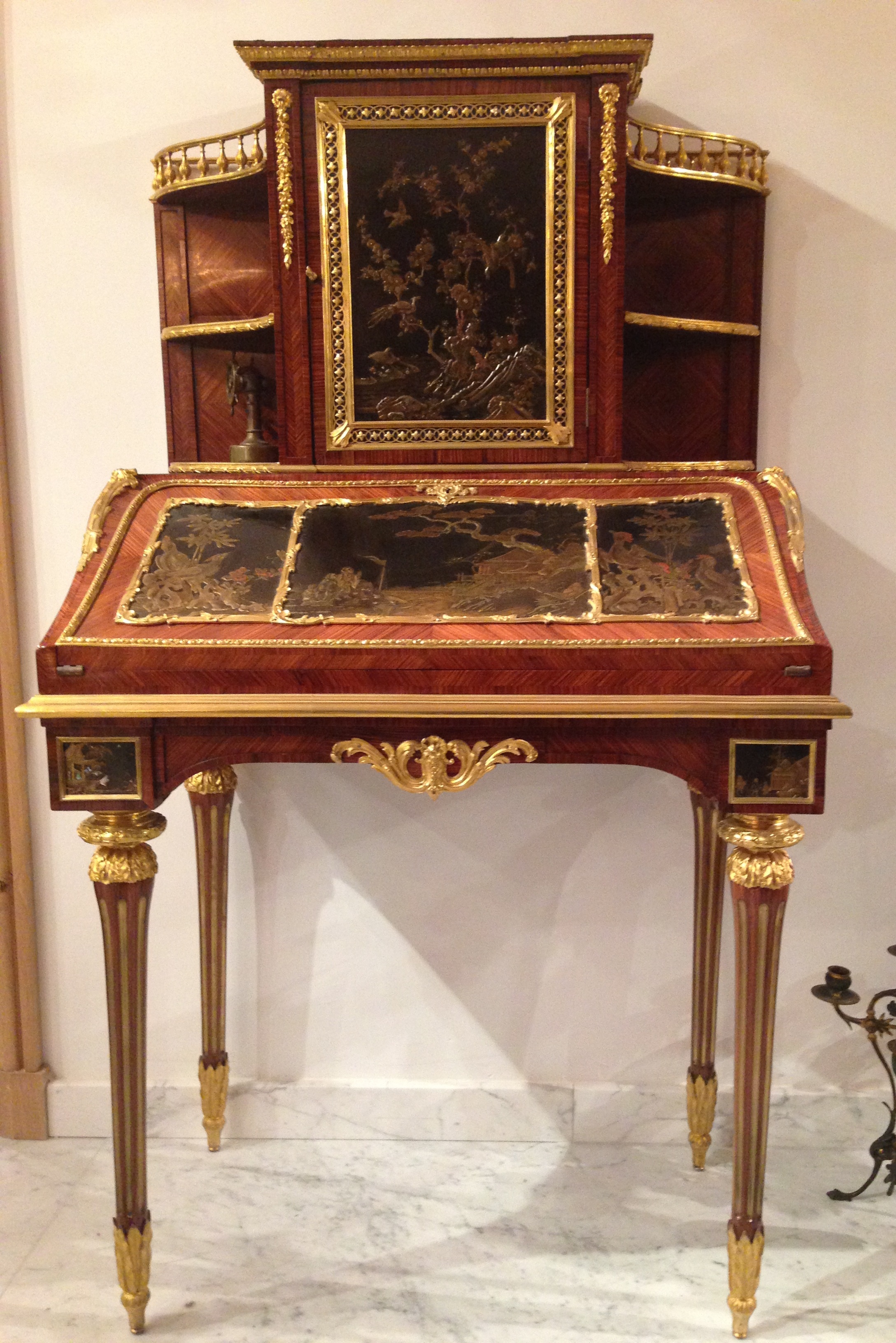
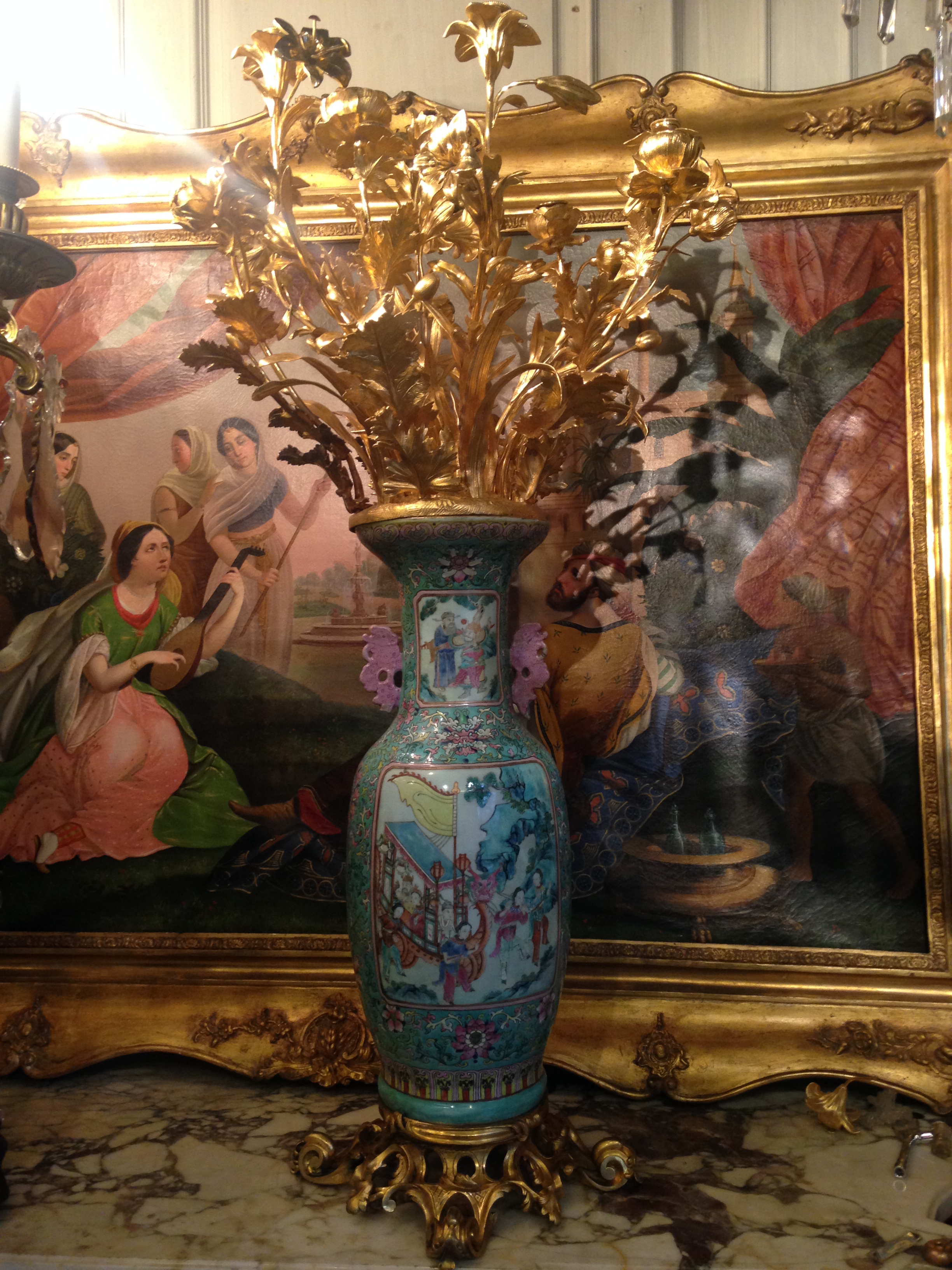
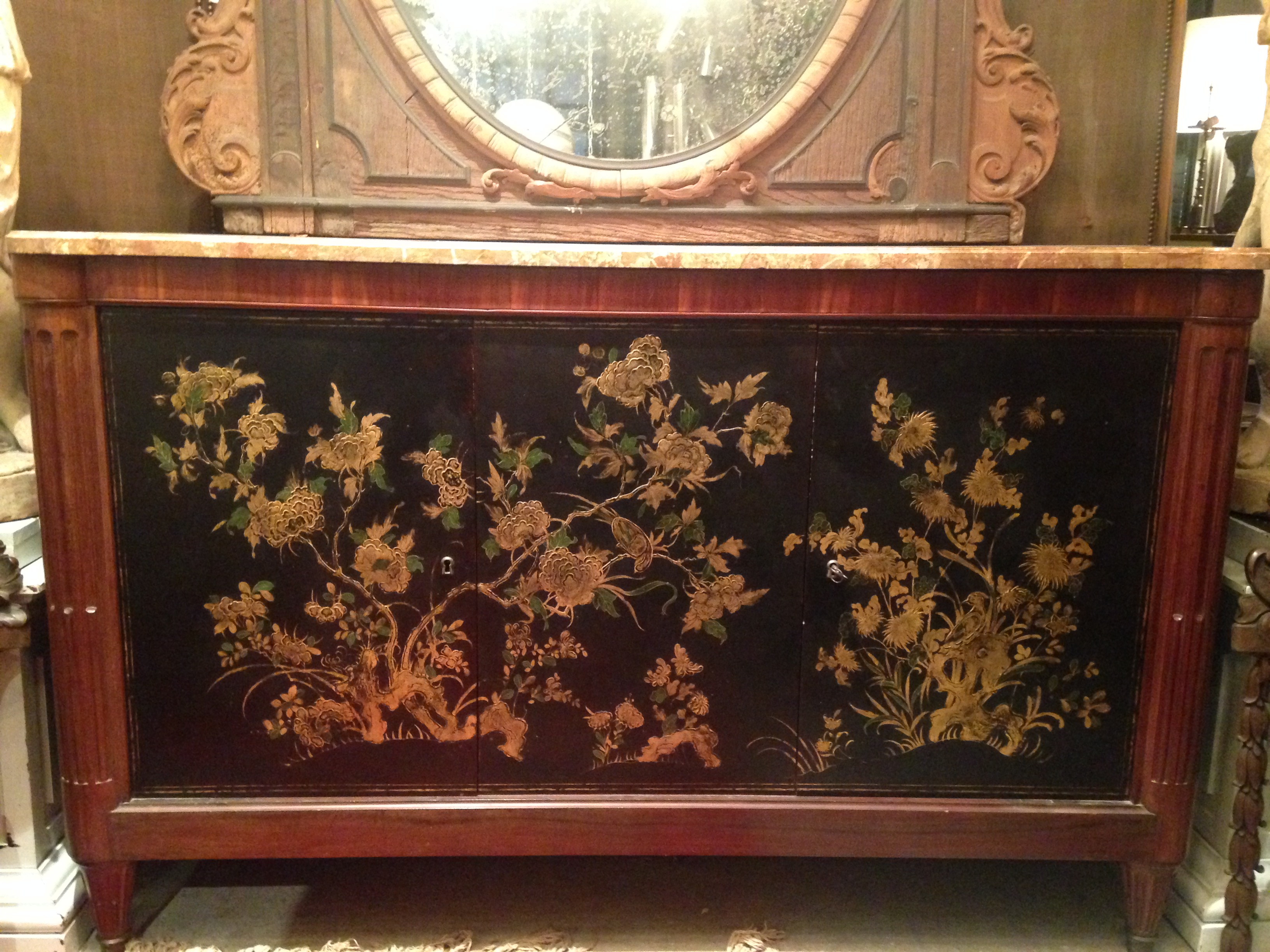

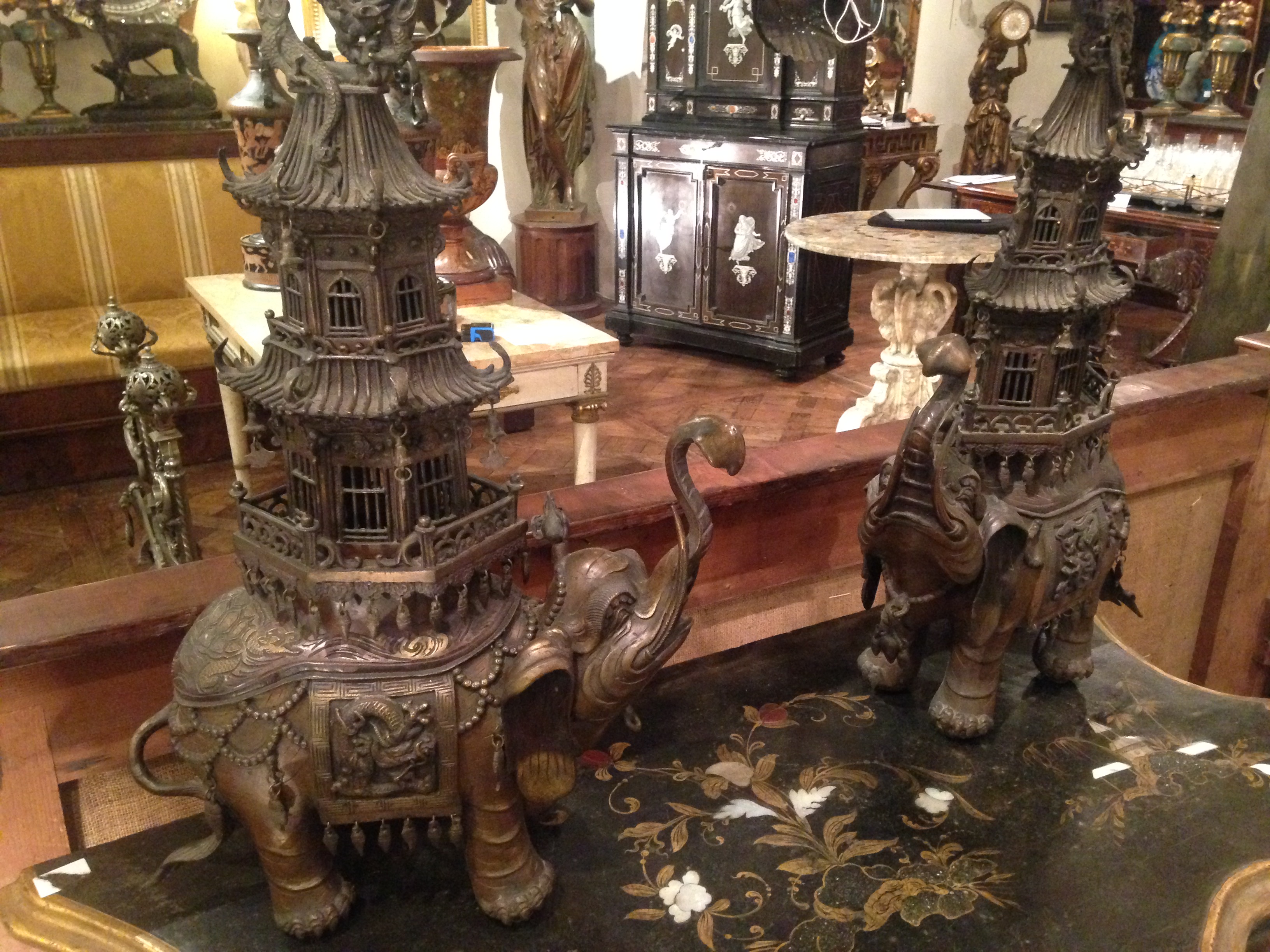
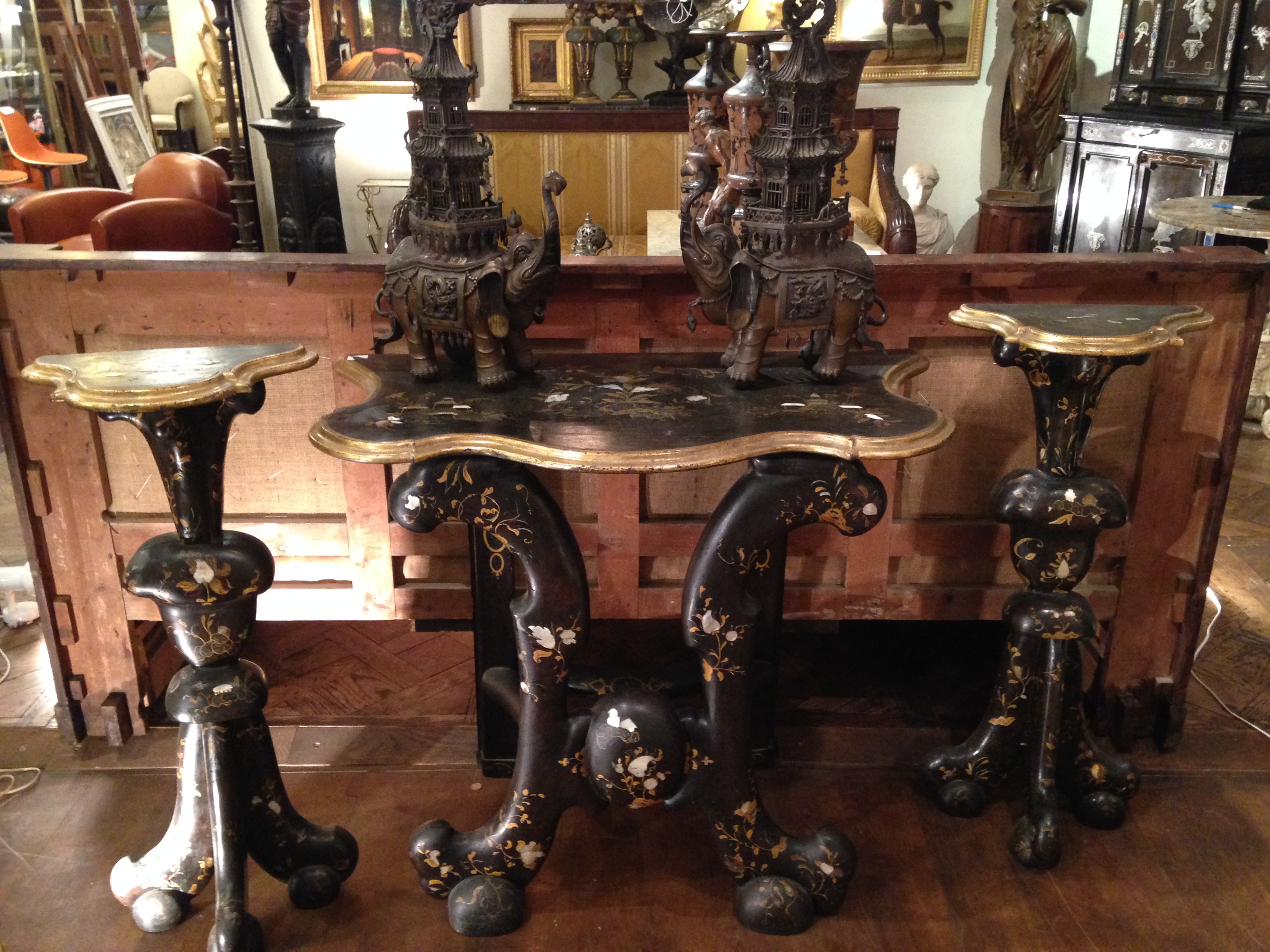
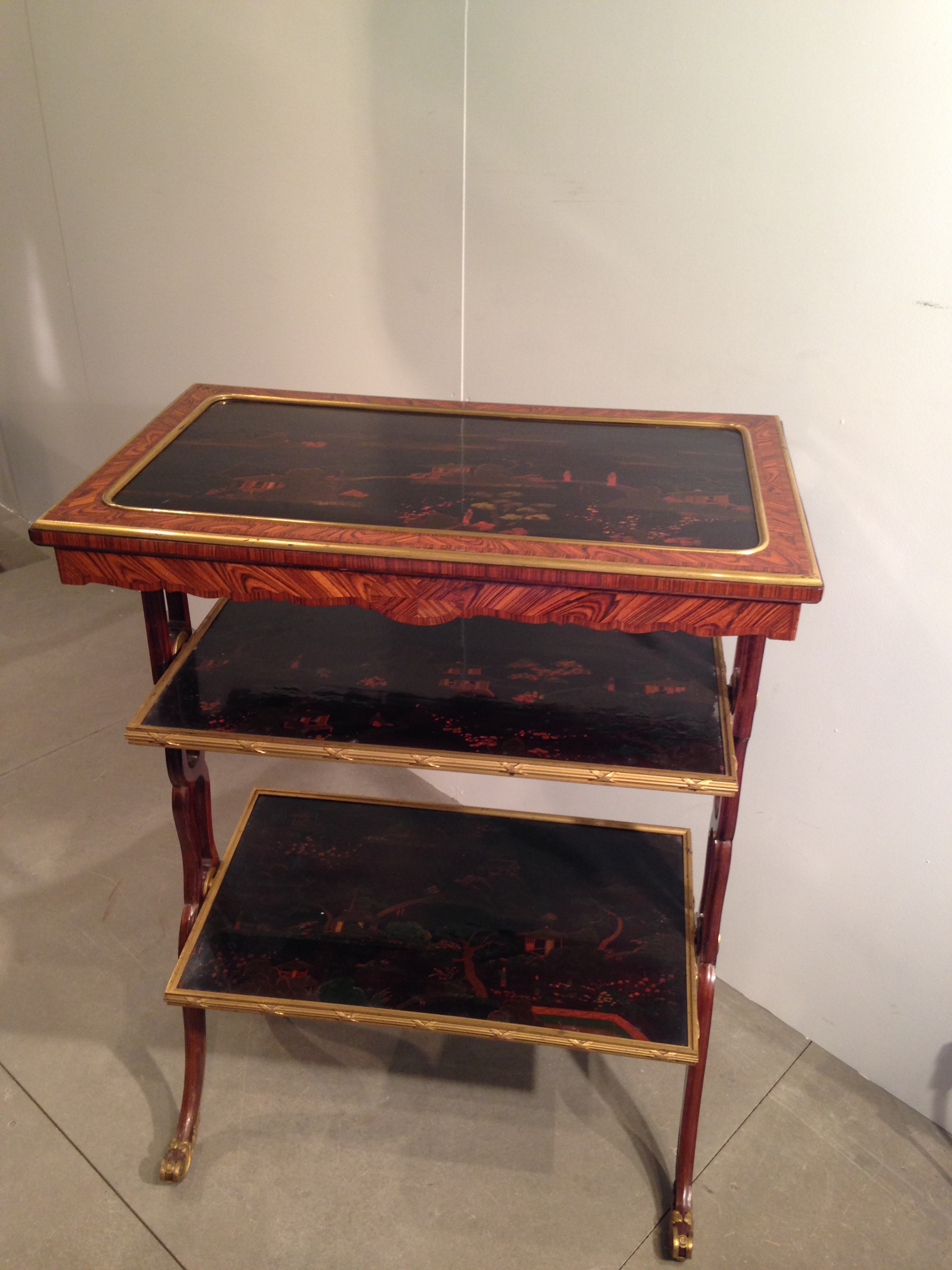

They attract attention in the alleys of Paul Bert Serpette, delicate furniture and vases in which Asian landscapes composed of mountains, streams and mist are displayed. In view of the richness of their materials or the originality of their form, we stop, wonders, we start dreaming. Where do they come from? From a former colonial counter? From a master lacquerer installed in Europe? The history of this mixed, mixed furniture is unique. It begins under the Ancien Régime and knows its apogee in the XIXth. This story begins in Asia. In China and Japan more precisely. Two countries which have by their cultural differences constituted poles of attraction, and seduction unmatched for Europeans. If the exoticism of their aesthetics seduces, it is especially the limitations they impose on their exports that nourish this scent of rarity and exclusivity of production far east.
In the seventeenth and eighteenth centuries , Chinese porcelain and Japanese lacquer are rare and reserved for the royal and aristocratic European families. There is little that Marie Antoinette to collect these exceptional imports. To explain this withdrawal, it is necessary to understand that the Empire of the middle is truly seen. As the center of the world China does not need trade. If it opens its doors to the Dutch of the Dutch Company, in order to allow them to admire Chinese virtue, the same thing applies to Japan: it was not until 1867 that he participated in his first universal exhibition and that Prince Tokugawa Akitake Moves to Paris. A first contact for the Europeans with the Empire of the rising sun, its traditions, its art and its inhabitants which will mark them permanently ...
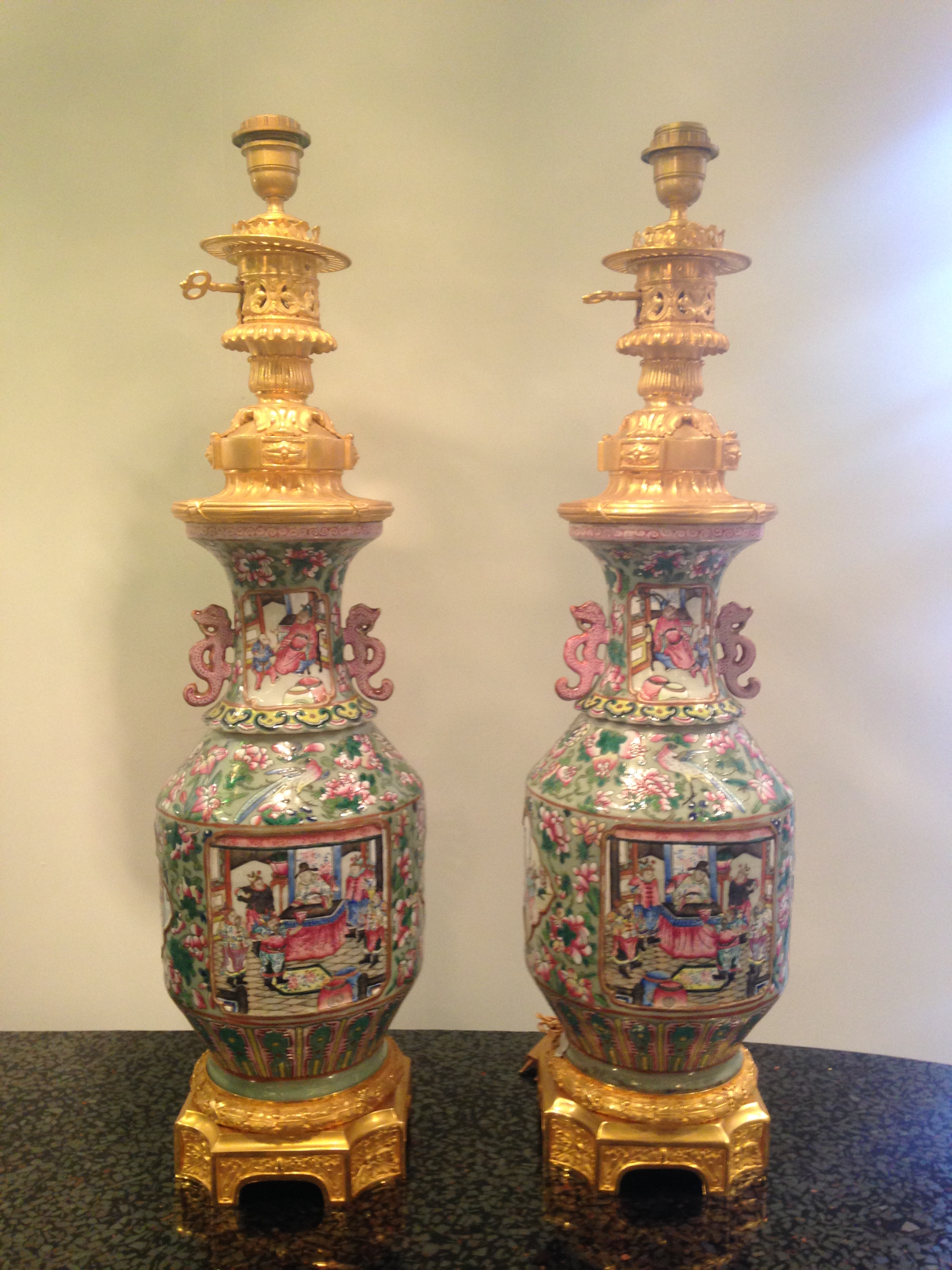
The impact of this exhibition is indeed unprecedented. The enthusiasm is such that European artists like the ceramist Félix Bracquemond and the painter Henri Fantin-Latour organize themselves in company where one meets on the occasion of dinners "à la japonaise", debauches of kimonos, baguettes and sake. Imaginary is all of a sudden Unbridled: one gets grime in Japanese, one dresses with the Chinese and one is furnished to the Asian. And the artists and creators to divert, to invent and to take inspiration from this way mode terribly exoti.c They will accli to subdue the Asian production to the taste of their contemporaries. To give them the thrill of the far East without leaving their Haussmannian living room and abandon their bourgeois codes. The West digests the imports of Asia until creating a Westernized East. Is the line of the famous Parisian store, L'Escalier de Cristal, which subtly distills Orientalism into a basically European furniture, for example by encrusting Japanese lacquer panels in a Napoleon III style table. Canton porcelain vases. They also become a new life in Europe. Imported, reworked and reinterpreted, they become elegant oil lamps for bourgeois interiors. Mounted on gilded bronze, they are sometimes signed by the famous Ferdinand Barbedienne founder. Other artists go further by creating a true style such as Gabriel Viardot (1830-1906). The visit to the Universal Exhibition of 1867 is an aesthetic shock for this Parisian cabinetmaker who begins to produce furniture, free interpretations of a Chinese-Japanese hybrid genre. He does not hesitate either to divert Japanese lacquer boards or mother-of-pearl from Tonkin to give shape to his creations to aesthetics mixed.