


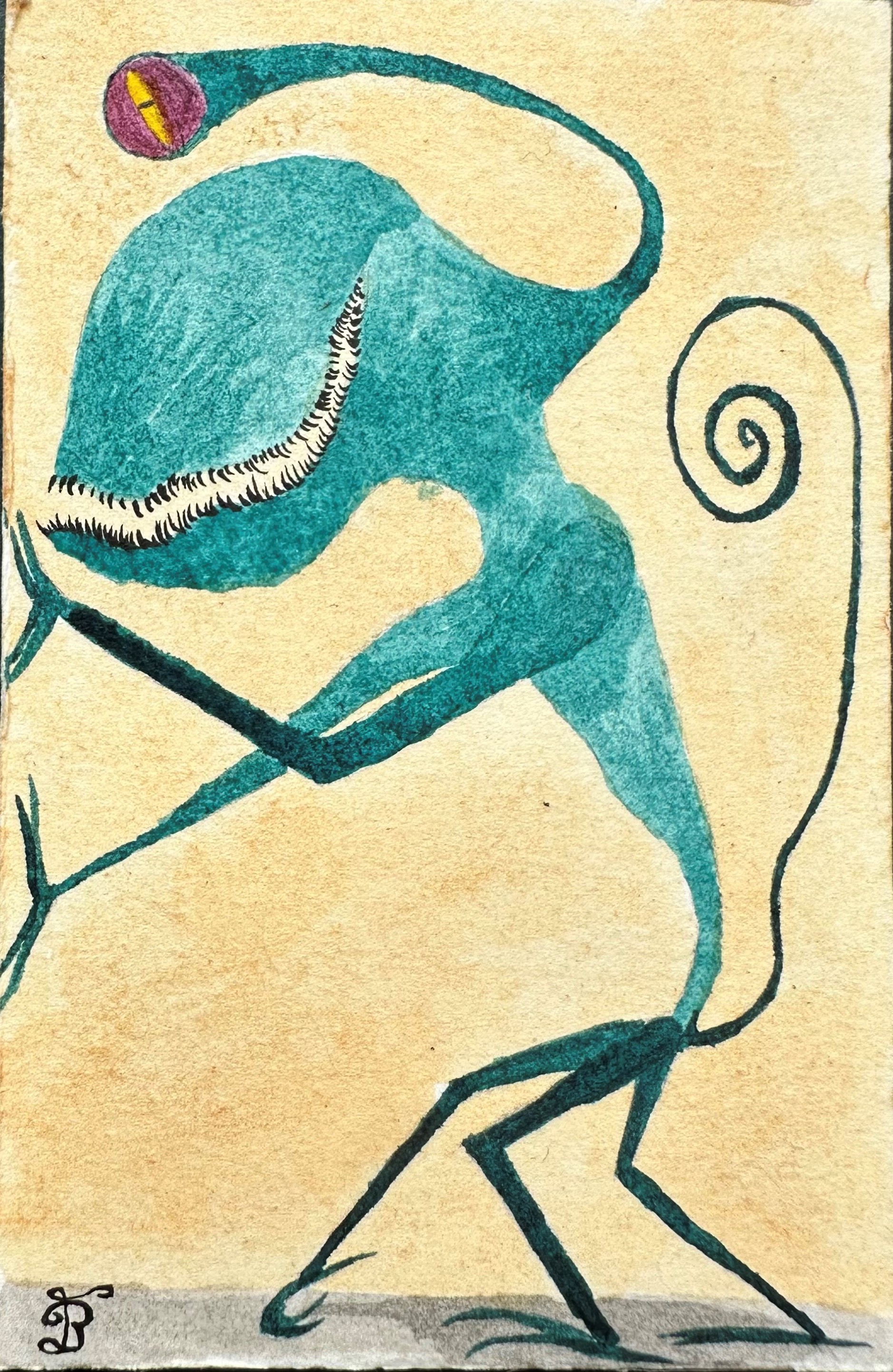
"No one can describe the monster, no language can paint this vision of madness."
Howard Philipps Lovecraft, The Call of Cthulhu, 1926
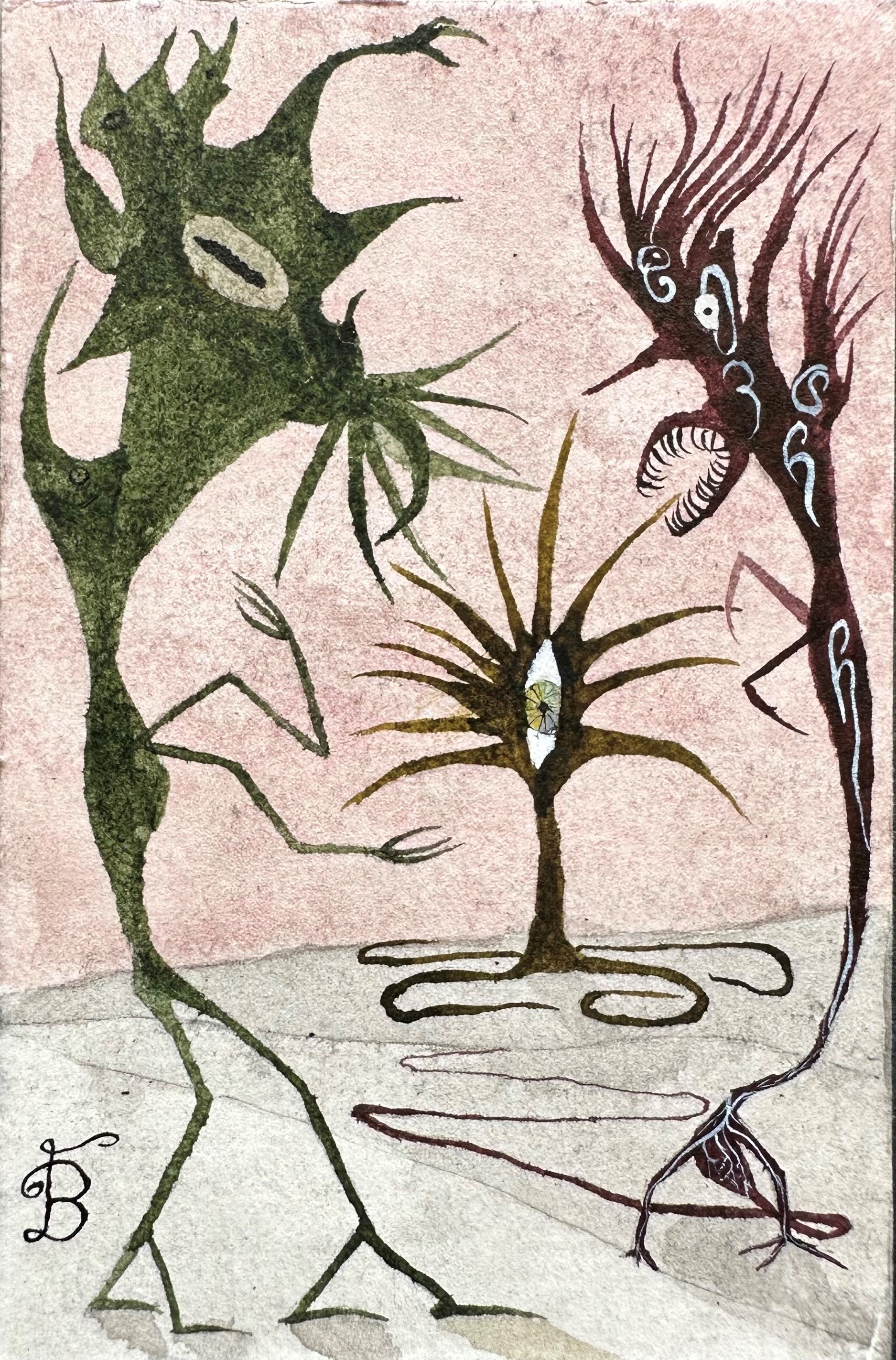
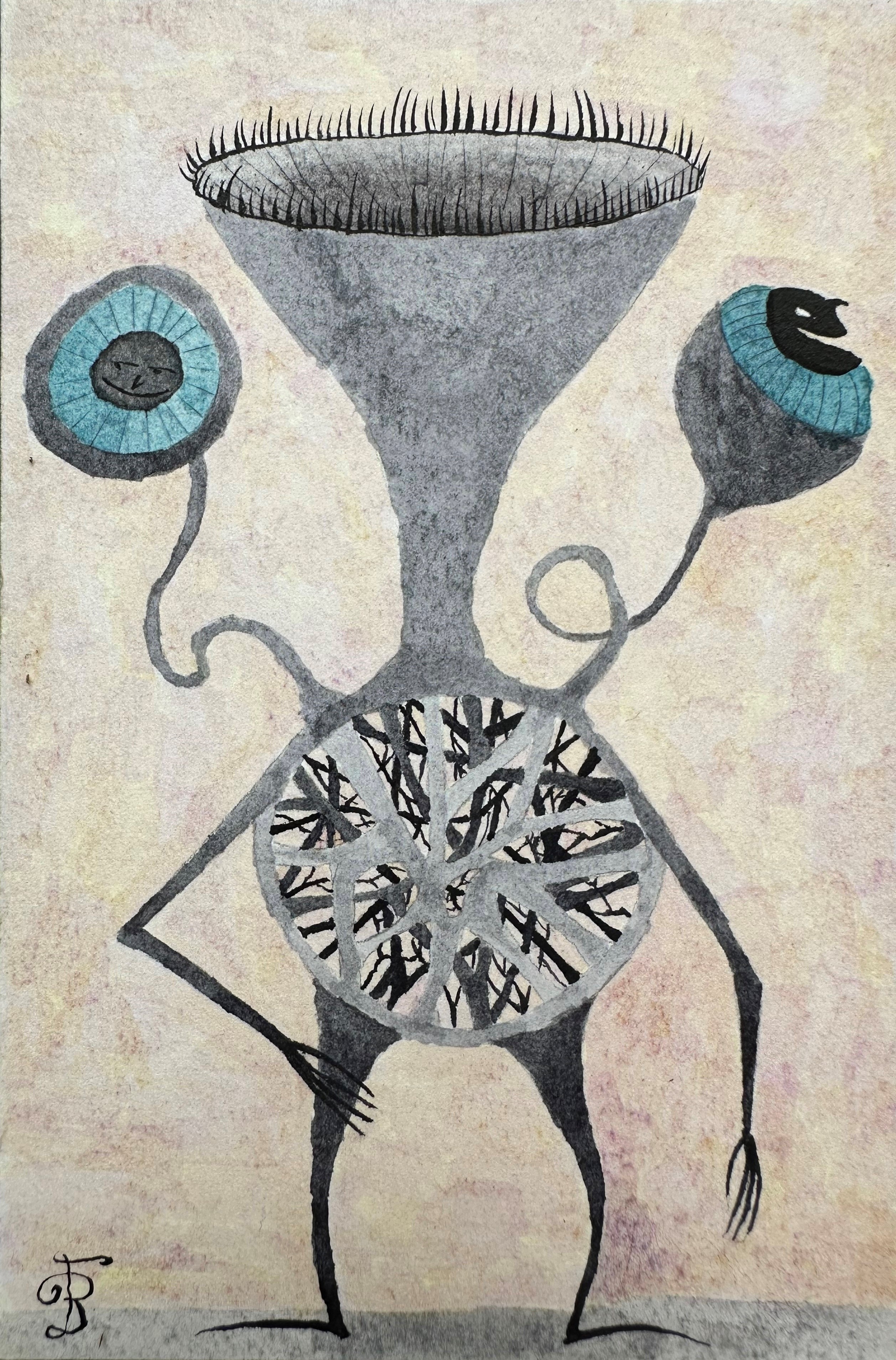
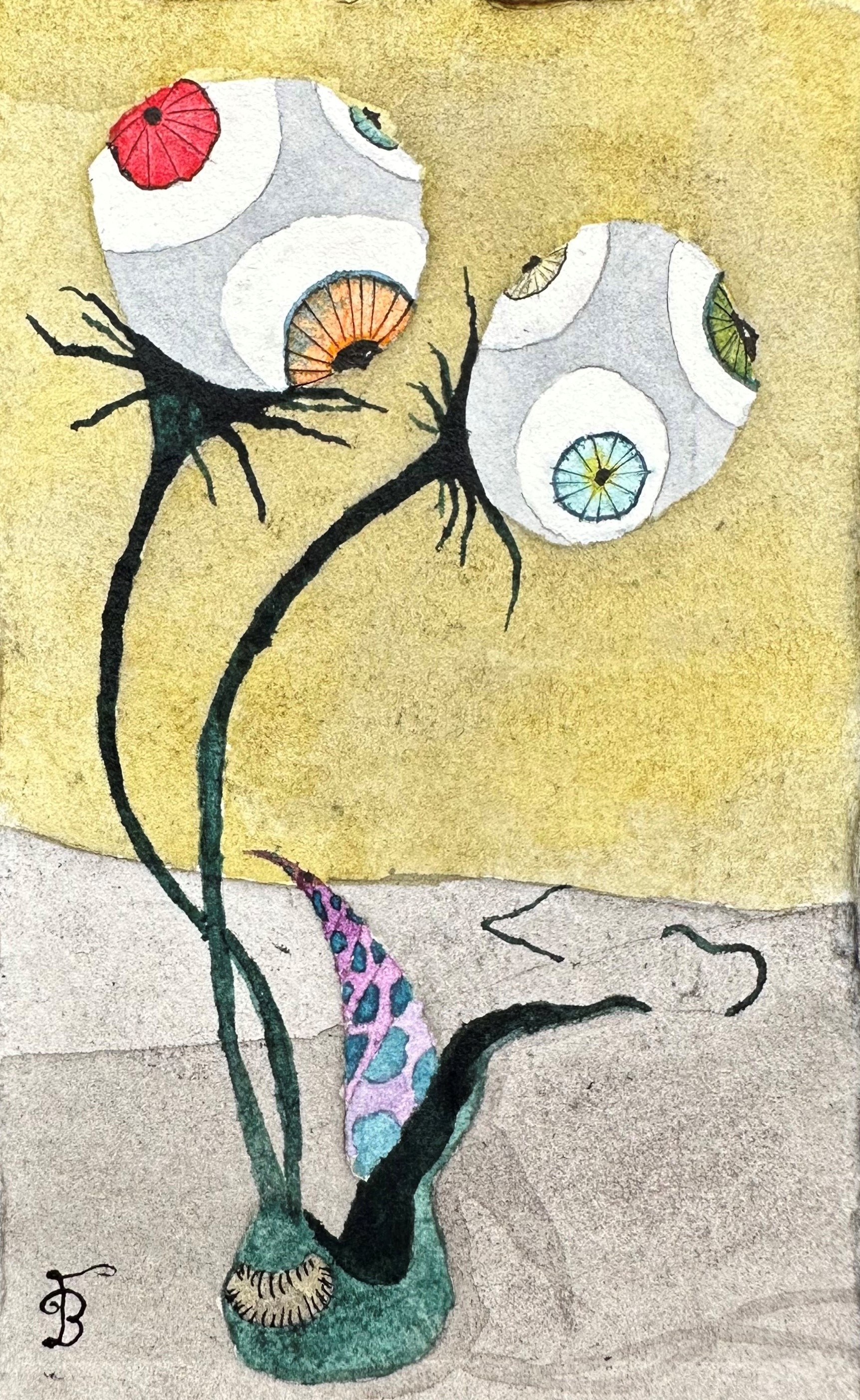
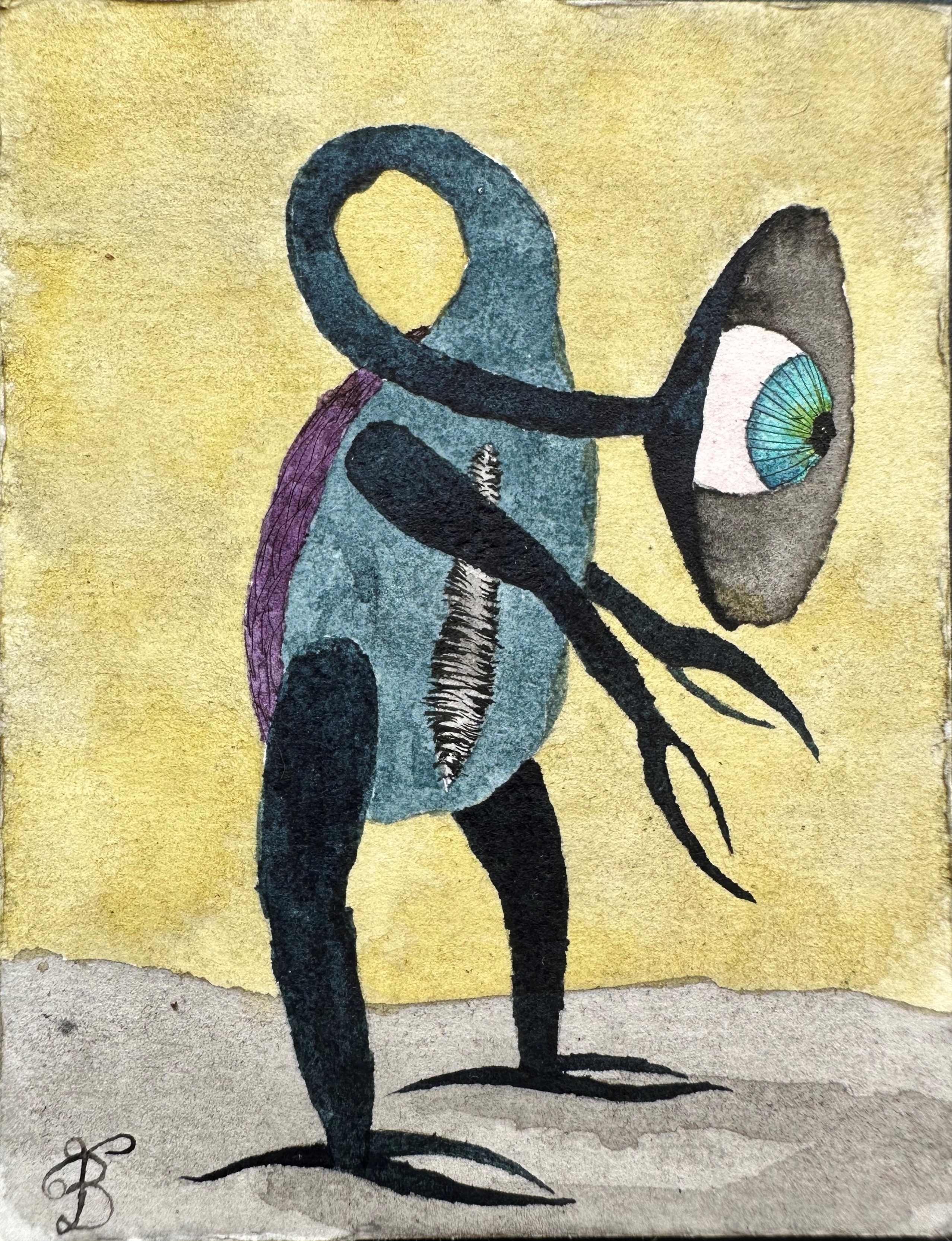
During a rummage through China one Friday morning, I went to see Louis Baquet, a young dealer from whom I sometimes buy pieces and whose eye I like. On his stand, my eye was quickly drawn to a small drawing representing a curious character. I immediately wanted to acquire it; that's how I discovered that Louis drew, and that the serious and reserved boy that I thought I knew sheltered a whole strange world that I had never suspected and whose meanderings I wanted to expose.
"When you live with a monster, you prefer it with a smile"
Jean Giraudoux, 1937
At what age did you start drawing? Has this been a story that has been told for a long time?
When I was a child, drawing was more like a game. I often told a story, my prediction subjects were battles, a medieval siege or a naval assault, most of the drawing was attributed to underwater life. This is probably where these inspirations from marine biology come from: tentacles, fins, crests, pincers…
What is your background?
I started drawing again in 2019, shortly after starting my career as an antique dealer. I quickly became interested in old drawings and started copying 18th century drawings, especially trees or Dutch genre scenes.
It was during the first lockdown that I started drawing almost daily, my ex-girlfriend then taught me the basics of perspective and volumes. During the second lockdown, my grandfather taught me the technique of engraving, which was a new approach to drawing and a period of reflection on the direction I was going to take next.
What are your sources of inspiration?
Howard Philipps Lovecraft, Odilon Redon, Victor Hugo, Hieronymus Bosch, David Cronenberg, the 19th century caricaturists, Alfred Kubin, Charles-Frédéric Soehnée, Gustave Moreau, Bruegel, Mœbius, Jodorowsky, Jacques Tardi, François Schuiten, Benoît Peeters…
What is your way of doing things?
Three years ago, I started drawing stumps in a somewhat surrealist way with several lines and different ways of drawing In a spiral, letting my hand tremble or in small superimposed waves to have a scale effect Gradually, these drawings looked less and less like stumps and more and more like agglomerations of characters I was later inspired by stains on walls, on the ground or by the veins of certain marbles The line became much more refined and the contrasts were more and more marked For the inks, I always start with an idea in mind or an inspiration from an old drawing or sketch unlike pencil drawings, for which I start from a free form, which evolves at the same time as the drawing
Often an idea can be reused in several drawings going in several different directions. Now, as soon as an idea comes to my mind, I try to write it down to remember it and then reproduce it on paper.
What are your favorite techniques? Tell me about your choice to make small formats
My favorite technique remains graphite, but it requires a lot of time..
In ink, it's more immediate, a small format takes me between three and four hours, but once the technique is mastered I always move towards much more complex drawings that take longer and longer to complete.
How did color come into your work?
With my last large pencil formats, I felt a real desire to introduce color. I reduced the colored pencil leads to powder, mixed them, then applied them with a brush to a few small details. When I returned to ink, the desire for color quickly became much more pronounced.
I think I'll tackle oil one day, but not right away. Although I usually change techniques on a whim, it could be in three days or three years.
Tell me about your world
I have thought many times about evolving my universe, but without real consistency. I had the idea that the agglomerations of characters were gods, the more complex they are, the higher they are hierarchically, the simpler characters in ink being minor divinities and the tiny characters who turn around them their worshipers. Two or three species of worshipers are recurrent in several drawings. I had also thought about creating a kind of language based on the different eyes, mouths and tentacle arms, but it never really came to fruition.
Later I thought about developing this universe into a new format like comics, which could be quite fun if I manage to find the time one day.
What does the creative process give you?
I really like seeing the evolution of a drawing, seeing it take shape until its completion The longer the work, the more satisfying the end In the most complex drawings, I like to hide details, which will not necessarily be visible at first glance I really like works that can be discovered as you go along, like Bosch's paintings, full of hidden details and references These works that you can look at for hours and still discover new characters
Are you thinking about making a career out of it? Will it remain a hobby?
Consistencies and links with your profession as an antique dealer?
I'm not yet ready to make it my job. I find it harder to work under pressure and I want it to remain a pleasure above all, even if preparing this exhibition was an interesting exercise. Why not make it a job?