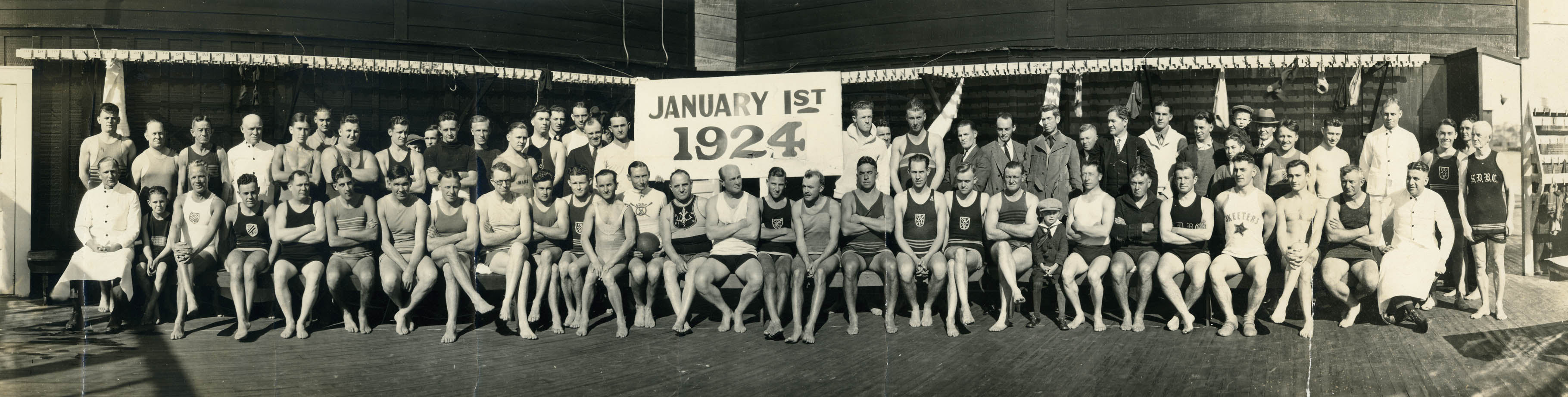
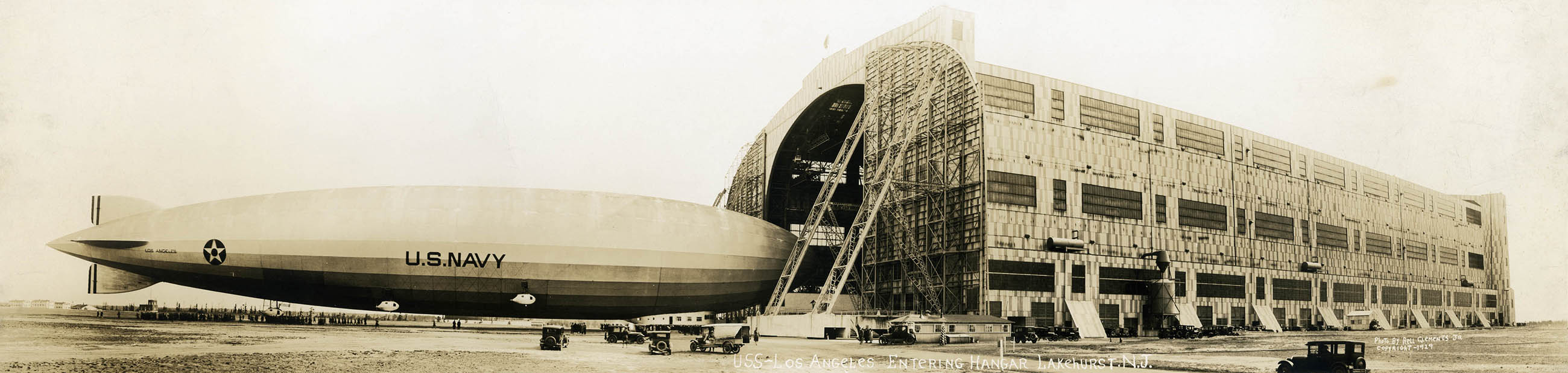
The spotlight took place last summer at the Rencontres d'Arles At the Palais de l'Archevêché, WM Hunt unveiled his very own collection of photos of groups, crowds, immortalized in a particular format: the panorama were revealed. An incredible upheaval and the photographic effervescence that provoked the invention of the panoramic camera at the beginning of the XXth century. A technical and visual shock that had unsuspected social, economic and political fallout Mathias Roudine, antiquarian to Paul Bert Serpette, In the foreword to Crowd, WM Hunt did not forget to thanks.
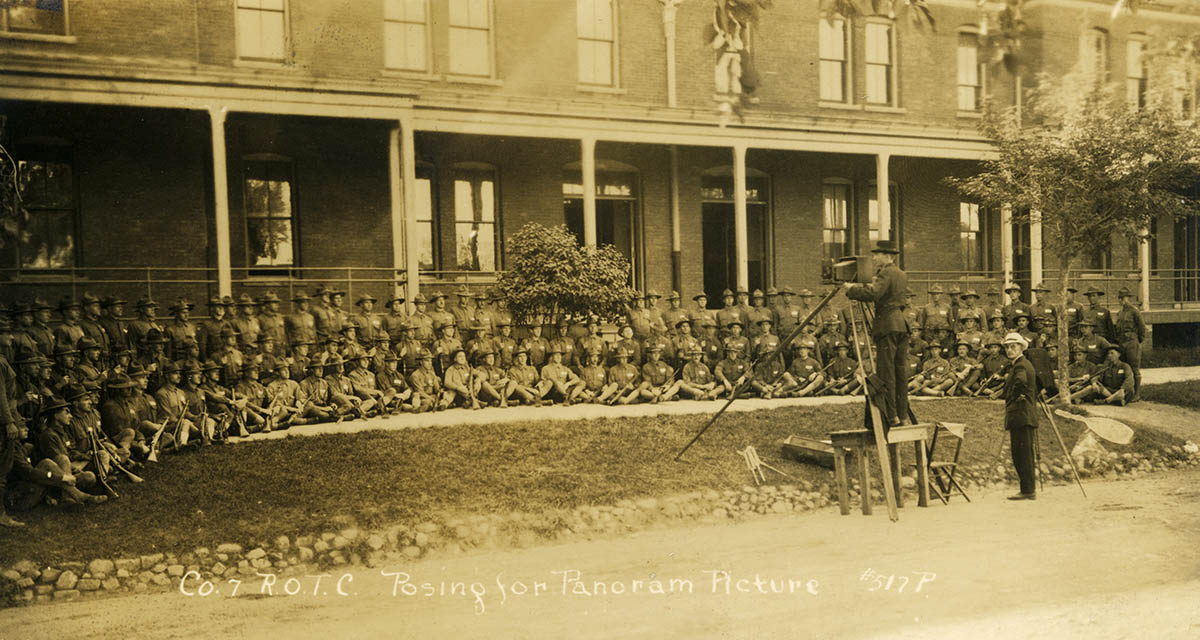
A AMERICAIN FORMAT Plunge man into the image, to immerse him in an old man Dream In 1787, the English painter Robert Barker invented the first panorama, a faithful reproduction of a landscape at 360 degrees on a rotunda. The invention of photography does not help the business. And at the end of the 19th century, prototypes of panoramic apparatuses such as the cyclograph of Damoiseau emerged. But it was in the United States that the process took shape and was quickly commercialized: in 1890, everyone could order his Panoram de Kodak which with its rotatable spring-mounted lens allows a wide, more or less precise field. The real revolution takes place in 1904 with the Cirkut distributed by the Rochester Panoramic Camera Company. Two first models are launched. The 10 inches can make shots up 3m50 in length and 16 inches, less manoeuvrable but shooting 6m50 in length. A never-seen that leads to a renewal of the profession American photographers will quickly master this new technique and offer their services to a country in full conquest of the vast spaces of the West.
CLICHES D'ENVERGURE Unpublished until then, such formats awaken the interest of the political authorities who see it as an instrument for the promotion of the American West, still wild territory to invest after having conquered it. Whether to finish in postcards or to illustrate the follow-up of site, panoramic immortalizes a country in progress. Construction of bridges, creation of dams, elevation of buildings, the Cirkut is the privileged witness of the American effervescence at the beginning of century. It is also, after the war, the tool chosen to identify the destruction and material damage of a Europe devastated. A role that had already been attributed to him in 1906 during the earthquake and the great fire of San Francisco, whose panoramic photos made it possible to realize the extent of the catastrophe. Beyond the landscapes, behind all these constructions, thousands of faces, firemen, soldiers, marines, workers, peasants, employees, sp Orents, schoolboys or Miss have been seized in precise, original and nothing obsolete today. Well before taking on a sociological function, these group portraits were part of a commercial approach. What better way to make a profit from the cliché than to sell it to all the people posing on the picture? And for the sponsor, there's nothing like a panorama to embrace the cohesiveness of his business, the power of his military division or the beauty of his Miss America lined up on the beach. In one piece, the disparate whole makes sense, offering, for those who look more closely, faces of incredible diversity and spontaneity. Commercial and technicians, the panoramic photographers were no less inventive conductors, always in search of the best possible point of view to gather the collective, even going as far as constructing dizzying miradors to increase their scale Schutz, Weaver, Clements, Lawrence and Goldbeck are the big names in the golden age of the panorama, which will soon lose steam after the Second World War, surpassed by the rise of magazines that make it very obsolete. At: Mathias Roudine, Photographs Panormaiques 1900-1950, Allée 5, Stand 247, Paul Bert