André Arbus (1903–1969) occupies a unique place in the landscape of 20th-century French Decorative Arts. Trained in Toulouse in the family cabinetmaking workshop, then at the Beaux-Arts, he developed a highly structured practice of furniture design, contrary to the industrial logic and radical avant-gardes of his time.
From the 1930s onward, he established a recognizable vocabulary: forms drawn from the French classical repertoire, tapered legs, symmetries, balanced masses... which he simplified and adapted to modern interiors. Unlike many post-war designers, Arbus did not seek to break with history, but rather to offer a contemporary interpretation, based on rigorous design and high-quality execution.
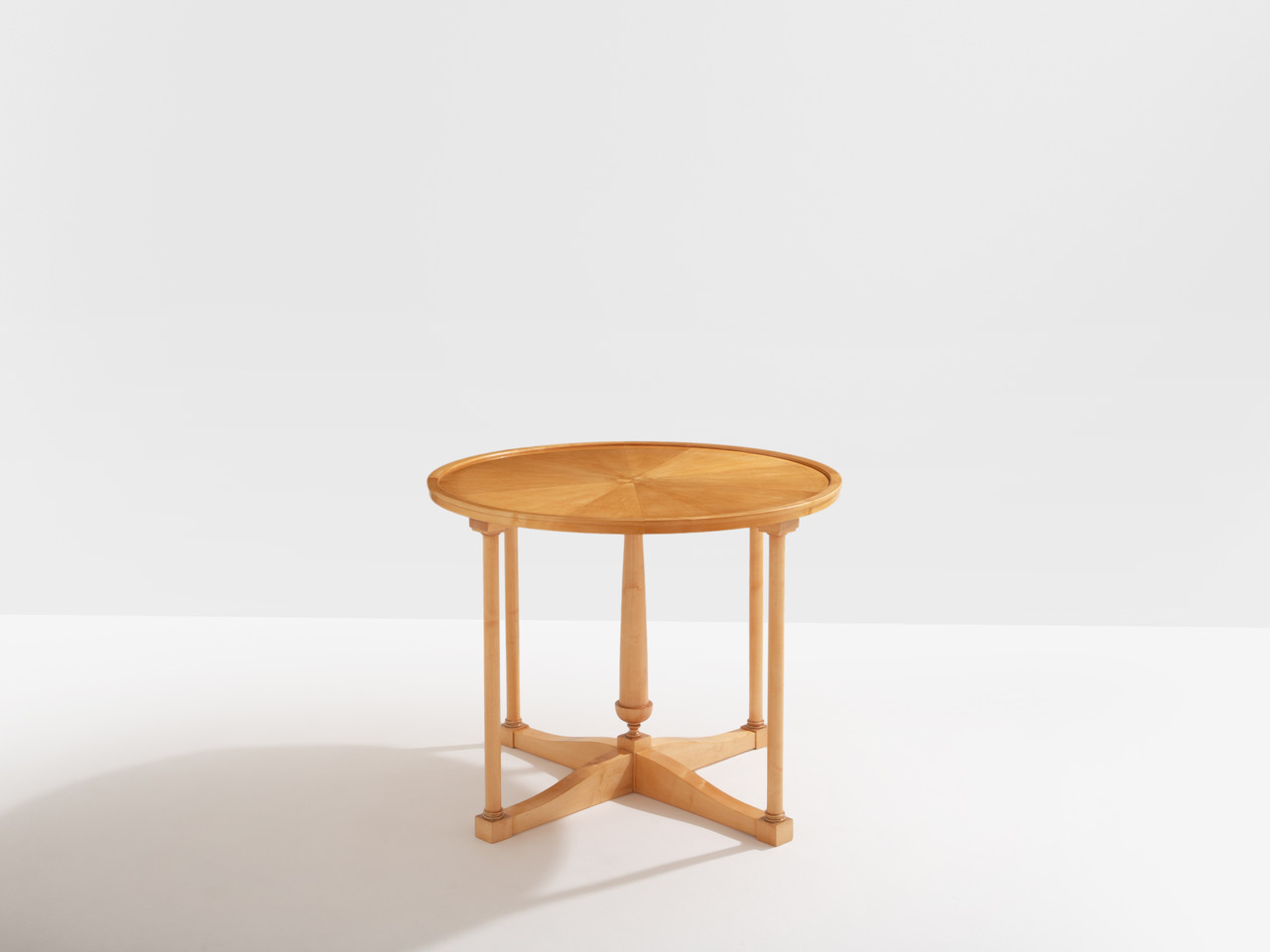
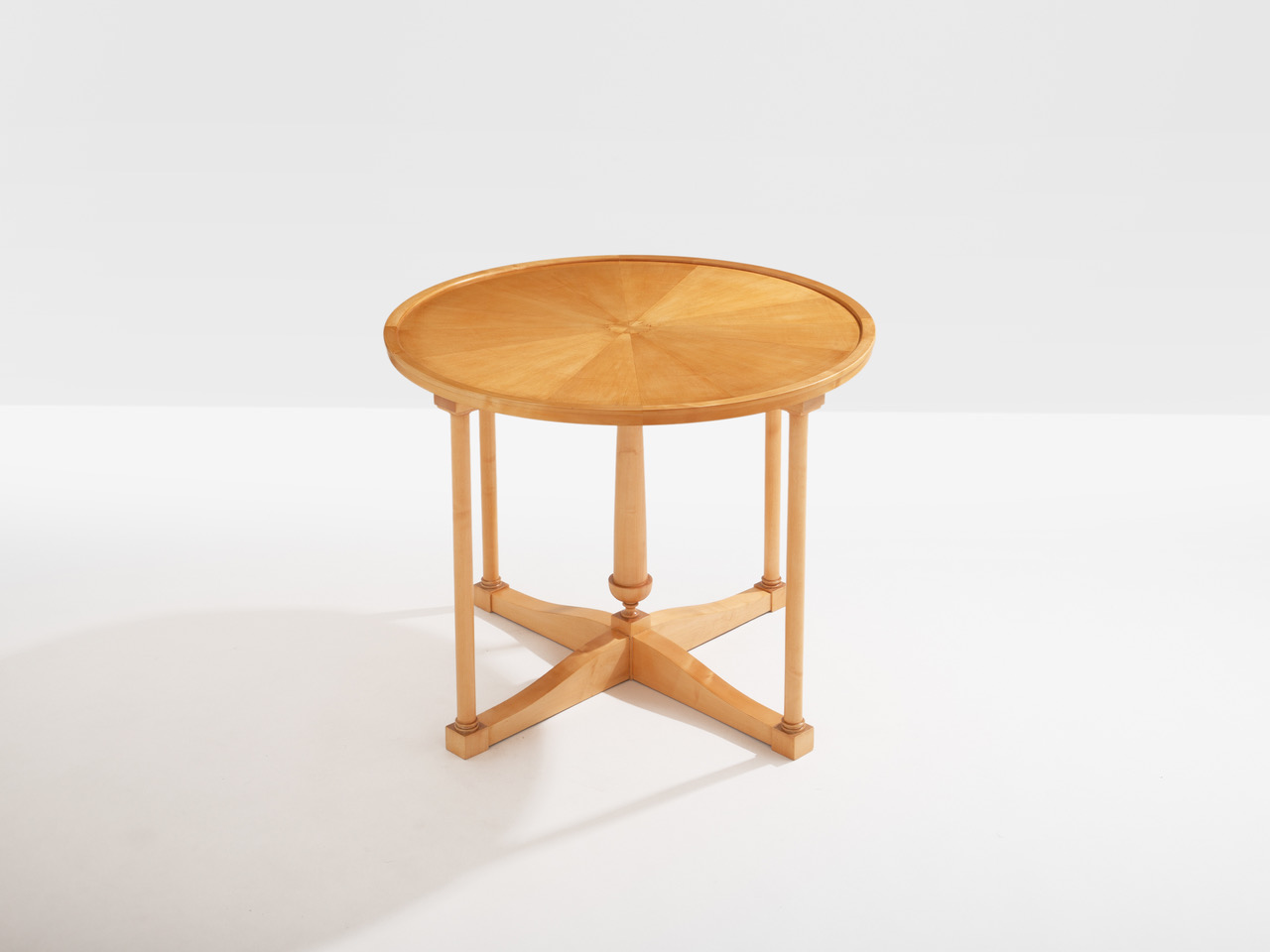
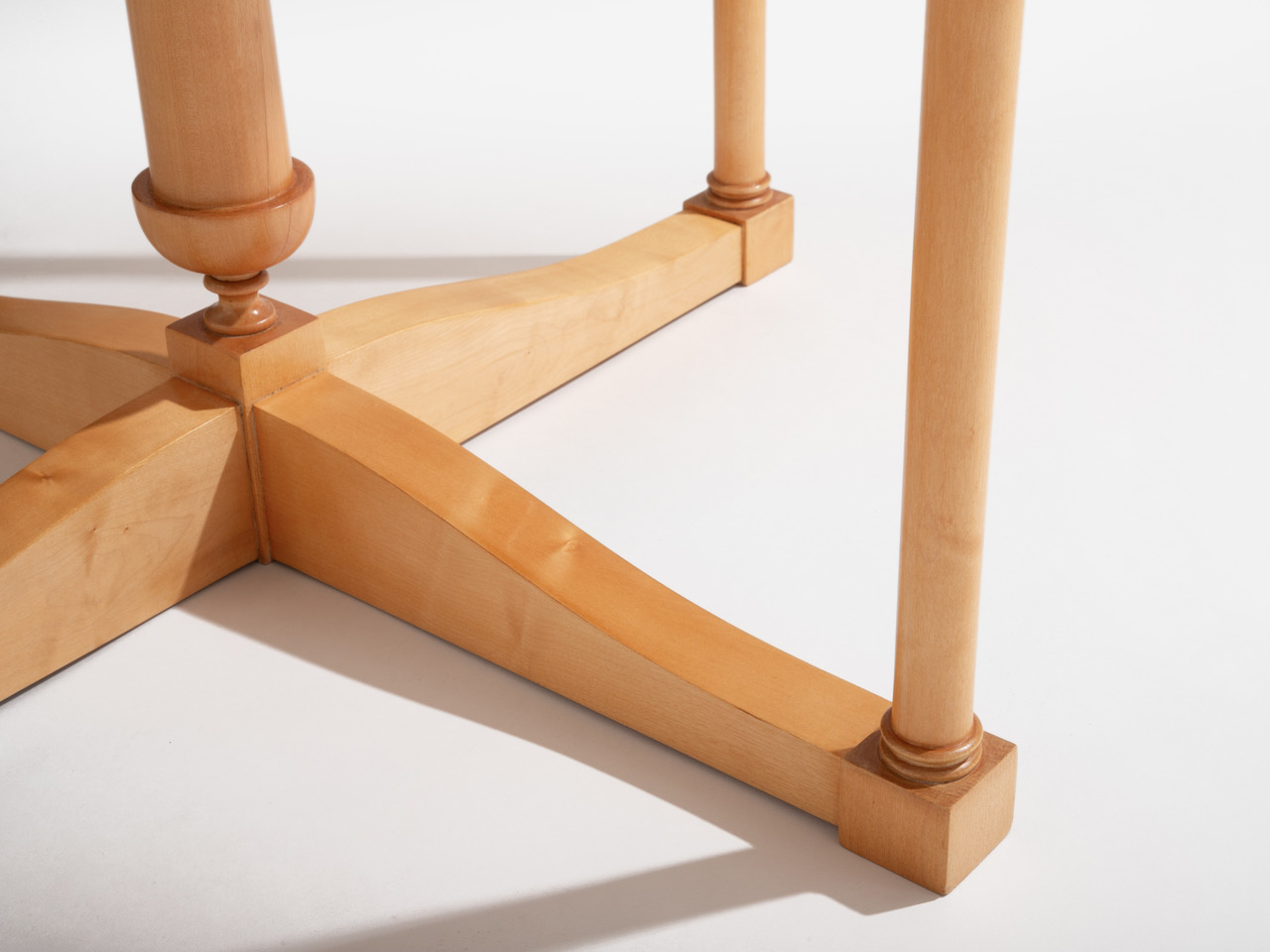
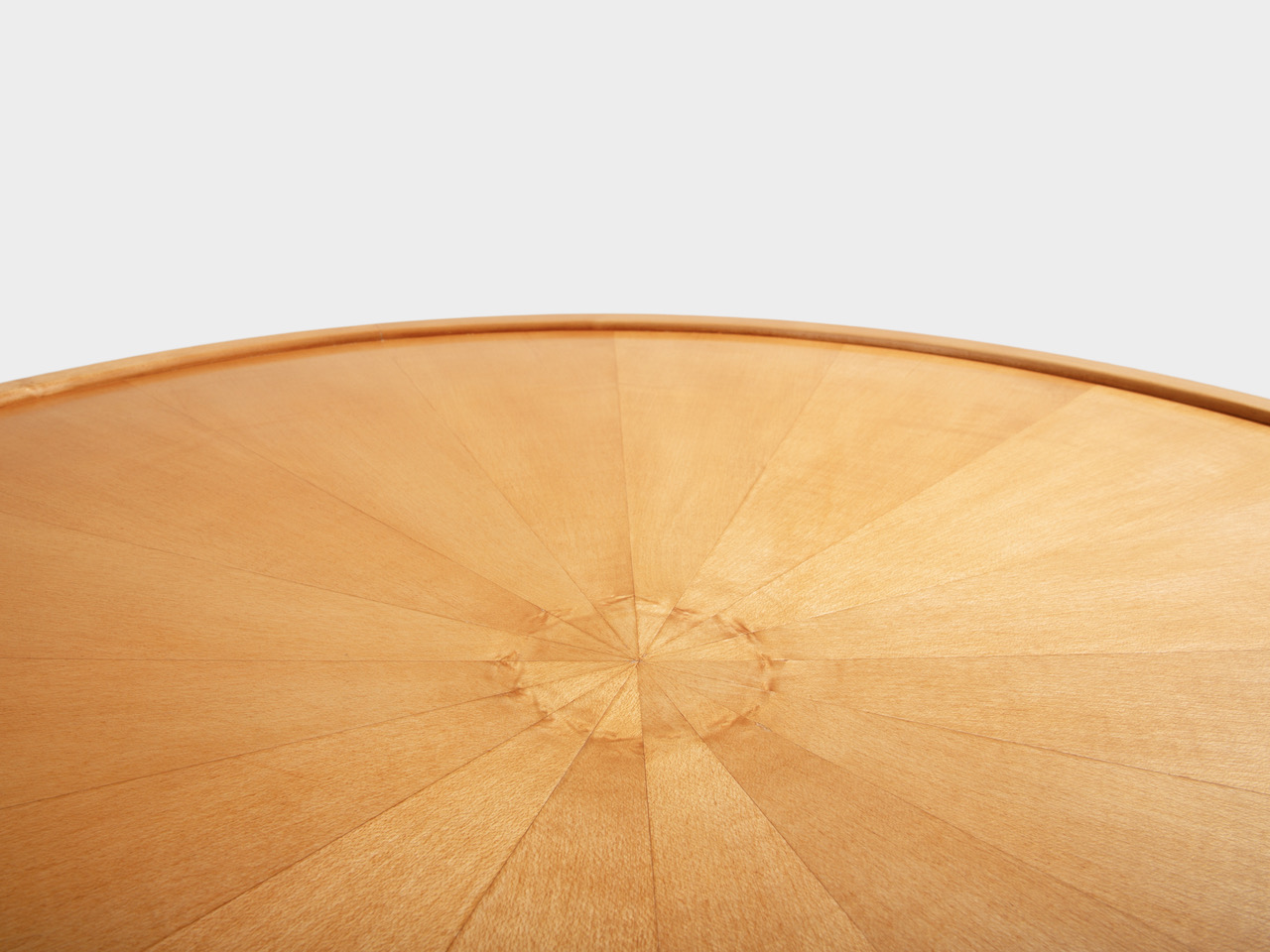
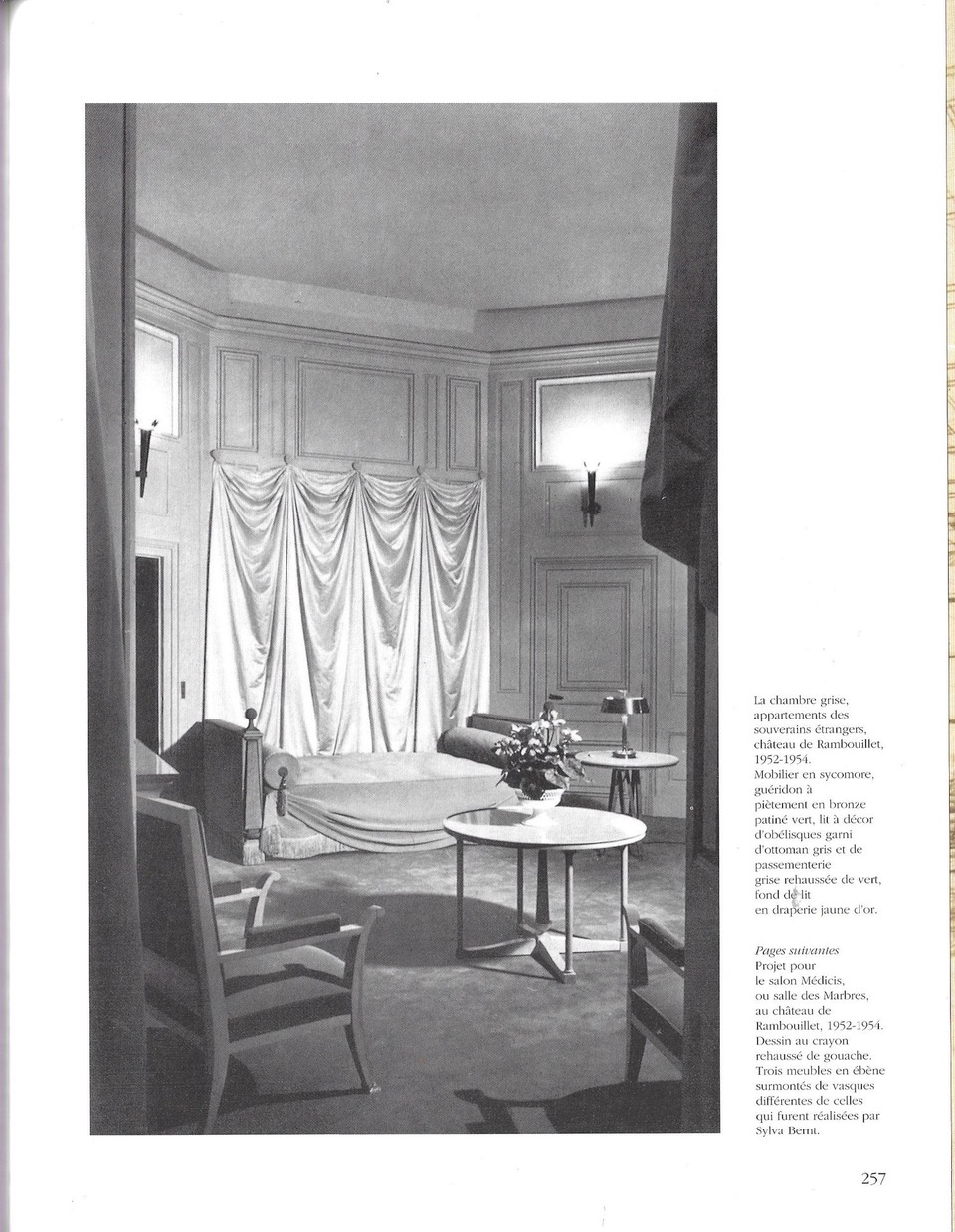
This sycamore side table from the 1940s is a good example. The choice of this light wood, highly prized at the time, allows for fine surface work and highlights the precision of the joinery. The particularly elaborate base clearly illustrates how Arbus transforms a classic motif into a structural, almost architectural element.
This piece is similar to the ensembles created for official commissions, notably at the Château de Rambouillet, where Arbus designed complete interiors. There, he developed a holistic approach: the furniture is not isolated, but participates in an overall composition conceived in its proportions, rhythms, and flow.
At the same time, Arbus incorporated more precious materials into some pieces: bronze, ivory, lacquer, and also produced bronze furniture, bordering on sculpture, which reinforced its uniqueness in the French landscape.
Today, his work is particularly sought after for this balanced position: an inherited artisanal mastery, combined with a sober and legible style, which transcends eras without being fashionable.
Available at Maison Cedric
https://www.paulbert-serpette.com/antiquaires/maison-cedric