Baccarat (Maison)
It was in 1764 that the history of the Baccarat glassworks took off, thanks to the initiative of the Bishop of Metz and Monseigneur de Montmorency-Laval. The Sainte-Anne glassmakers settled in the Lorraine town of Baccarat, marking the start of an exceptional adventure. The factory enjoyed dazzling success, becoming one of the three largest glassworks in Europe by 1785. However, the turbulence of the French Revolution plunged the company into a difficult period, culminating in bankruptcy in 1806.
Baccarat's history took a turning point in 1816 when the factory was bought by Aimé-Gabriel d'Artigues. Under his management, the factory underwent a remarkable revival during the Restoration, first taking the name "Établissement de Vonêche" in Baccarat, then simply "Baccarat". In 1823, a major turning point came with a prestigious commission from Louis XVIII. The royal appreciation propelled Baccarat's reputation to unprecedented heights, attracting the attention of princely and royal houses the world over. In 1824, the company became a société anonyme, consolidating its eminent status.
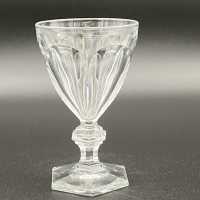
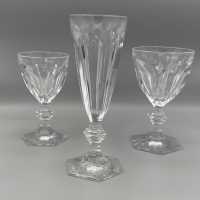
Buoyed by its continuing success, in 1841 Baccarat created the legendary Harcourt service, an iconic creation that remains a symbol of elegance and refinement. The House of Baccarat's reputation spread beyond France's borders when it took part in world exhibitions, notably the 1925 International Exhibition of Decorative Arts. At this event, eminent glassmakers such as Georges Chevalier helped revitalize the factory's style, giving it a modernity that endures to this day.
Thanks to its constant quest for quality and innovation, Baccarat is today revered as the world's most famous glass manufacturer. Its artistic heritage and commitment to excellence have ensured Baccarat a special place in the history of glass design and craftsmanship.