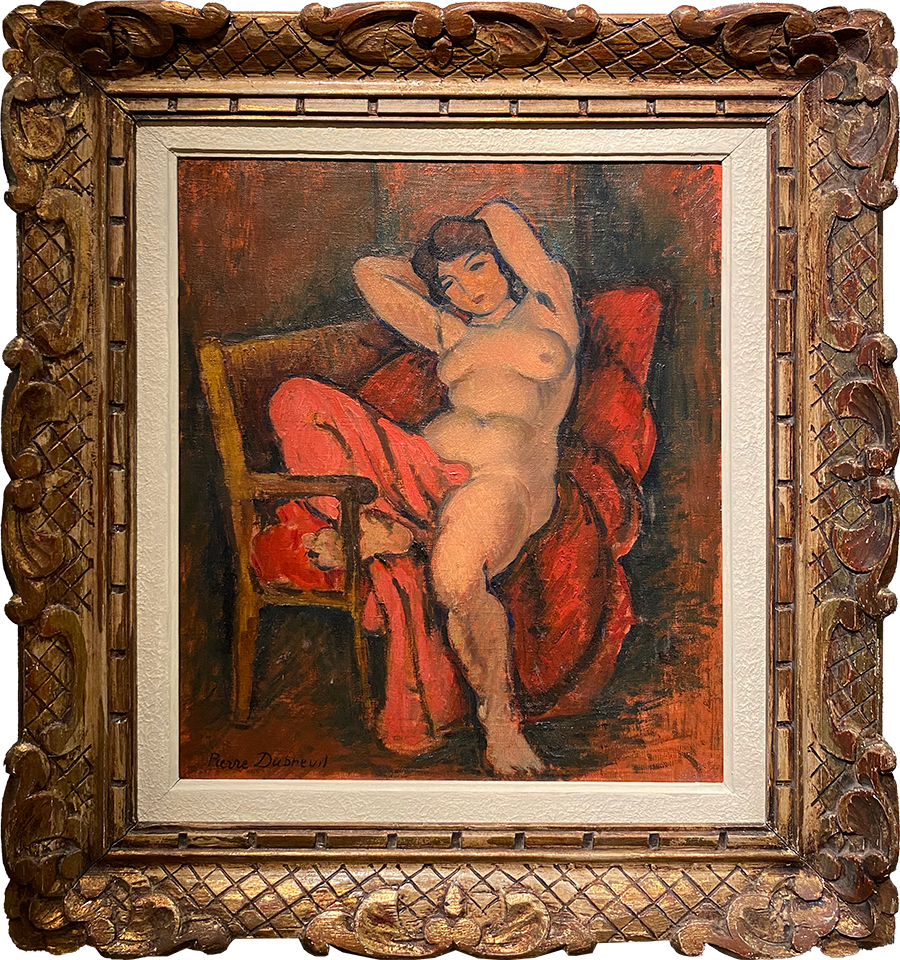
Nu aux étoffes rouges, Pierre DUBREUIL (Quimper, 1881- Paris, 1970)
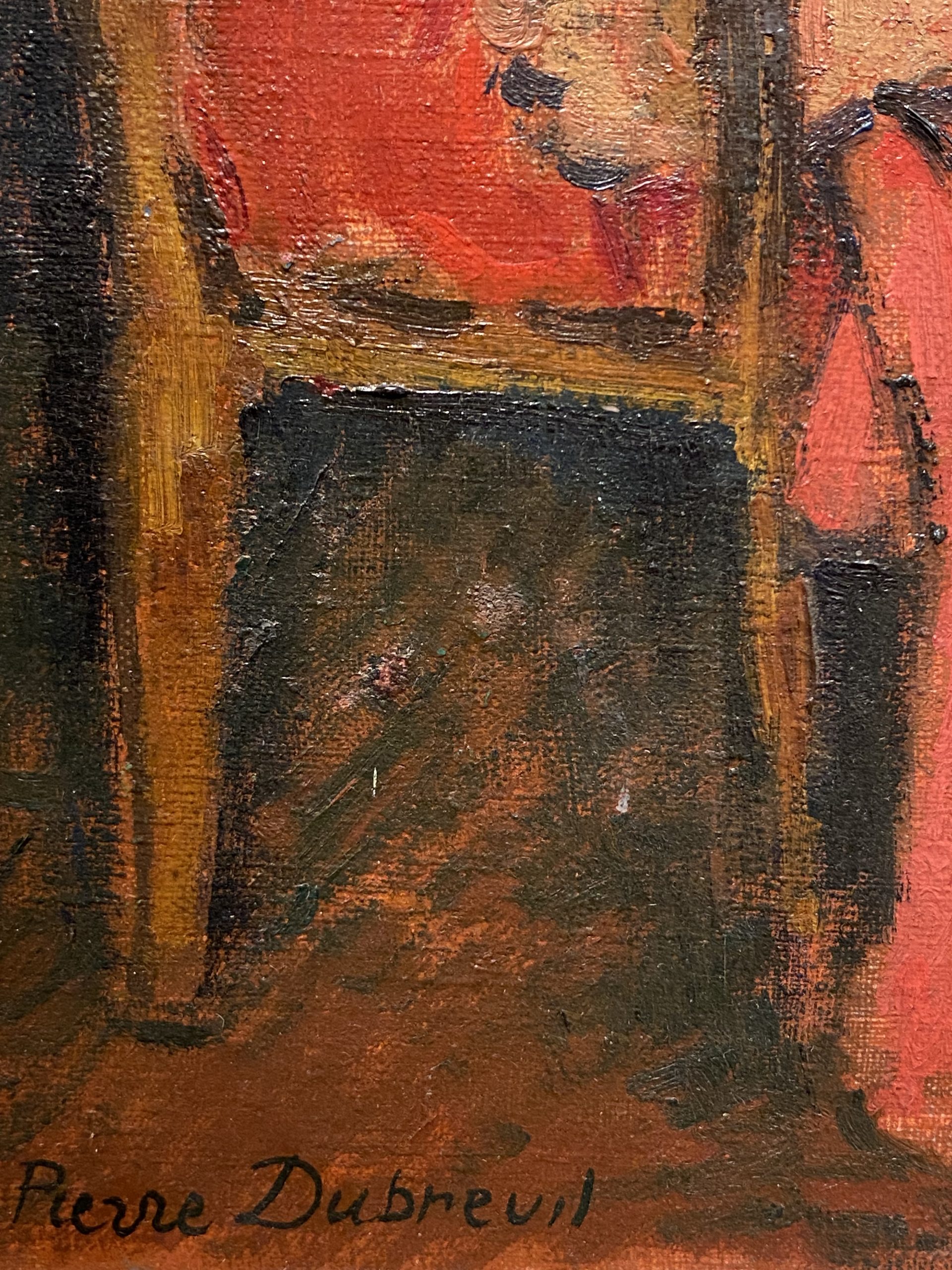
Oil on canvas, signed lower left
Dimensions without frame 46×38 cm
Dimensions with frame 65×57 cm
Originally from Vannes in Brittany and leaving the École des Beaux-Arts in Paris after one term, Pierre Dubreuil entered the studio of Henri Matisse in 1909 where he studied painting and sculpture. Mobilized during the first war, he did not exhibit until 1921, at the Indépendants and at the Salon d'Automne of which he became a member the same year, as well as at the Salon des Tuileries. In 1934, he was part of the 5th group of Contemporary Painters, at the Petit Palais.
We owe him the wall decoration of the Paimpol Navigation School, tapestry cartoons for Les Gobelins (Les Quatre Parts du Monde) and for Aubusson (Les Jardins). Through the various techniques he mastered, illustrator, engraver, Dubreuil was part of the traditional French painting which characterized the inter-war period. Before any search for originality, it is a painting which aims to be constructed by a demanding drawing and an authentically sensitive color.
In the work of this discreet, perhaps secretive Breton, it is with the landscapes of his native country, with the numerous family portraits and even more with the very sensual nudes which punctuate it, that he more freely reveals the various facets of his deep personality. We can think that his talent culminated with the groups of Bathers, painted between 1943 and 1957, and that unlike the pride of that of Cézanne, he located them in the complicity of a discreet penumbra of sub- drink.
Paintings and engravings by Dubreuil are kept at the Musée d'Art Moderne and the Petit Palais in Paris, at the Beaux-Arts museums in Toulouse, Vannes, The Hague and at the British Museum. The Grenoble museum preserves a tapestry by him.
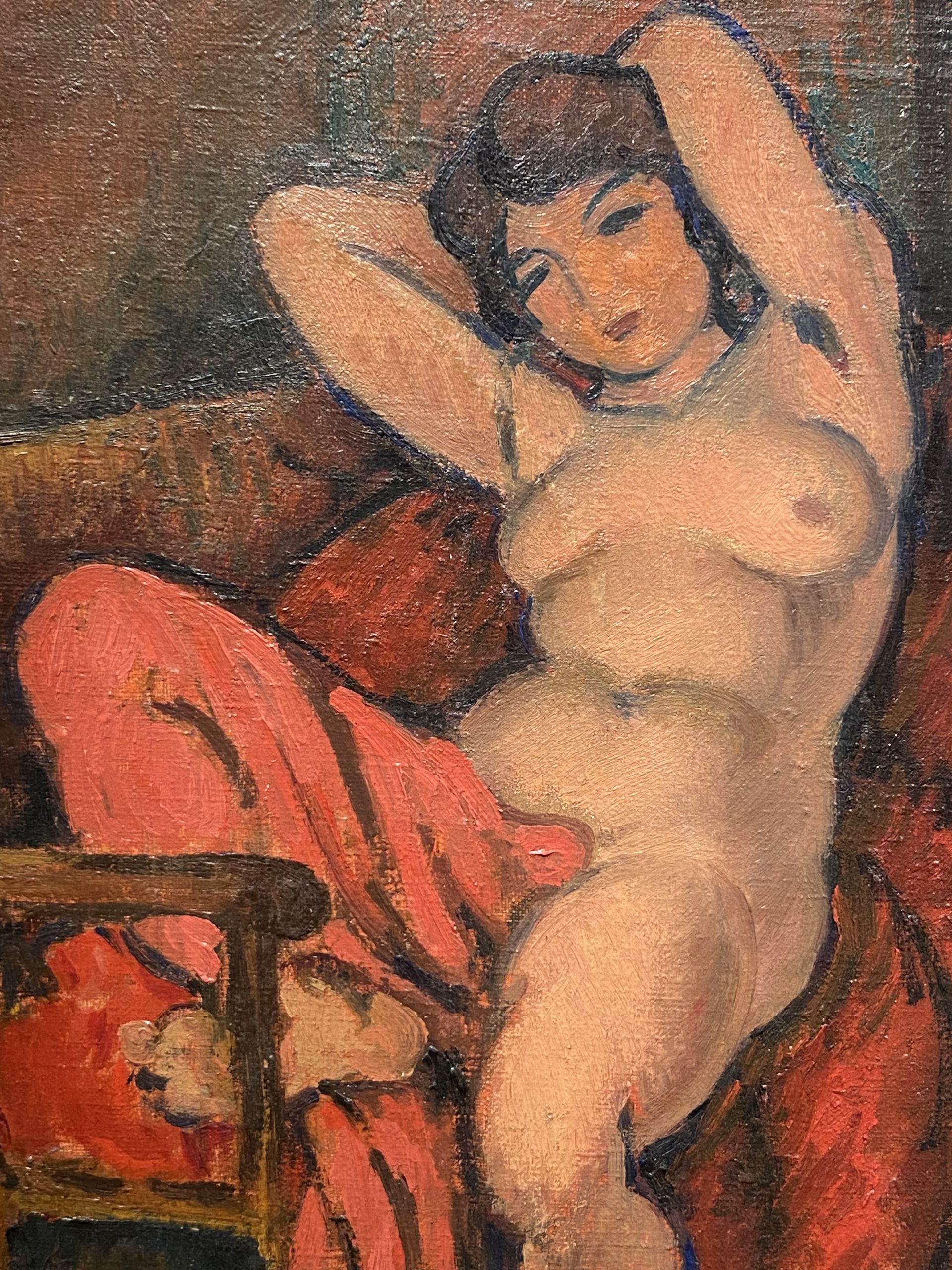
The tight framing of our painting immerses us in the intimacy of the painter and his model, deliberately limiting the depth of the shots. The palette of reds and pinks plays with the light, and stands out against a darker, cut-out background. Adopting a lascivious pose on a crumpled drapery, the model is highlighted with a very Modiglianesque ringed facial expression and generous curves which lend themselves to arabesques. Are we in the painter's studio? We would like to believe it, so much so does the place appear to us as a metaphor for the painter's artistic creation and as a form of self-portrait of the artist, who is physically absent.
© Art Trading France


 +33(0)6 09 46 25 90
 artradingfrance@wanadoo.fr